San Jerónimo escribiendo
Caravaggio · 1606
.jpg)
An old scholar leans over his books, one arm stretched out with a quill, utterly absorbed. Nearby, the quiet presence of mortality reminds us how short the time for such work may be.
The story behind the painting
This is the Saint Jerome in the Galleria Borghese in Rome, also known as Saint Jerome Writing or Saint Jerome in His Study. It is usually dated to 1605-06, largely on the word of the 17th-century biographer Gian Pietro Bellori, while the scholar Denis Mahon suggested 1602-1604; Wikidata gives 1606. Bellori said Caravaggio made it for Cardinal Scipione Borghese, who became a cardinal in 1605. Yet a 1613 poem describing the Borghese Caravaggios does not mention it, so the Cardinal may have acquired it later. Whatever the exact date, it is believed to come from the end of Caravaggio's Roman years, which closed when he left Rome in 1606. It measures about 116 by 153 centimetres.
What to look for
The canvas is wide rather than tall, and the figure of Jerome stretches across it. The saint reads intently, and his outstretched arm rests with the quill as if he has paused mid-thought between reading and writing. Follow that arm: it forms a long bridge across the picture, linking the scholar to the books before him. The sources suggest that Jerome may be shown in the act of translating the Vulgate, the Latin Bible. Look at how the light picks out his bare head and the pages, while the rest dissolves into darkness. Caravaggio painted Jerome more than once, both in meditation and writing; this version captures the concentration of a mind at work.
Meaning and intent
Saint Jerome is a Doctor of the Church in Roman Catholicism and was a popular subject for painters, Caravaggio included. Here he is not a hermit beating his breast in the desert but a man of learning, bent over his labour. The picture honours study itself as a kind of devotion: the long hours, the fragile light, the patience of turning one language into another. Caravaggio gives this scholarly life the same seriousness he gives dramatic martyrdoms. The stillness is the drama. We watch someone so absorbed that he has forgotten us entirely, and that absorption becomes the painting's subject.
Legacy
The work's authorship has not always been certain. From 1700 until 1893, the Borghese inventories attributed it to Jusepe de Ribera, and Caravaggio's authorship is still sometimes questioned. That history is a reminder of how strongly Caravaggio's manner shaped the painters who followed him, to the point that their works and his could be confused. Today the painting remains in the Galleria Borghese, among the collection gathered by the family of the Cardinal named by Bellori as its patron. It offers a quieter side of an artist known for violence and drama: a portrait of concentration, painted in the last Roman years before his life changed course.
¿Sabías que…?
- Usually dated 1605-06 after Bellori; Denis Mahon suggested 1602-1604.
- Attributed to Jusepe de Ribera in Borghese inventories from 1700 to 1893.
- Held at the Galleria Borghese, Rome; 116 × 153 cm.
Sobre el artista
Caravaggio (1571-1610)
arte religioso · Pintura barroca de Italia · Galería Borghese · Colección Borghese
Más obras de Caravaggio
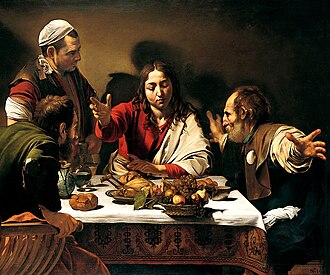 La cena de Emaús - Caravaggio (1601)
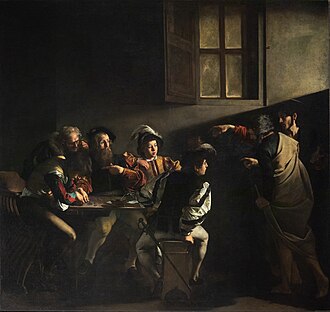 La vocación de San Mateo - Caravaggio (1609)
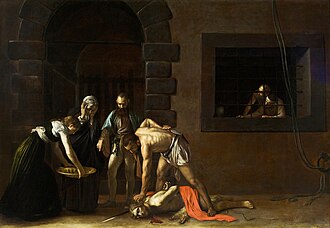 La decapitación de San Juan Bautista - Caravaggio (1608)
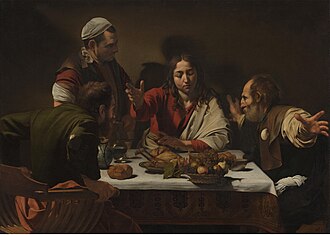 Los discípulos de Emaús - Caravaggio (1601)
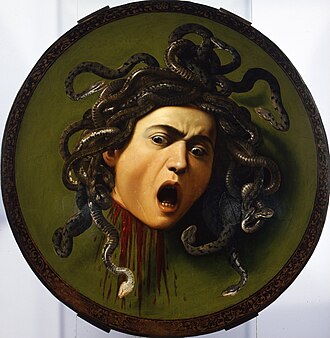 Cabeza de Medusa - Caravaggio (1597)
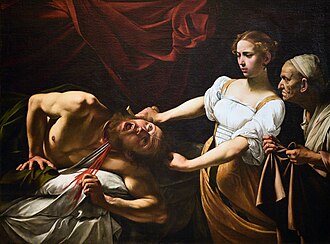 Judit decapitando a Holofernes - Caravaggio (1598)
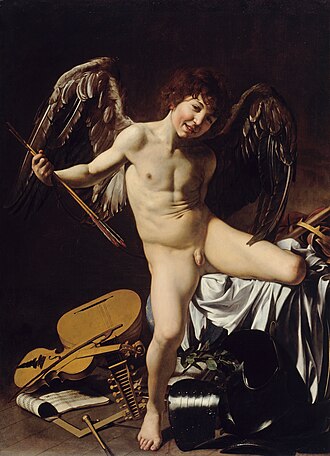 El amor victorioso - Caravaggio (1600s)
%2C%201595%20circa%2C%20534.jpg) Baco enfermo - Caravaggio (1595)
Baco enfermo - Caravaggio (1595)
Obras de artistas relacionados
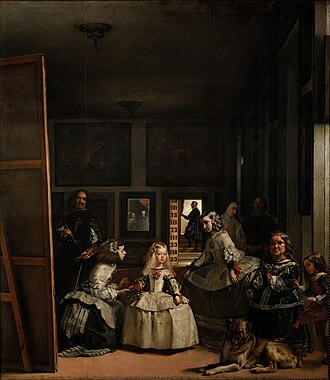 Las meninas - Diego Velázquez (1656)
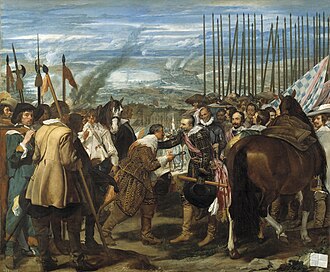 La rendición de Breda - Diego Velázquez (1635)
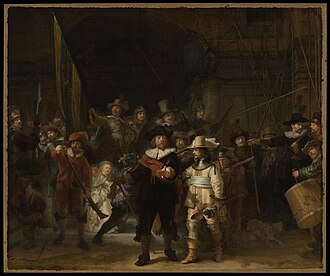 La ronda de noche - Rembrandt van Rijn (1642)
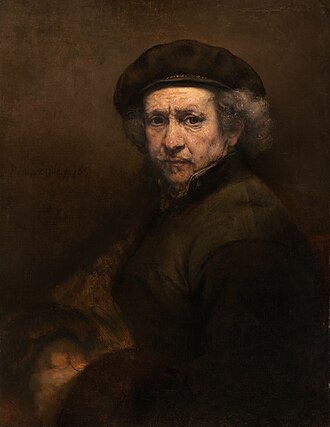 Autorretrato - Rembrandt van Rijn (1659)
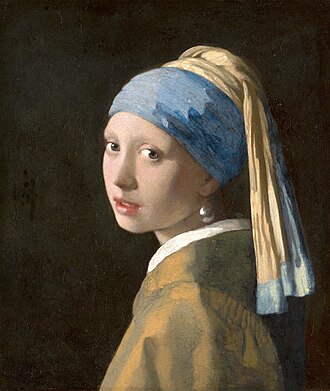 La joven de la perla - Johannes Vermeer (1665)
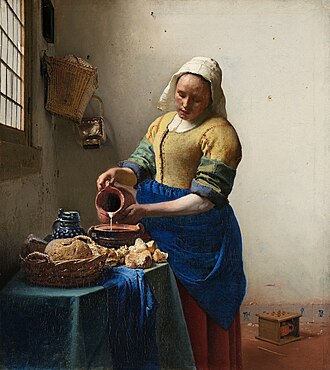 La lechera - Johannes Vermeer (c. 1658)