La ronda de los presos
Vincent van Gogh · 1890
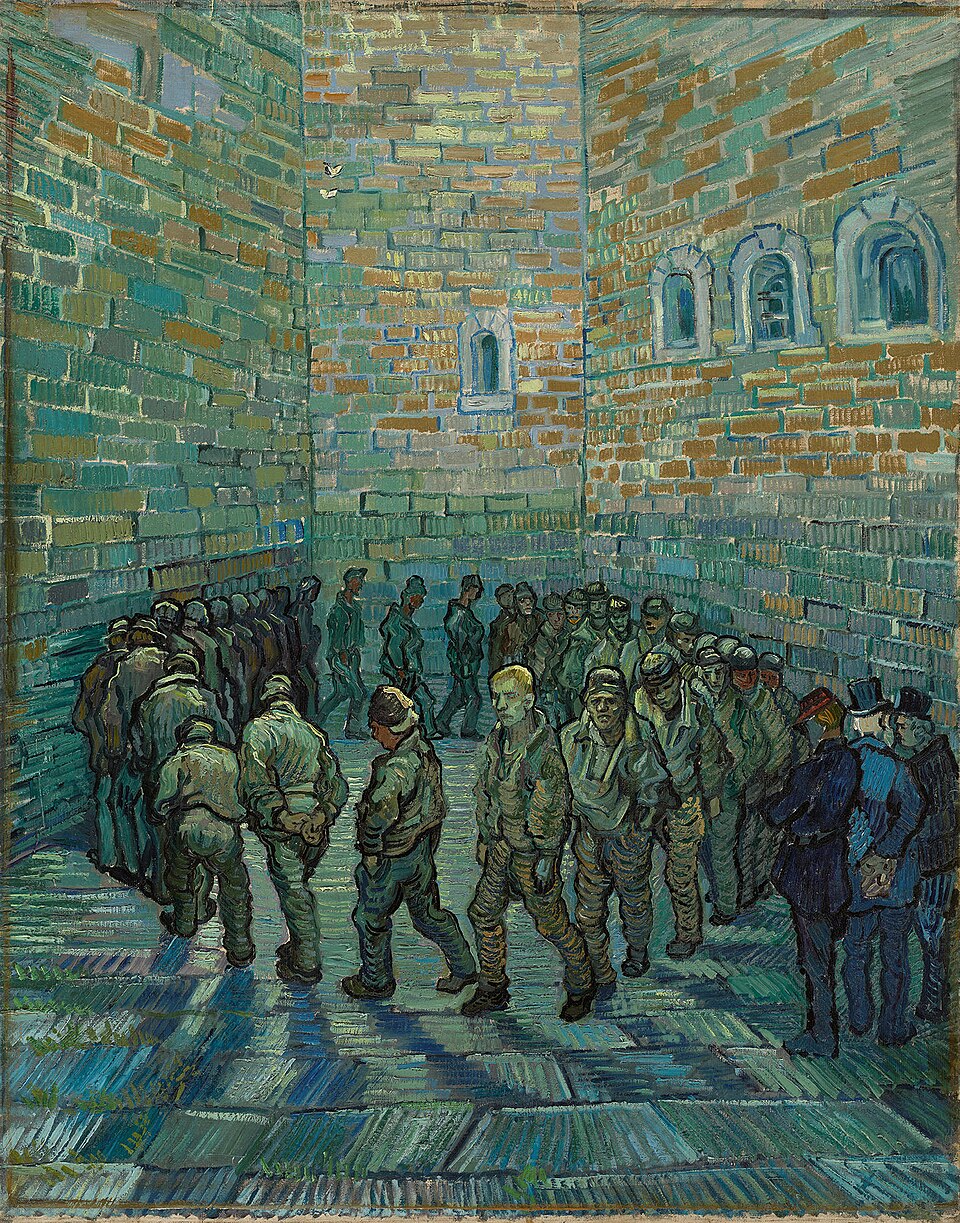
Men trudge in an endless circle at the bottom of a brick well, and one of them turns to look straight out at us. Van Gogh painted this from inside an asylum, and many have seen his own face in that glance.
The story behind the painting
Van Gogh painted Prisoners' Round in February 1890 at the Saint-Paul Asylum in Saint-Rémy, where he was detained from May 1889 to May 1890 after an attack of mental illness in 1888. The hospital's director, Dr. Peillon, and his brother Theo encouraged him to paint as part of his recovery. Unable to go out and work from life, he turned to copying other images, including photographs and engravings. His source here was an 1872 engraving by Gustave Doré of the exercise yard at Newgate Prison, published in the book London: A Pilgrimage. Van Gogh actually worked from a woodblock reproduction by Héliodore Pisan printed in a Dutch magazine, De Katholieke Illustratie. He told Theo that this painting, along with his copy after Daumier's Men Drinking, was difficult to carry out.
What to look for
The composition is claustrophobic. A ring of prisoners walks in a circle around a narrow yard hemmed in by towering brick walls, with only a few small arched windows high above. In the scene, the men are parading past detectives so that their faces can be remembered. Depressing blues and greens fill the shadowy depths of the yard, while splashes of red catch the light on the bricks higher up. Look up and you will find two small white butterflies, fragile and almost hidden, fluttering near the top of the walls. Then return to the front of the line: one prisoner without a cap has turned his head to look out at the viewer, and his features may resemble Vincent's own.
Meaning and intent
Although borrowed from Doré, the image became deeply personal. Painted by a man confined in an asylum, the circling figures and walls without exit recall Van Gogh's own detention and his psychological isolation. The bareheaded prisoner who meets our gaze turns a scene of anonymous punishment into a moment of recognition. The tiny butterflies above the gloom can be read as a glimpse of freedom just out of reach. After Van Gogh's death, his friend Émile Bernard saw the painting as symbolic of his end, describing life as a high prison with walls so high, and the walkers circling the pit as poor artists and damned souls passing under the whip of Destiny.
Legacy
Only a few months after finishing it, Van Gogh shot himself in July 1890, and this canvas was among the works displayed around his coffin before his funeral. After Theo's death in January 1891 it passed to his widow, Johanna van Gogh-Bonger, then through several collectors before reaching Ivan Morozov in Russia by 1909. Morozov's collection was nationalised by the Soviet government, and in 1948 the painting moved to the Pushkin Museum of Fine Arts in Moscow, where it remains. Its haunting circle reached the cinema too: it inspired a prison scene in Stanley Kubrick's 1971 film A Clockwork Orange. It stands as one of the most moving works of Van Gogh's final year.
¿Sabías que…?
- Van Gogh based it on a reproduction of an 1872 engraving by Gustave Doré of Newgate Prison.
- Two small white butterflies are painted high on the prison walls.
- It was displayed around Van Gogh's coffin before his funeral.
- It inspired a prison scene in Kubrick's A Clockwork Orange.
Sobre el artista
Vincent van Gogh (1853-1890)
escena de género · Museo Pushkin
Más obras de Vincent van Gogh
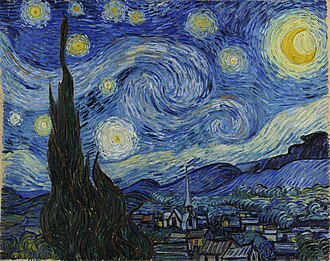 La noche estrellada - Vincent van Gogh (1889)
.jpg) Terraza de café por la noche - Vincent van Gogh (1888)
Terraza de café por la noche - Vincent van Gogh (1888)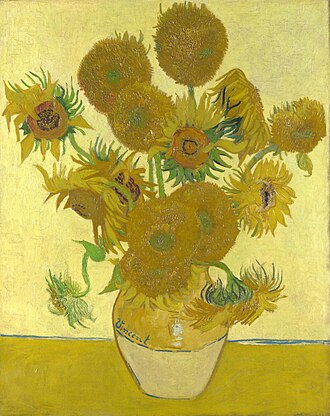 Los girasoles - Vincent van Gogh (1888)
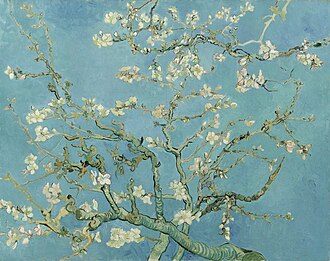 Almendro en flor - Vincent van Gogh (1890)
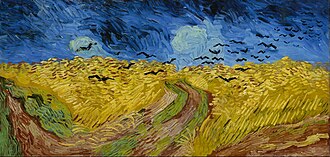 Campo de trigo con cuervos - Vincent van Gogh (1890)
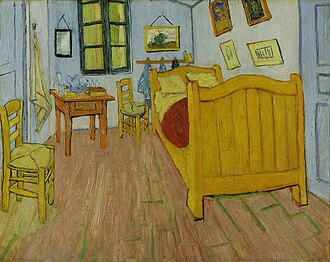 El dormitorio en Arlés - Vincent van Gogh (1888)
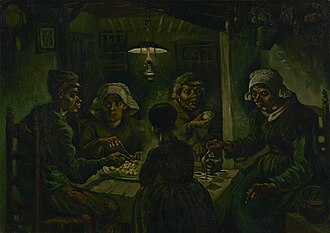 Los comedores de patatas - Vincent van Gogh (1885)
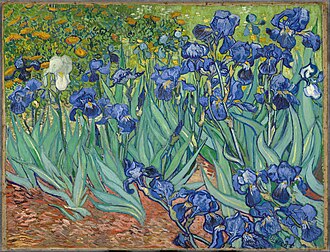 Lirios - Vincent van Gogh (1889)
Obras de artistas relacionados
 ¿De dónde venimos? ¿Qué somos? ¿Adónde vamos? - Paul Gauguin (1897-1898)
%201889.jpg) El Cristo amarillo - Paul Gauguin (1889)
El Cristo amarillo - Paul Gauguin (1889) Almuerzo sobre la hierba - Édouard Manet (1863)
 Olympia - Édouard Manet (1863)