Portrait of the artist's father
Alberto Durero · 1490
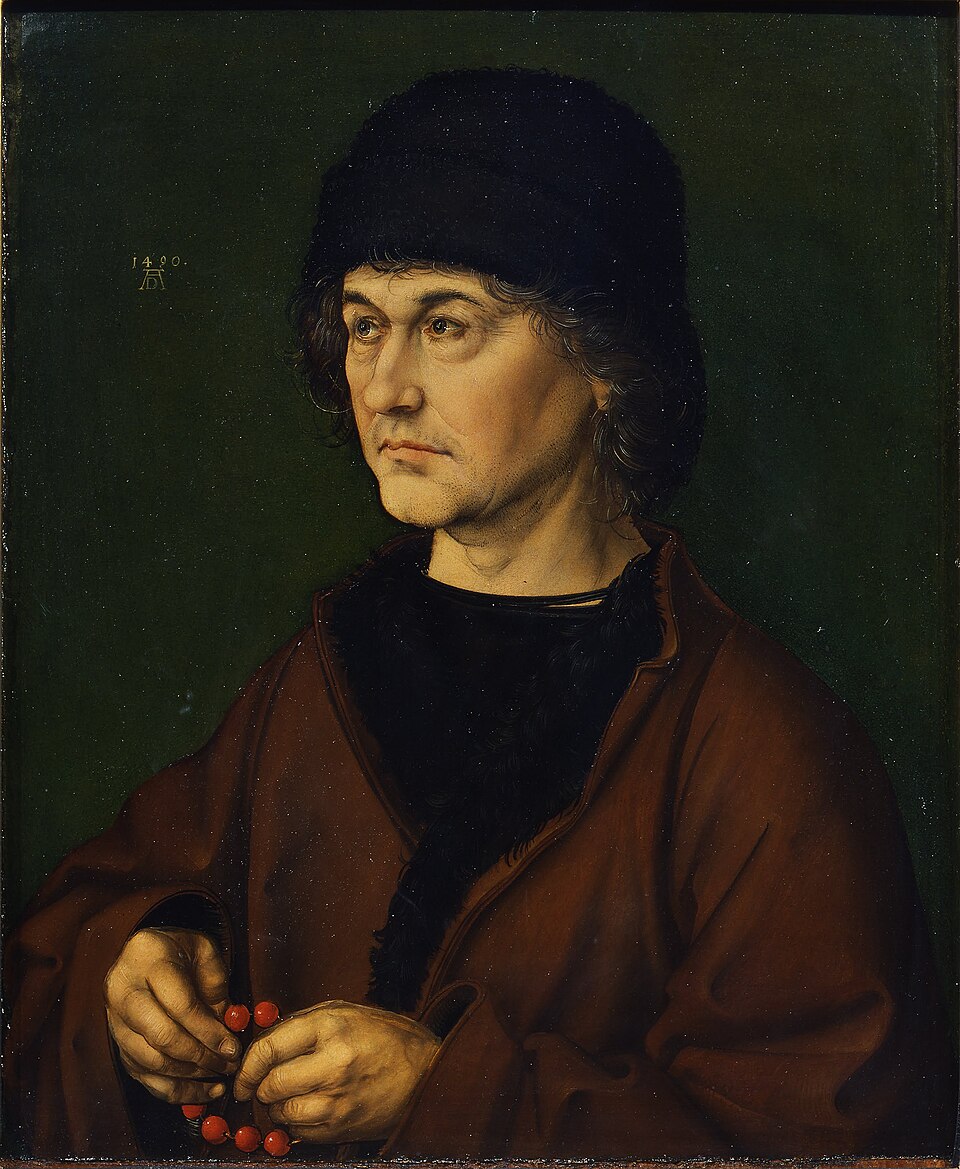
A goldsmith in a fur hat holds a rosary of red beads and looks to his left, toward a wife who now hangs in another country. It is one of the earliest paintings we know by his son, Albrecht Durer.
The story behind the painting
This portrait of Albrecht Durer the Elder, the painter's father, is one of Durer's oldest known paintings. It was probably made on the eve of the young artist's departure from Nuremberg. The panel is signed and dated 1490, though the inscription may have been added later. It was the right wing of a diptych; the left wing was a Portrait of Barbara Holper, the artist's mother. Durer painted his father again, in a portrait from 1497 now in the National Gallery in London.
What to look for
The father is shown half-length, turned three-quarters to the left, against a dark background in green tones. His hands are clearly displayed, holding a rosary of red beads, following the model of Flemish painting. His clothes belong to cold countries: a fur hat, a large, well-covered tunic, all in dark colours. Look at his eyes: the gaze is intense and turned to the left. The French source gives the panel as 47 by 39 cm, while Wikidata lists 47 by 39.5 cm.
Meaning and intent
The painting only makes full sense as half of a pair. The father looks to the left, toward where his wife's portrait hung, and the black of his hat answers the bright white of her headdress. On the back of the father's panel the young painter painted the joined coats of arms of the Durer and Holper families, which also supports the idea that the two portraits were made as a diptych. The red rosary in his hands speaks of piety, presented in the manner of the Flemish masters.
Legacy
Between 1588 and 1628 the pair was split up. The father's portrait, perhaps sold by Willibald Imhoff of Nuremberg, entered the collection of Emperor Rudolf II and then passed to the Grand Dukes of Tuscany, and it has stayed in Florence ever since. In 1675 it was counted among the works of Cardinal Leopoldo de' Medici, in 1677 it was recorded in the Grand Ducal wardrobe, later it was at the Villa di Poggio Imperiale, and in 1773 it reached the Uffizi. The mother's portrait was rediscovered only in 1979, in the Germanisches Nationalmuseum in Nuremberg.
¿Sabías que…?
- Signed and dated 1490, one of Durer's earliest known paintings.
- Right wing of a diptych with the portrait of his mother, Barbara Holper.
- The family arms are painted on the back.
- In the Uffizi since 1773.
Sobre el artista
Alberto Durero (1471-1528)
retrato · Galería Uffizi · Renacimiento alemán
Más obras de Alberto Durero
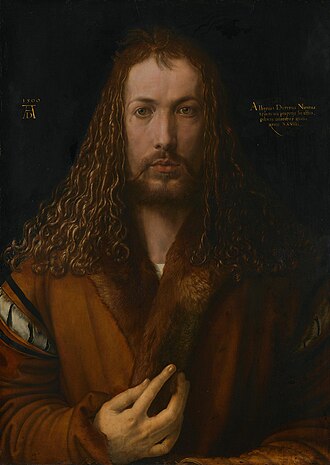 Autorretrato de Durero - Albrecht Dürer (1500)
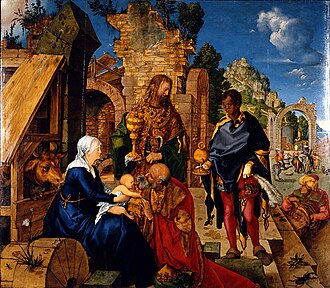 Adoración de los Magos - Albrecht Dürer (1504)
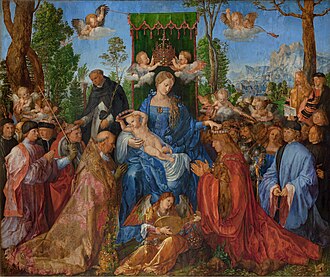 Fiesta del Rosario - Albrecht Dürer (1506)
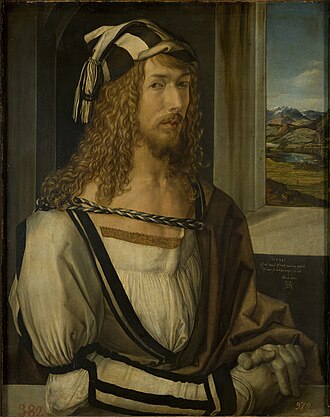 Autorretrato de Durero - Albrecht Dürer (1498)
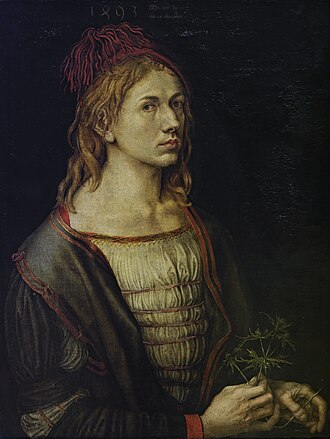 Autorretrato de Durero - Albrecht Dürer (1493)
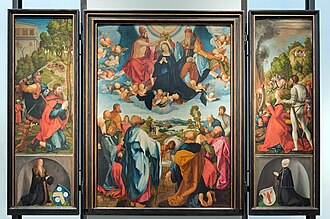 Altar Heller - Albrecht Dürer (1500s)
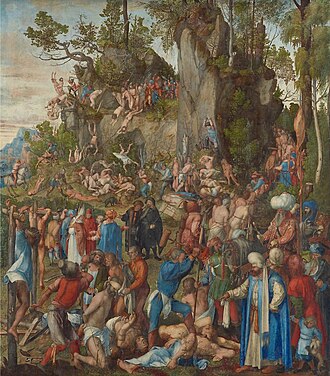 El martirio de los diez mil cristianos - Albrecht Dürer (1508)
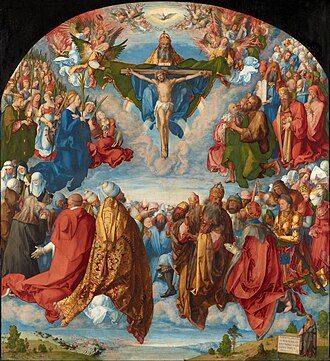 Adoración de la Trinidad - Albrecht Dürer (1511)
Obras de artistas relacionados
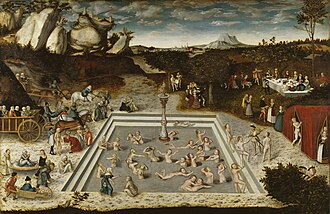 La fuente de eterna juventud - Lucas Cranach the Elder (1546)
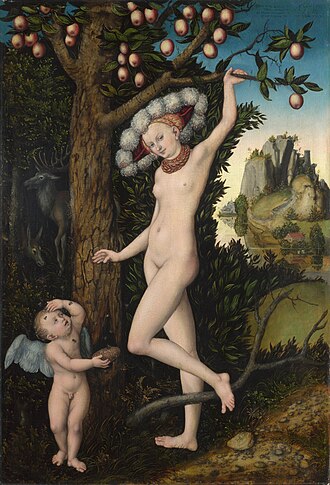 Venus y Cupido ladrón de miel - Lucas Cranach the Elder (1520s)