Retrato de Jakob Muffel
Alberto Durero · 1526
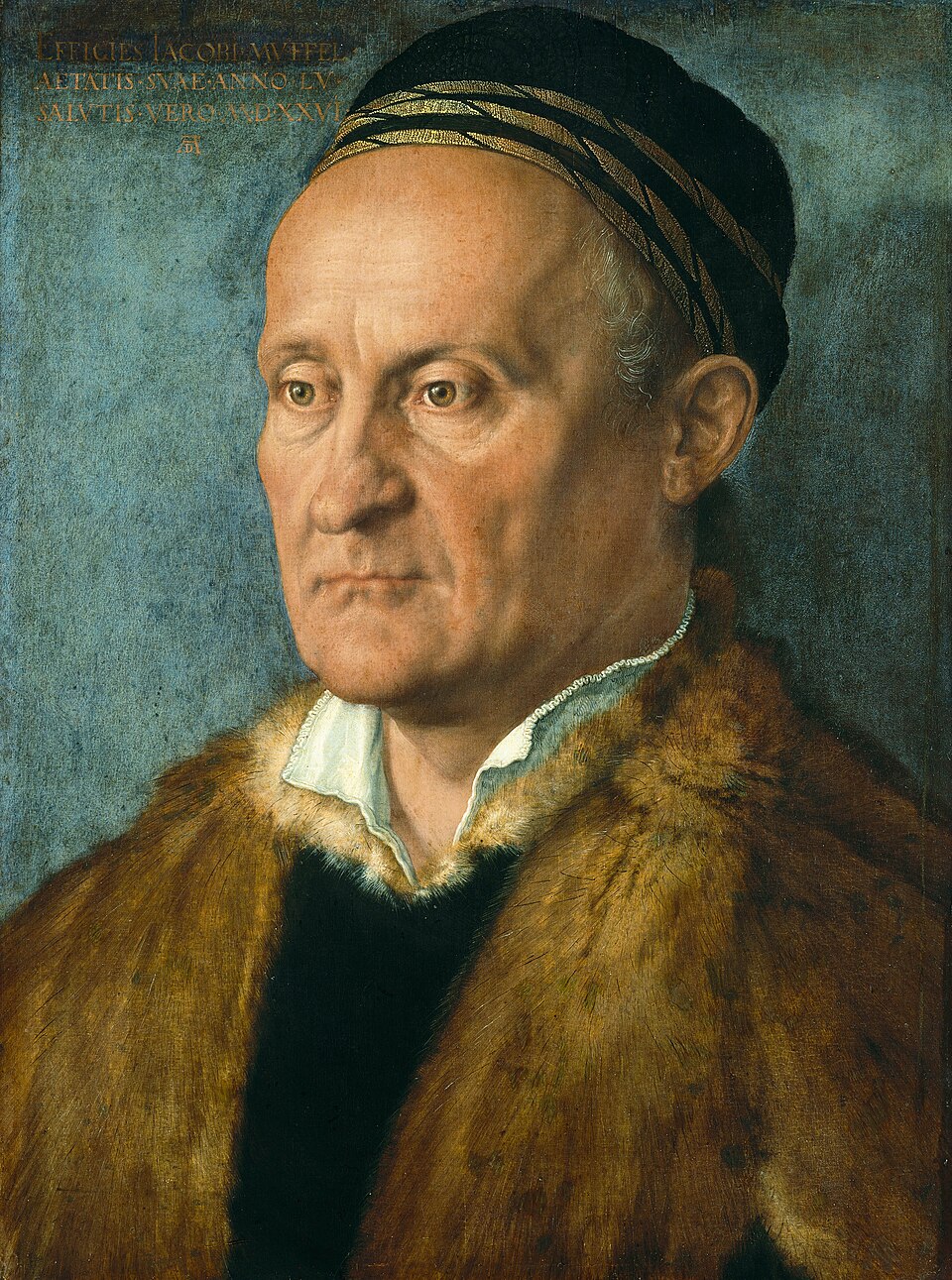
In 1526 Dürer painted the burgomaster of Nuremberg, the city to which he had just given his great panels of the Four Apostles. Was this portrait part of a public celebration? The clues are in its size.
The story behind the painting
The Portrait of Jakob Muffel is signed and dated 1526 and was painted in Nuremberg, Dürer's home city. It was a busy year for portraits: in the same year Dürer also portrayed Johann Kleberger and Hieronymus Holzschuher. Jakob Muffel was no private client. He was burgomaster of Nuremberg in the very year that Dürer donated to the city his four panels of The Four Apostles. The source suggests that the gift and the portrait are perhaps related to each other, though it does not claim this as certain. Behind this modest panel, then, lies a moment when an aging master and his city were exchanging gestures of honour.
What to look for
The panel is small and close in scale, about 48 by 36 centimetres, a size made for looking at a face from near by. It is a portrait of a single man, Jakob Muffel, and it carries Dürer's signature and the date 1526, so we know exactly when and by whom it was made. Our source gives few further details of its appearance, so the best way to see it is slowly. Notice how a portrait of this size invites you to stand close, as if in conversation. It is a likeness meant to record a real person holding a real office, not an imagined figure or a saint, and that plainness is part of its dignity.
Meaning and intent
The most intriguing idea about this painting concerns its size. The panel is the same size as Dürer's portrait of Holzschuher, another leading citizen painted in the same year. Because of this match, scholars have speculated that the two portraits may have been commissioned for an official celebration and exhibited in the city's town hall. If so, the portrait was not only a private memento but a public image of civic authority, shown where the people of Nuremberg did their business. That remains a hypothesis, and the source presents it as such, but it helps us imagine the painting hanging among other faces of a proud city.
Legacy
Today the portrait hangs in the Gemäldegalerie in Berlin. It belongs to the last group of portraits Dürer painted, alongside those of Kleberger and Holzschuher, all made in Nuremberg in 1526. Seen together, these works show an artist still devoted to the human face late in his career, and still closely bound to the life of his city. The link with The Four Apostles adds a quiet resonance: in one year Dürer gave Nuremberg a monumental religious gift and also painted the man who led it. Standing before Muffel's face, we stand at the meeting point of art, friendship and civic pride.
¿Sabías que…?
- Signed and dated 1526, painted in Nuremberg
- Size: 48 × 36 cm
- Collection: Gemäldegalerie, Berlin
- Same size as Dürer's portrait of Hieronymus Holzschuher
Sobre el artista
Alberto Durero (1471-1528)
retrato · Renacimiento alemán · Gemäldegalerie de Berlín
Más obras de Alberto Durero
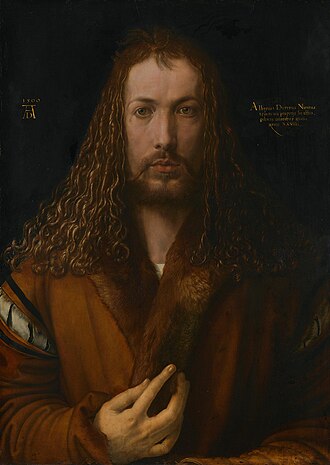 Autorretrato de Durero - Albrecht Dürer (1500)
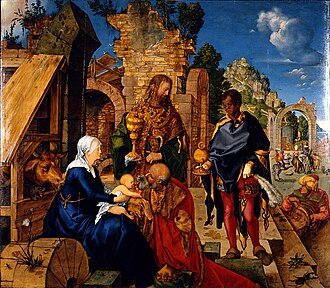 Adoración de los Magos - Albrecht Dürer (1504)
.jpg) Fiesta del Rosario - Albrecht Dürer (1506)
Fiesta del Rosario - Albrecht Dürer (1506)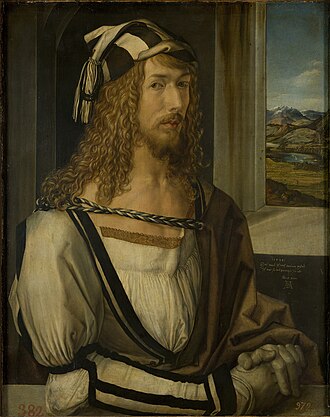 Autorretrato de Durero - Albrecht Dürer (1498)
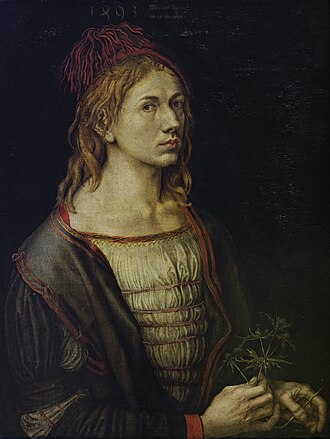 Autorretrato de Durero - Albrecht Dürer (1493)
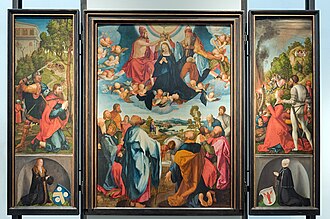 Altar Heller - Albrecht Dürer (1500s)
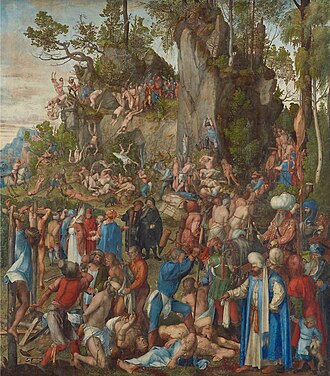 El martirio de los diez mil cristianos - Albrecht Dürer (1508)
%20-%20Google%20Art%20Project.jpg) Adoración de la Trinidad - Albrecht Dürer (1511)
Adoración de la Trinidad - Albrecht Dürer (1511)