Portrait of a Man in a Red Cap
Tiziano · 1520
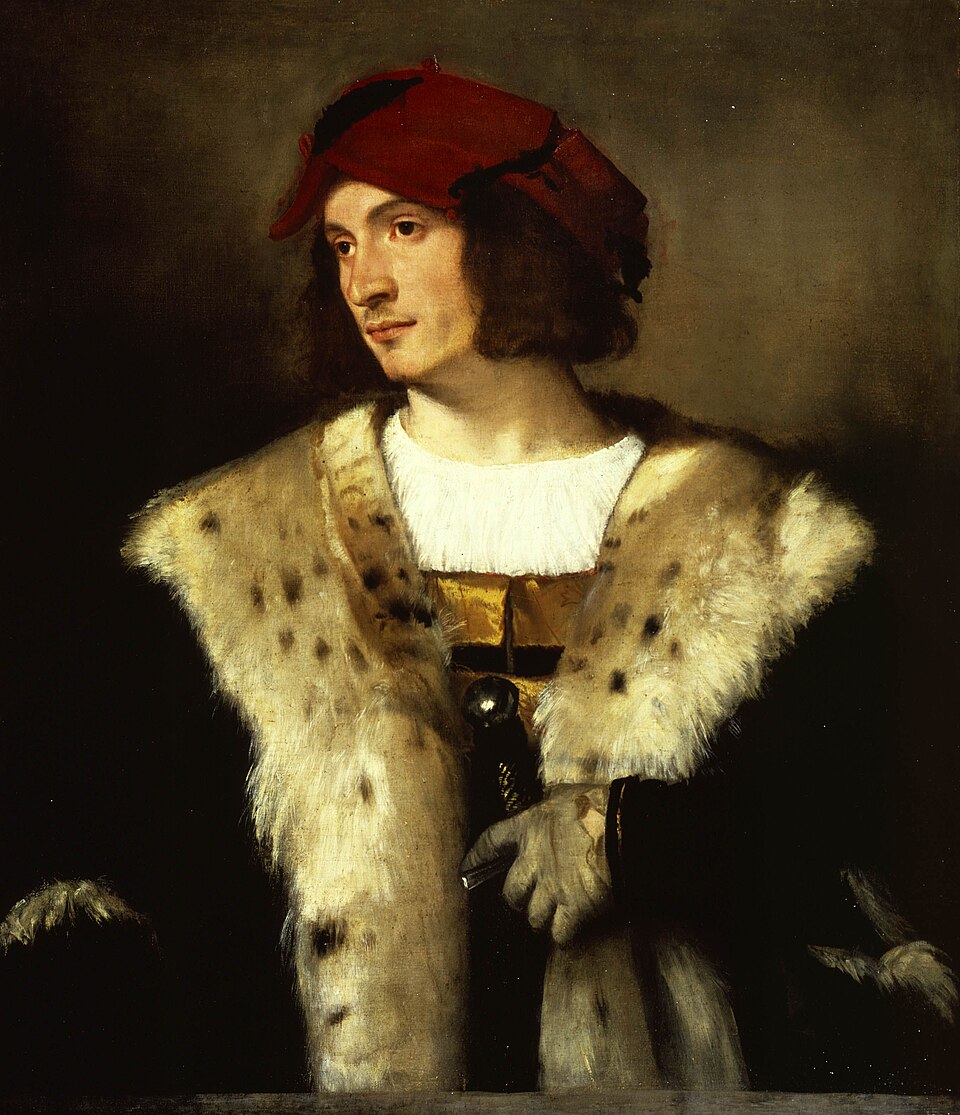
A young man in a vivid red cap, fur and a glove, painted by the young Titian. A critic once dismissed him as the work of a lesser hand, until a cleaning made, in his words, the scales fall from his eyes.
The story behind the painting
Titian painted this portrait of an unidentified young man in the years just after his stay in Padua, around 1513 to 1515. The Frick Collection dates it to about 1516, a little later than the Man with a Glove, the other portrait of a young man given to the same period. Wikidata gives 1520 instead, so the date is approximate. The sitter has never been identified, and the painting takes its usual title from his most striking feature, the vivid red cap. It is also known as Man with a Red Cap and Portrait of a Young Man.
What to look for
Start with the red cap, then look at what the critic Charles Ricketts noticed once the painting was cleaned: the shape of the eyelids, the construction of the chin, the shape of the shadows. The brown background turned into a luminous warm grey. The glove and the fur, which he had thought indifferent, revealed the tender pigment of the master, and the linen was painted in pâte sur pâte, layer on layer, a practice of Titian's. The canvas measures about 82 by 71 cm. Ricketts called the work beautiful and Giorgionesque.
Meaning and intent
The picture shows how much a portrait can carry without a name. We do not know who this young man was, yet his presence was strong enough that by the seventeenth century the image was well known: Carlo Dolci copied the figure into the background of his Martyrdom of Saint Andrew, now in the Palazzo Pitti in Florence. The red cap, the fur and the glove signal a young man of standing, but the portrait's real subject is the living face that made later painters borrow it.
Legacy
Ricketts first saw the painting at Christie's in a darkened, dirty state and thought it an early work by Titian's brother Francesco Vecellio. After cleaning, he asked how he could have mistaken this masterpiece for the work of a second-rate man. Writing in 1910, he judged it better preserved than the Cobham Ariosto. The painting passed through several private collections, was auctioned at Christie's in 1906 and bought by Sir Hugh Lane, and Henry Clay Frick acquired it in 1915. It is in the Frick Collection in New York.
¿Sabías que…?
- Painted by Titian, dated about 1516 by the Frick Collection.
- The sitter has never been identified.
- Copied by Carlo Dolci into one of his own paintings in the 17th century.
- Acquired by Henry Clay Frick in 1915.
Sobre el artista
Tiziano (1488-1576)
retrato · Alto Renacimiento · escuela veneciana · Colección Frick · hombre joven · hombre desconocido
Más obras de Tiziano
 Venus de Urbino - Titian (1538)
 La Asunción de la Virgen - Titian (1510s)
 Amor sacro y amor profano - Titian (1510s)
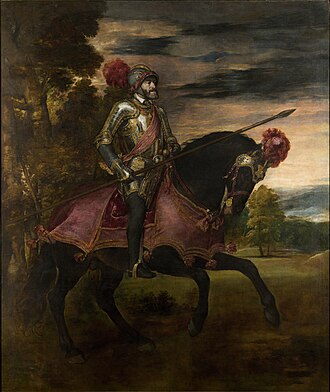 Carlos V a caballo en Mühlberg - Titian (1548)
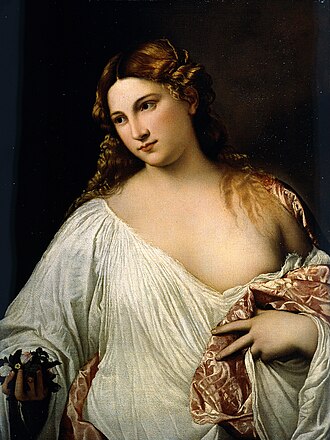 Flora - Titian (1517)
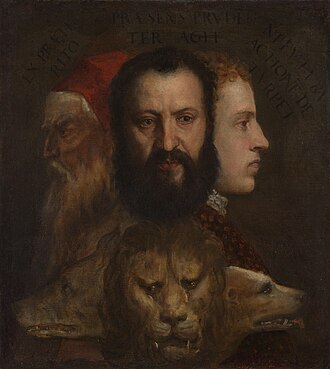 Alegoría de la Prudencia - Titian (1550)
 Diana y Acteón - Titian (1550s)
 Baco y Ariadna - Titian (1520s)
Obras de artistas relacionados
 La Última Cena - Jacopo Tintoretto (1563)
 San Marcos liberando al esclavo - Jacopo Tintoretto (1540s)
 Las bodas de Caná - Paolo Veronese (1560s)
 Cena en casa de Leví - Paolo Veronese (1573)