Retrato de Felipe II
Tiziano · 1551
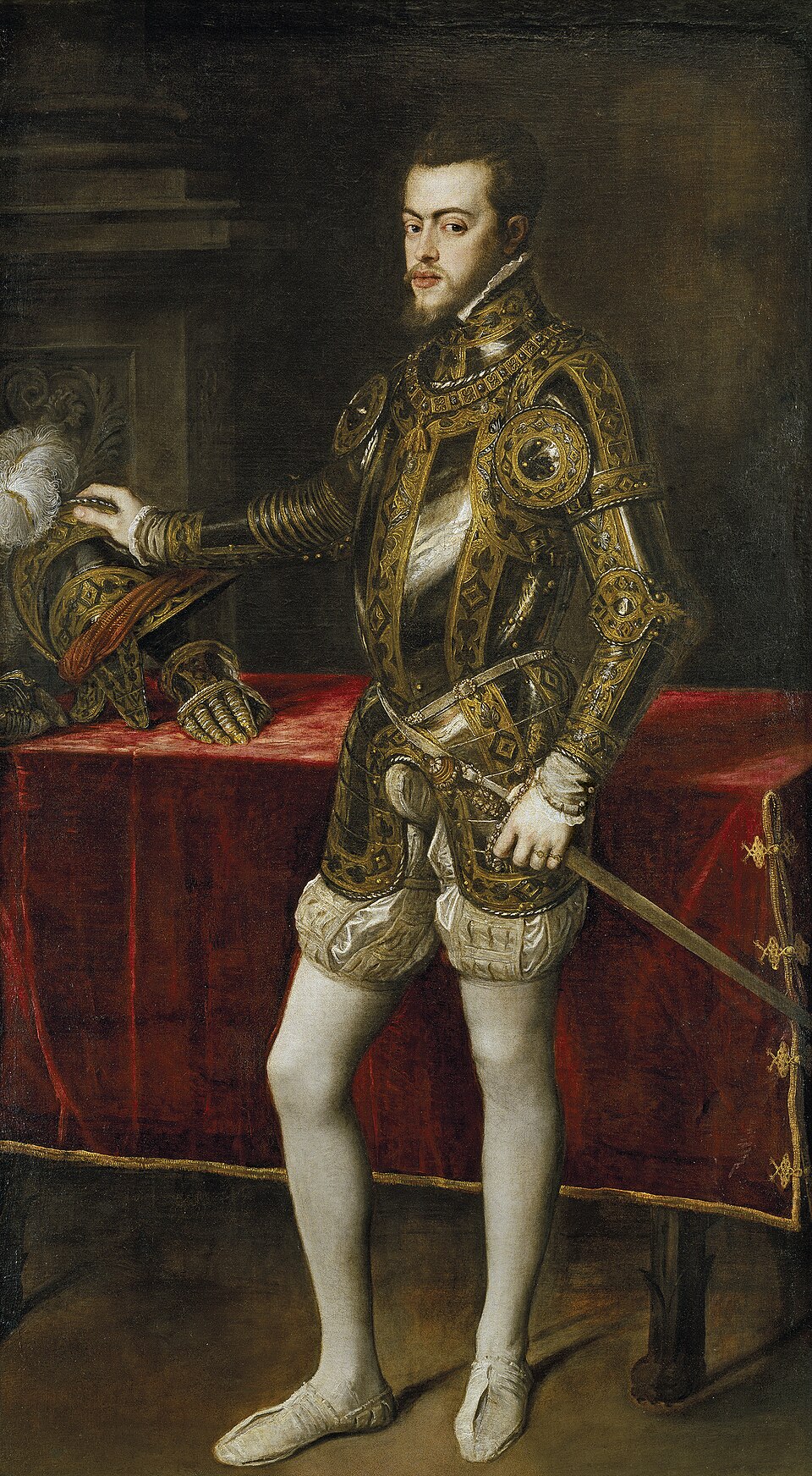
A young prince stands in gleaming armour beside a column and a velvet-covered table, every inch the future king. Yet Philip himself was not fully happy with how Titian had painted his face.
The story behind the painting
Titian painted this portrait of Philip, then prince and future King Philip II of Spain, in 1551, when both of them were in Augsburg. Only a few years earlier, in 1548, Titian had painted Philip's father in the Equestrian Portrait of Charles V, and here he again succeeded in stylising his royal sitter. In May 1551 Philip sent a replica, or second copy, of the portrait to his aunt Mary of Hungary; that version no longer survives. The original, a full-length canvas about 193 by 111 cm, is now in the Museo del Prado in Madrid.
What to look for
The picture is full of symbols of royal majesty: the column, the table covered with a velvet mantle, and above all the superb armour the prince wears. Spend time on that armour. The original in the Prado is considered to be of the highest quality, with a remarkable degree of resolution in the metal surfaces. Wikidata also lists a combat helmet, a sword and the Golden Fleece among the things shown. The figure stands calm and upright, and the whole image is built to project the dignity of a future ruler rather than to tell a story.
Meaning and intent
According to a letter from Philip himself, he was not entirely satisfied. He liked the image of majesty the portrait projected, but he was not fully convinced by the depiction of his face, which he felt had been painted too quickly. The source suggests this shows that Philip was not yet familiar with the Venetian manner of painting practised by Titian. Because the Prado original is so finely resolved, his objections are now thought more likely to concern the replica made for his aunt, surely painted with a more hurried brushstroke. The portrait is therefore both a statement of power and a record of a patron learning a new style.
Legacy
From 1600 the portrait appears in the inventories of the Royal Alcázar of Madrid. There, in 1628, it was copied by Peter Paul Rubens, who is known to have copied several paintings by Titian in the Spanish royal collections. The painting moved to the Prado in 1827. An old copy of the portrait is kept in the palace of La Quinta in Cudillero, Asturias, and some sources attribute that copy to Rubens. Through these inventories and copies, the armoured prince Titian painted in Augsburg remained part of the Spanish royal collection for more than two centuries before reaching the museum.
¿Sabías que…?
- Painted in Augsburg in 1551.
- A replica for Mary of Hungary is lost.
- Copied by Rubens in 1628 at the Alcázar of Madrid.
- In the Prado since 1827.
Sobre el artista
Tiziano (1488-1576)
retrato · Museo del Prado · escuela veneciana · espada · armadura · Vellocino de oro
Más obras de Tiziano
.jpg) Venus de Urbino - Titian (1538)
Venus de Urbino - Titian (1538)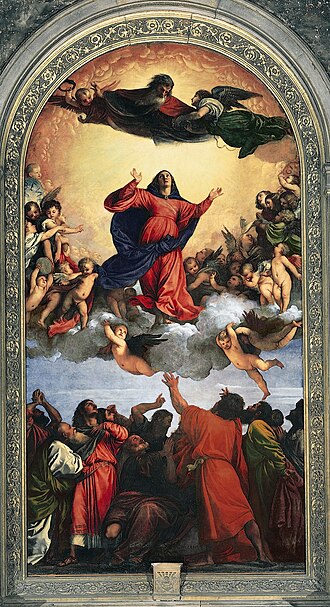 La Asunción de la Virgen - Titian (1510s)
FXD.jpg) Amor sacro y amor profano - Titian (1510s)
Amor sacro y amor profano - Titian (1510s)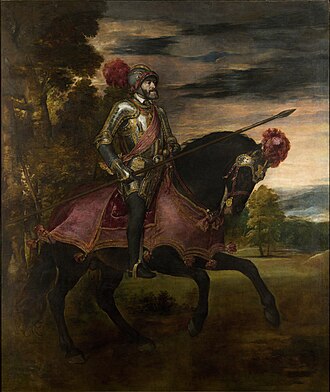 Carlos V a caballo en Mühlberg - Titian (1548)
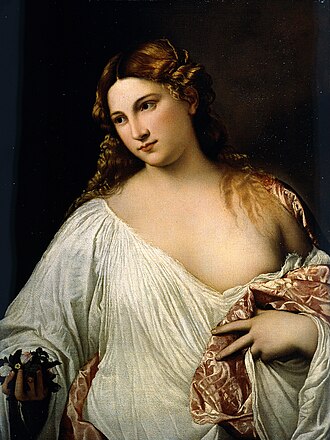 Flora - Titian (1517)
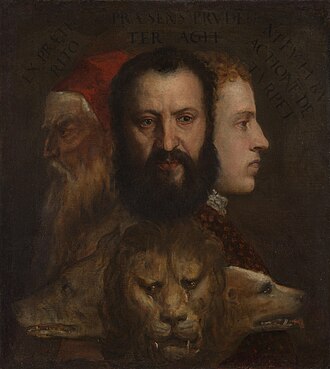 Alegoría de la Prudencia - Titian (1550)
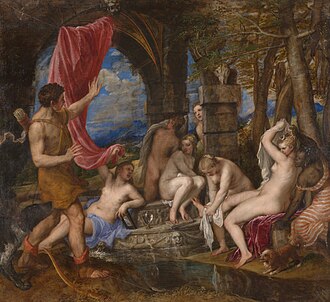 Diana y Acteón - Titian (1550s)
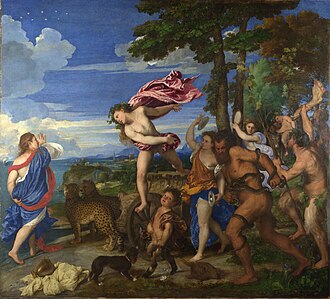 Baco y Ariadna - Titian (1520s)
Obras de artistas relacionados
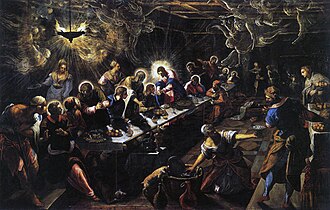 La Última Cena - Jacopo Tintoretto (1563)
 San Marcos liberando al esclavo - Jacopo Tintoretto (1540s)