Magdalena penitente
Caravaggio · 1593
.jpg)
A young woman sits on a low chair, head bowed, hands in her lap, her jewels left on the floor beside her. A single tear runs down her cheek. Caravaggio's audience said she looked like the girl next door, and that was exactly the shock.
The story behind the painting
Caravaggio painted the Penitent Magdalene around 1594 to 1595, according to Wikipedia; Wikidata gives 1593. At the time he was living with Giuseppe Cesari and Fantin Petrignani, and the picture was almost certainly commissioned by Pietro Vittrice, guardaroba of Pope Gregory XIII. It may be the first religious painting Caravaggio ever completed. Historians have speculated that the model was Anna Bianchini, one of several courtesans he used as models, who may also appear in his Rest on the Flight into Egypt and as Martha in the Conversion of the Magdalene.
What to look for
A young brunette squats or kneels on a low chair, her hands cradled in her lap. Beside her lie a collection of jewellery and a stoppered bottle almost three-quarters full. Her gaze is turned away, her head bent down in a position compared with traditional images of the crucified Christ. Look closely and you find a single tear running down one cheek to the side of her nose. Instead of the naked hermit of earlier paintings, such as Titian's of 1533, she wears the ordinary clothing of Caravaggio's own day.
Meaning and intent
The painting broke with tradition by showing the Magdalene in modern dress and, in John Varriano's words, avoiding the pathos and languid sensuality usual for the subject. Contemporaries complained, as Hilary Spurling put it, that she looked like a girl drying her hair alone at home. Bellori later felt Caravaggio had dressed up a genre scene with a jar of oil and discarded jewels. Yet the Jesuit poet Giuseppe Silos praised it in 1673 for showing the silent remorse hidden in her conscience. Peter Robb even proposed that her swollen face and hands hint at the beating of courtesans by Roman police.
Legacy
The painting hangs in the Doria Pamphilj Gallery in Rome. It has invited both criticism and praise, and speculation about Caravaggio's intentions has continued into the 21st century. Its quiet realism may have inspired Georges de La Tour to paint several versions of the subject. De La Tour kept the seated woman with averted face and clasped hands, but lit her strongly from behind with a candle before a mirror and placed a skull in her lap. Caravaggio's Magdalene, ordinary and alone, opened the way for a more human vision of repentance.
¿Sabías que…?
- Painted around 1594 to 1595, possibly his first religious work.
- Probably commissioned by Pietro Vittrice.
- The model may have been Anna Bianchini.
- In the Doria Pamphilj Gallery, Rome.
Sobre el artista
Caravaggio (1571-1610)
arte religioso · mujer · sentado · melena · barroco · vestido · María Magdalena · Galería Doria-Pamphili · perla
Más obras de Caravaggio
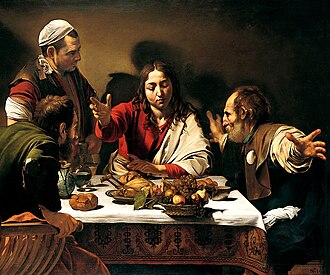 La cena de Emaús - Caravaggio (1601)
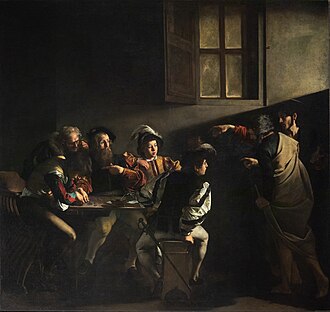 La vocación de San Mateo - Caravaggio (1609)
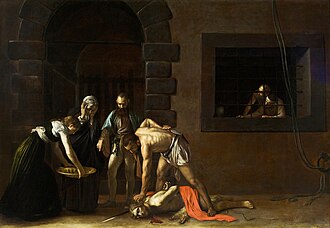 La decapitación de San Juan Bautista - Caravaggio (1608)
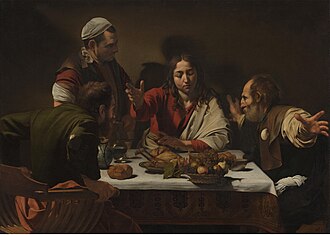 Los discípulos de Emaús - Caravaggio (1601)
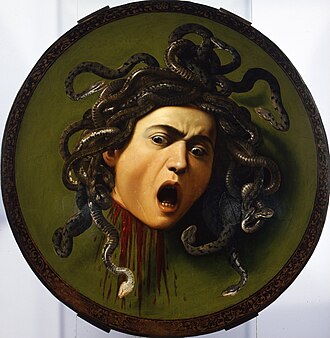 Cabeza de Medusa - Caravaggio (1597)
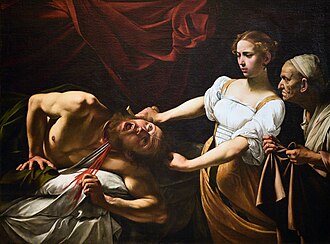 Judit decapitando a Holofernes - Caravaggio (1598)
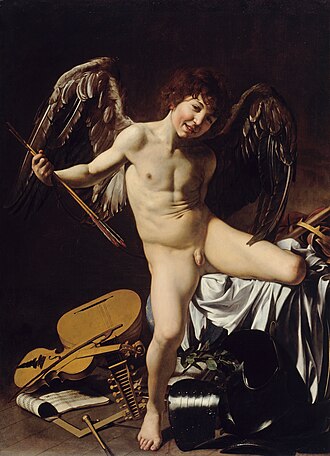 El amor victorioso - Caravaggio (1600s)
%2C%201595%20circa%2C%20534.jpg) Baco enfermo - Caravaggio (1595)
Baco enfermo - Caravaggio (1595)
Obras de artistas relacionados
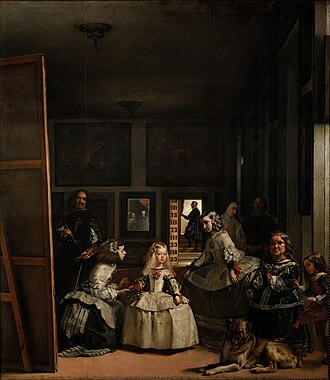 Las meninas - Diego Velázquez (1656)
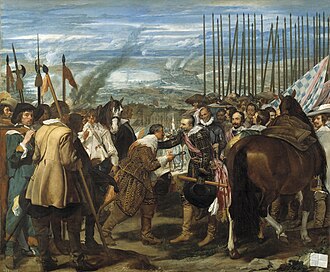 La rendición de Breda - Diego Velázquez (1635)
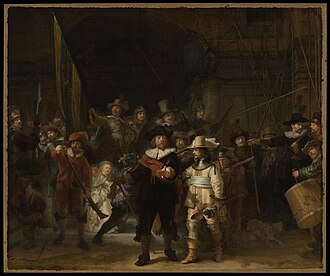 La ronda de noche - Rembrandt van Rijn (1642)
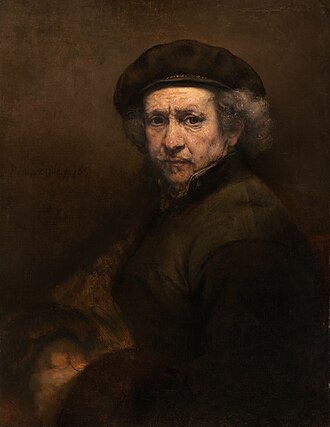 Autorretrato - Rembrandt van Rijn (1659)
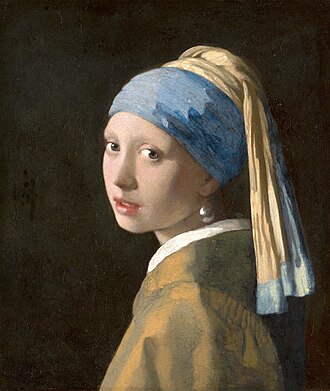 La joven de la perla - Johannes Vermeer (1665)
 La lechera - Johannes Vermeer (c. 1658)