Orfeo y Euridice
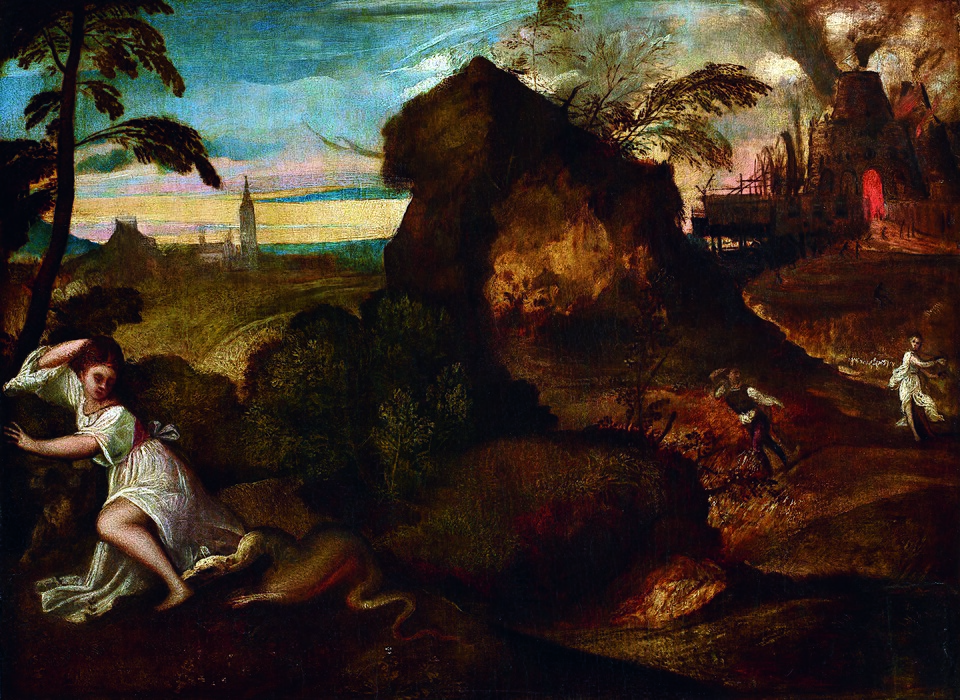
On the left, Eurydice falls, bitten by a snake. On the right, Orpheus leads her out of the flames of the underworld, turns back to look at her, and loses her forever. Both moments share one small panel, perhaps by the young Titian.
The story behind the painting
Orpheus and Eurydice is a small oil painting on panel, about 39 by 53 cm, dated to around 1508 and kept at the Accademia Carrara in Bergamo. It came from the Lochis collection. Who painted it has long been uncertain. For a long time it was attributed to Giorgione or one of his followers. In 1927 Roberto Longhi gave it to the young Titian, and other authors followed him. In 1955, however, Coletti attributed it to Palma il Vecchio. Wikidata gives no date for the painting, so the date of about 1508 comes from the Wikipedia article.
What to look for
The myth of Orpheus is told in two parts within a pastoral landscape. In the foreground on the left, Eurydice dies, bitten by a snake. On the right, Orpheus is leaving the underworld with his wife behind him, but he has turned around to look at her, and so loses her forever. Notice how the landscape changes with the story: on the left it is calm and peaceful, while on the right it is seized by the fury of the flames of hell. The greens of the vegetation have oxidised over time and turned brown.
Meaning and intent
The feeling for nature, the true protagonist of the scene, comes from Giorgione: the landscape adapts itself to the feelings of the figures. Grief on one side and catastrophe on the other are carried as much by the land and the fire as by the small bodies within it. Showing two moments of one story side by side lets the eye travel from the first loss to the second, from Eurydice's death to the turning back that undoes Orpheus's rescue.
Legacy
The case for Titian rests on the arrangement of the figures, which resembles his other early works, especially the frescoes of the Fondaco dei Tedeschi in Venice and those of the Scuola del Santo in Padua. The debate between Giorgione, Titian and Palma il Vecchio shows how closely these Venetian painters worked in those years. The panel remains in Bergamo at the Accademia Carrara, together with other works from the Lochis collection, such as the Lochis Madonna, also linked to Titian.
¿Sabías que…?
- Oil on panel, about 39 x 53 cm, around 1508.
- Attributed to Titian by Roberto Longhi in 1927; others proposed Giorgione or Palma il Vecchio.
- Shows Eurydice's death and Orpheus's backward glance in one landscape.
- In the Accademia Carrara, Bergamo, from the Lochis collection.
Sobre el artista
Tiziano (1488-1576)
Alto Renacimiento · pintura mitológica · escuela veneciana · Accademia Carrara
Más obras de Tiziano
 Venus de Urbino - Titian (1538)
 La Asunción de la Virgen - Titian (1510s)
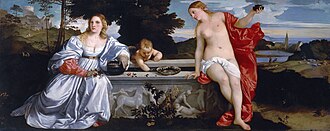 Amor sacro y amor profano - Titian (1510s)
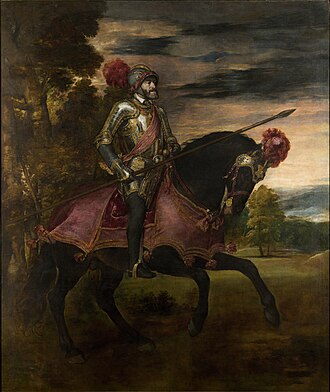 Carlos V a caballo en Mühlberg - Titian (1548)
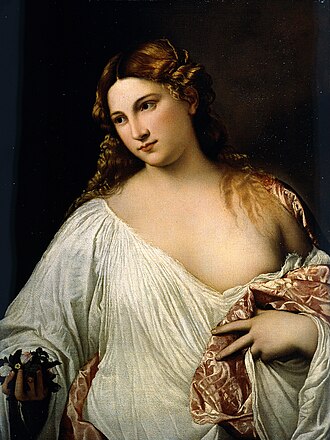 Flora - Titian (1517)
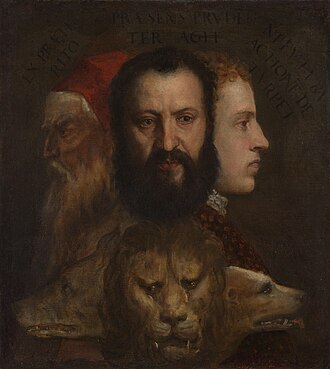 Alegoría de la Prudencia - Titian (1550)
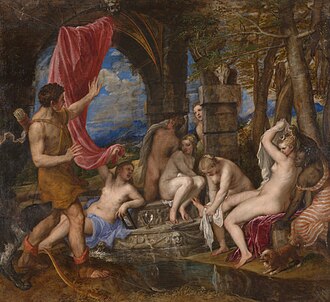 Diana y Acteón - Titian (1550s)
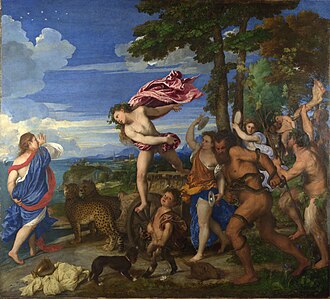 Baco y Ariadna - Titian (1520s)
Obras de artistas relacionados
 La Última Cena - Jacopo Tintoretto (1563)
 San Marcos liberando al esclavo - Jacopo Tintoretto (1540s)
 Las bodas de Caná - Paolo Veronese (1560s)
 Cena en casa de Leví - Paolo Veronese (1573)