Madonna con el niño y Santa Ana
Caravaggio · 1605
.jpg)
An altarpiece made for Saint Peter's in Rome stayed there only a few days. Caravaggio's mother and child crush a serpent together, and the Church was not ready for what it saw.
The story behind the painting
Caravaggio received the commission from the Archconfraternity of the Papal Grooms, the Palafrenieri, on 1 December 1605, and finished it in under four months. A document found by scholar Luigi Spezzaferro records that he was paid 25 scudi. The altarpiece was placed in the new basilica of Saint Peter on 8 April and removed again on 16 April, moving to the confraternity's own church of Sant'Anna dei Palafrenieri. Why it was withdrawn is still debated. Some point to the nudity of the Christ Child and the Virgin's low neckline, others to the model, Maddalena Antonietti, called Lena, who had posed for Caravaggio before. Maurizio Marini notes that the claim that Lena was a prostitute has no evidence behind it. The painting was later sold to Cardinal Scipione Borghese.
What to look for
Stand before the lower edge of the canvas first. Mary, barefoot, presses down on a coiling snake, and her son, held in her arms, sets his own small foot on top of hers. Together they crush it. Both look down at the serpent, which twists upward as if rejecting all three figures. Everything else falls into shadow, a strong contrast of dark and light known as tenebrism. The brightest figure is the child, then Mary, who stands closest to him. On the right, Saint Anne, the grandmother, watches in a dark navy-blue dress. She is painted more loosely and thinly, a wrinkled old woman. Mary and Anne wear thin gold ring halos, yet the child has none, an unusual choice.
Meaning and intent
The theme comes from Genesis 3:15, the promise that evil will be crushed underfoot. In the painting the serpent stands for evil or original sin, and serpents could also symbolize heresy. Art historian John Spike reads the strong light on the child as a reference to the light of the world. The hierarchy is drawn in light: Jesus brightest, Mary next because she is closest to him, Anne least. Spezzaferro believed the painting was rejected because Anne, traditionally honored as a symbol of grace, appears as an ordinary older woman. That is the paradox of the work. The saint the confraternity wanted to honor becomes a quiet witness at the edge.
Legacy
This was not the only time a Caravaggio left a church; his Death of the Virgin was removed from Santa Maria della Scala. John Spike cannot pin the removal of this altarpiece on one single reason, and Marini linked it partly to the painter's violent reputation. Yet the rejected picture found a lasting home. Bought by Cardinal Scipione Borghese, it still hangs in his palazzo, now the Galleria Borghese in Rome. Wikidata dates it to 1605, while Wikipedia gives 1605-1606, matching a commission in December 1605 and installation the following April. Today visitors meet it not as an altarpiece above worshippers, but at eye level, where every detail of that bare foot on the serpent can be seen.
¿Sabías que…?
- Commissioned on 1 December 1605 and completed in under four months (Wikipedia)
- Installed in Saint Peter's on 8 April and removed on 16 April (Wikipedia)
- Size 292 x 211 cm, Galleria Borghese (Wikidata)
Sobre el artista
Caravaggio (1571-1610)
arte religioso · Virgen María · Niño Jesús · Pintura barroca de Italia · melena · Galería Borghese · castaño
Más obras de Caravaggio
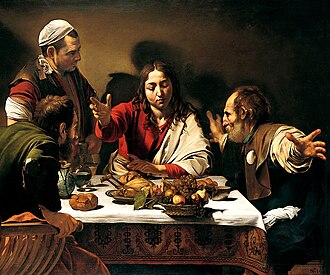 La cena de Emaús - Caravaggio (1601)
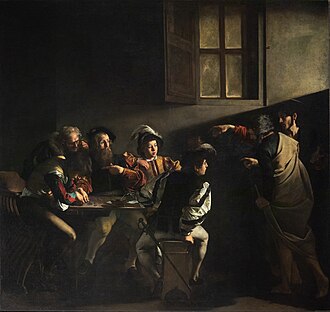 La vocación de San Mateo - Caravaggio (1609)
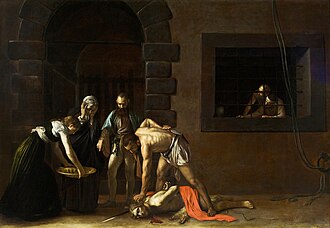 La decapitación de San Juan Bautista - Caravaggio (1608)
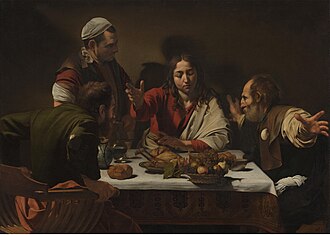 Los discípulos de Emaús - Caravaggio (1601)
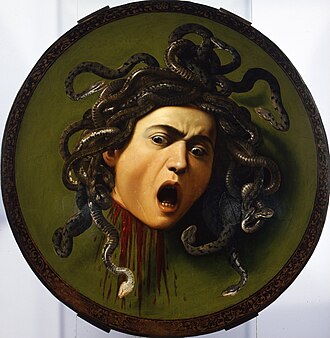 Cabeza de Medusa - Caravaggio (1597)
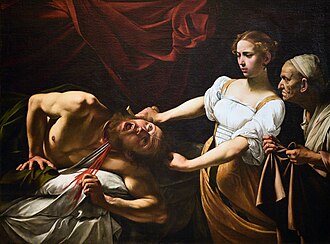 Judit decapitando a Holofernes - Caravaggio (1598)
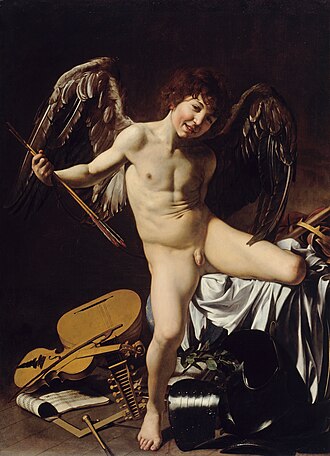 El amor victorioso - Caravaggio (1600s)
%2C%201595%20circa%2C%20534.jpg) Baco enfermo - Caravaggio (1595)
Baco enfermo - Caravaggio (1595)
Obras de artistas relacionados
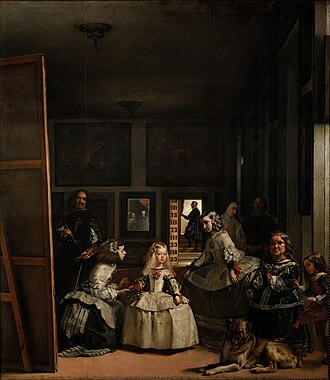 Las meninas - Diego Velázquez (1656)
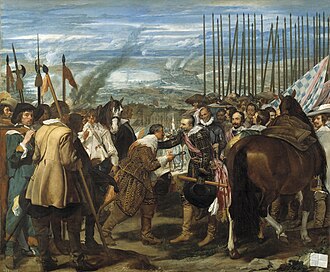 La rendición de Breda - Diego Velázquez (1635)
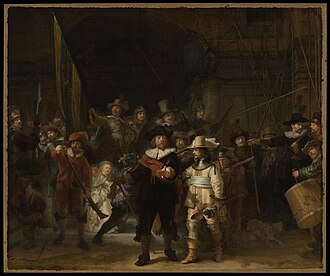 La ronda de noche - Rembrandt van Rijn (1642)
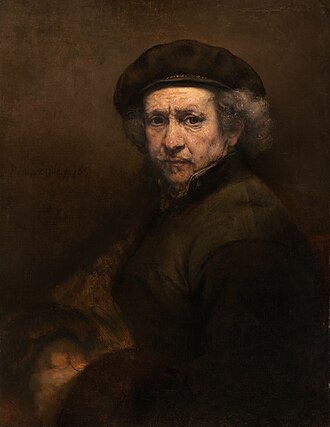 Autorretrato - Rembrandt van Rijn (1659)
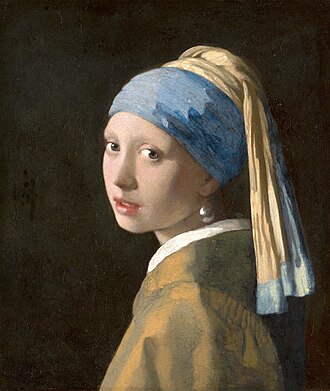 La joven de la perla - Johannes Vermeer (1665)
 La lechera - Johannes Vermeer (c. 1658)