Landscape with Couple Walking and Crescent Moon
Vincent van Gogh · 1890
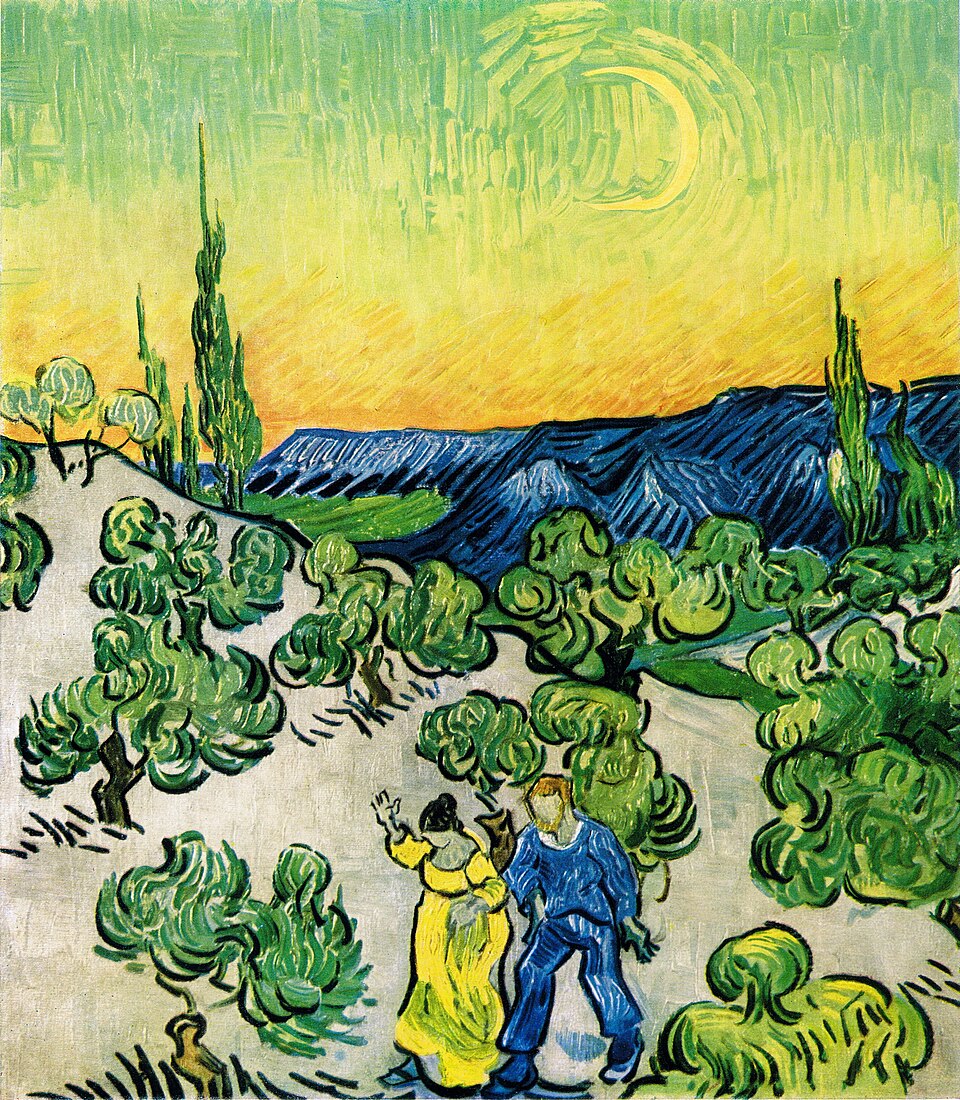
A man and a woman walk among olive trees and cypresses under a thin crescent moon. Van Gogh painted this quiet evening in May 1890, just as he was about to leave Saint-Rémy, two months before his death.
The story behind the painting
Since May 1889 Van Gogh had been living at the asylum of Saint-Paul-de-Mausole in Saint-Rémy-de-Provence, treated for crises of madness, epilepsy and depression. The beauty of the Provençal landscape and its light fascinated him and inspired 143 oil paintings and more than 100 drawings there. He painted this canvas in May 1890, around his departure on 19 May for Auvers-sur-Oise, where, on his brother Theo's advice, he continued his care with Doctor Gachet.
What to look for
The canvas is small, about 52 by 47 cm. A couple strolls through an olive grove with cypresses, the Alpilles hills behind them and a crescent moon in a luminous twilight sky. The man has red hair and a red beard but no face; the French Wikipedia article suggests he is probably a self-portrait, walking with an anonymous woman. Look at the vivid contrasts of colour typical of Van Gogh: green against yellow, yellow-orange, blue-violet, laid down in visible brushstrokes.
Meaning and intent
The painting is one of the last in a series of 18 canvases on olive groves, a favourite subject of his Saint-Rémy period. Here the theme becomes something gentler: the source describes a harmonious, happy, dreamlike landscape, an imagined idyll rather than a scene from life. It is moving to know that this calm evening walk was painted by a man who had spent a year in an asylum and was about to leave it.
Legacy
In Auvers Van Gogh painted more than 70 canvases in the last 70 days of his life, before his death in July 1890 at the age of 37. This twilight walk, also called Evening Promenade, now belongs to the São Paulo Museum of Art in Brazil. The source gives the painting's date as May 1890, which matches the year 1890 recorded in Wikidata. The year in Saint-Rémy that produced it was one of the most fertile of his life.
¿Sabías que…?
- Painted in May 1890 at Saint-Rémy-de-Provence.
- One of the last of 18 canvases on olive groves.
- The faceless red-haired man is probably a self-portrait.
- Held by the São Paulo Museum of Art.
Sobre el artista
Vincent van Gogh (1853-1890)
pintura del paisaje · Museo de Arte de São Paulo
Más obras de Vincent van Gogh
 La noche estrellada - Vincent van Gogh (1889)
 Terraza de café por la noche - Vincent van Gogh (1888)
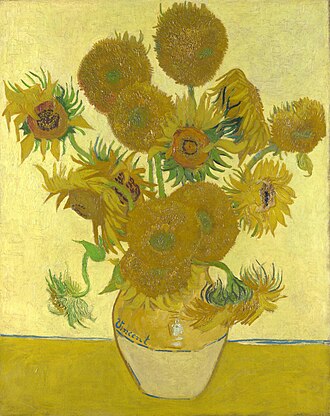 Los girasoles - Vincent van Gogh (1888)
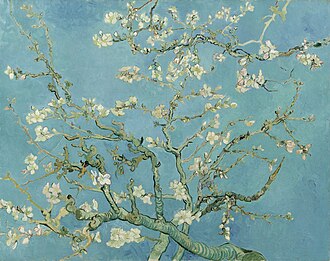 Almendro en flor - Vincent van Gogh (1890)
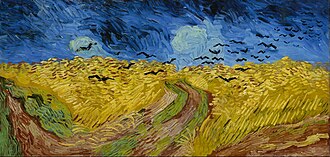 Campo de trigo con cuervos - Vincent van Gogh (1890)
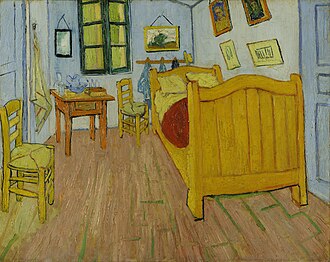 El dormitorio en Arlés - Vincent van Gogh (1888)
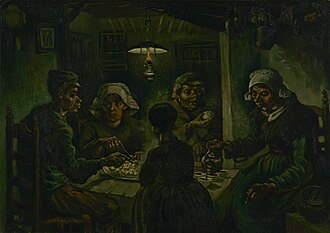 Los comedores de patatas - Vincent van Gogh (1885)
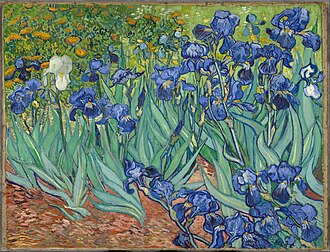 Lirios - Vincent van Gogh (1889)
Obras de artistas relacionados
 Las grandes bañistas - Paul Cézanne (1900s)
 The Boy in the Red Vest - Paul Cézanne
 ¿De dónde venimos? ¿Qué somos? ¿Adónde vamos? - Paul Gauguin (1897-1898)
 El Cristo amarillo - Paul Gauguin (1889)
 La elevación de la cruz - Peter Paul Rubens (1609)
 Rapto de las hijas de Leucipo - Peter Paul Rubens (1618)
 Paseo a orillas del mar - Joaquín Sorolla (1909)
 Triste herencia - Joaquín Sorolla (1898)
 Baile en el Moulin de la Galette - Pierre-Auguste Renoir (1876)
 El almuerzo de los remeros - Pierre-Auguste Renoir (1881)
 En el Moulin Rouge - Henri de Toulouse-Lautrec (1892)
 La toilette - Henri de Toulouse-Lautrec (1896)