Paisaje con carro y tren
Vincent van Gogh · 1890
.jpg)
Fields stretch to blue hills, a little carriage rolls along a white road, and a train streaks past trailing smoke, all seen through a veil of rain Van Gogh painted in a single day.
The story behind the painting
In June 1890 Van Gogh was living in Auvers-sur-Oise, a small town just north of Paris, having left the asylum at Saint-Rémy the month before. He painted this landscape in the week after his portraits of Dr Gachet, during the final months of his life. In a letter to his sister Wil he explained his mood and method: lately he had been working a lot and quickly, trying to express what he called the desperately swift passage of things in modern life. The day before writing, he said, he had painted a large landscape in the rain, viewed from a height. The view from above was a favourite of his since his early days sketching the dunes at Scheveningen with a perspective frame.
What to look for
Van Gogh's own letter is the best guided tour. Fields run as far as the eye can see in different greens: a dark green potato field with lush violet earth between the plants, a field of flowering peas whitening at the side, pink-flowered lucerne with a tiny reaper, long ripe grass of a fawn hue, then wheat, poplars and a last line of blue hills. At the foot of the hills a train passes, leaving an immense trail of white smoke across the greenery. A white road crosses the canvas, with a little carriage on it and white houses with stark red roofs alongside. Over everything, he wrote, fine rain streaks the scene with blue or grey lines.
Meaning and intent
The painting places old and new side by side: the carriage on the road and the train racing along the horizon, farm fields and the smoke of modern travel. Van Gogh himself framed it in terms of speed, saying he was trying to express the desperately swift passage of things in modern life. The high viewpoint turns the countryside into a broad patchwork, as if seen all at once, while the rain lines give the surface a sense of movement and weather. It is tempting to sense urgency in a man painting so fast in his last summer, but his letter speaks above all of attentive looking, naming each colour and crop with care.
Legacy
The painting is in the Pushkin Museum of Fine Arts in Moscow. In French and German it is known by titles describing Auvers after the rain or in the rain, a reminder of the weather he recorded so carefully. It belongs to the remarkable outpouring of work from Van Gogh's last weeks, and his detailed letter to Wil makes it one of the best documented pictures of that period. For visitors today, it offers a rare chance to compare a painting directly with the painter's own description, field by field, and to see how he turned an ordinary rainy view into a panorama of modern life.
¿Sabías que…?
- Van Gogh painted it in June 1890, in the week after his portraits of Dr Gachet.
- He described painting it in the rain, viewed from a height, in a letter to his sister Wil.
- The high viewpoint recalls his early sketching in the dunes of Scheveningen with a perspective frame.
- It is in the Pushkin Museum of Fine Arts, Moscow.
Sobre el artista
Vincent van Gogh (1853-1890)
pintura del paisaje · árbol · paisaje · casa · Museo Pushkin · nube · carretera
Más obras de Vincent van Gogh
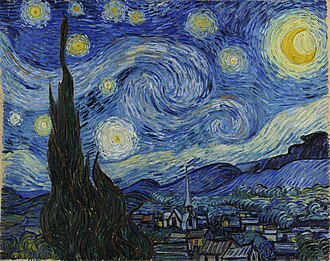 La noche estrellada - Vincent van Gogh (1889)
.jpg) Terraza de café por la noche - Vincent van Gogh (1888)
Terraza de café por la noche - Vincent van Gogh (1888)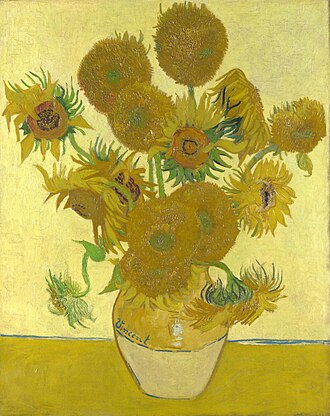 Los girasoles - Vincent van Gogh (1888)
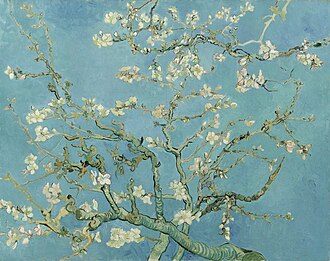 Almendro en flor - Vincent van Gogh (1890)
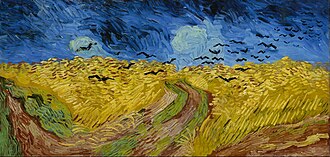 Campo de trigo con cuervos - Vincent van Gogh (1890)
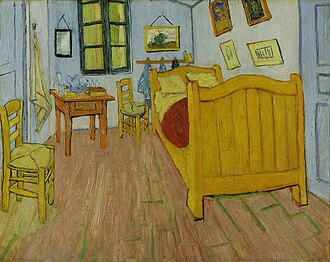 El dormitorio en Arlés - Vincent van Gogh (1888)
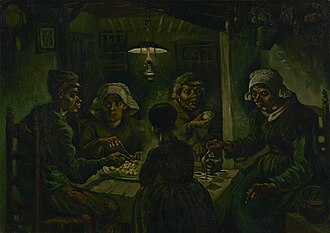 Los comedores de patatas - Vincent van Gogh (1885)
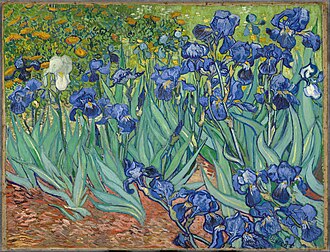 Lirios - Vincent van Gogh (1889)
Obras de artistas relacionados
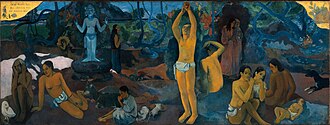 ¿De dónde venimos? ¿Qué somos? ¿Adónde vamos? - Paul Gauguin (1897-1898)
%201889.jpg) El Cristo amarillo - Paul Gauguin (1889)
El Cristo amarillo - Paul Gauguin (1889) Almuerzo sobre la hierba - Édouard Manet (1863)
 Olympia - Édouard Manet (1863)