La Mousmé
Vincent van Gogh · 1888
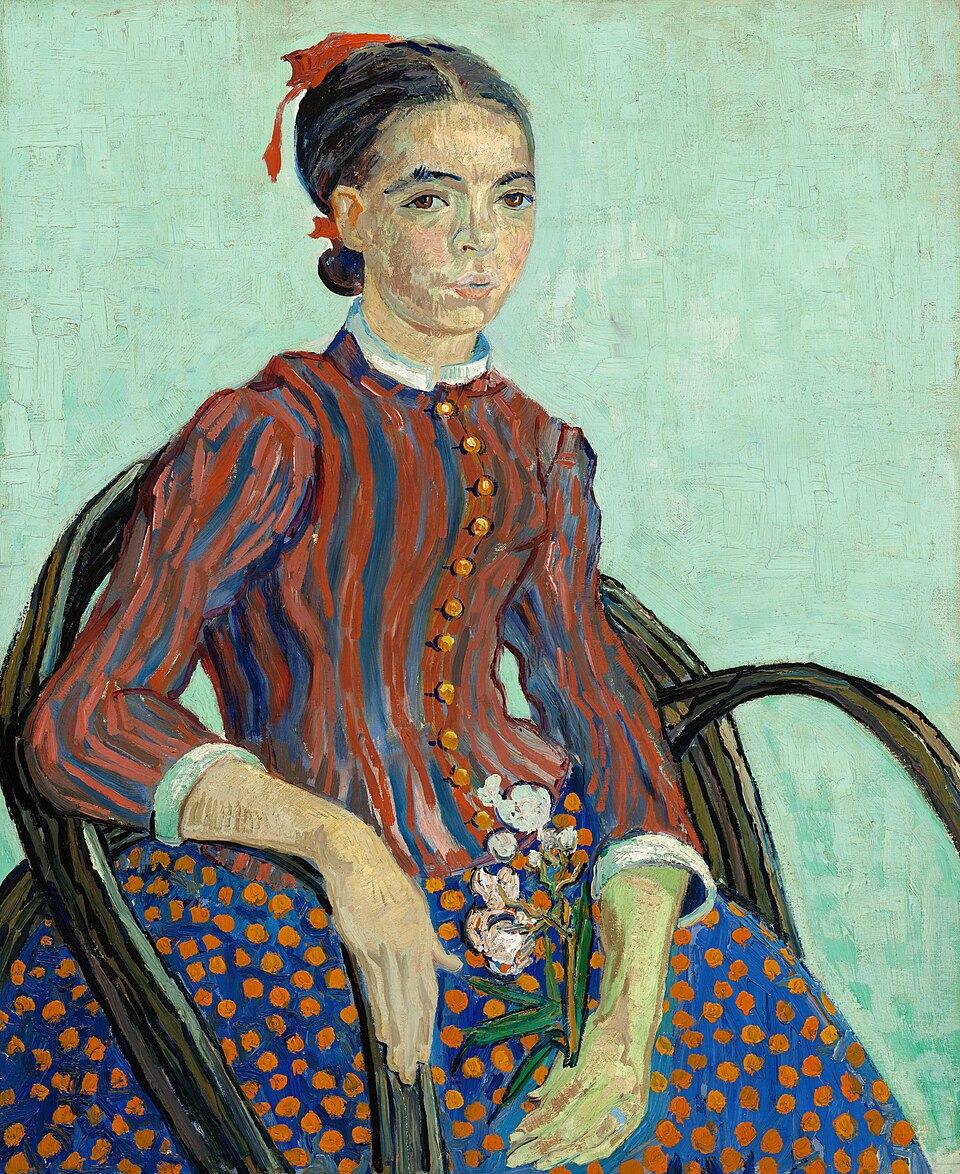
A young girl from Arles sits in a cane chair, a sprig of oleander in her hand, dressed in blazing blue and orange. Van Gogh spent a whole week on her, saving his strength to paint her well.
The story behind the painting
Vincent van Gogh painted La Mousmé in 1888 in Arles, the southern French town he called 'the Japan of the south'. He was 35, at the height of his career, in what was likely one of the happier periods of his life, producing more than 200 paintings and about 100 drawings in less than 444 days, including the sunflowers. Inspired by Pierre Loti's novel Madame Chrysanthème and by Japanese art, he set out to paint a mousmé. As he explained to his brother Theo, a mousmé is a Japanese girl, 'Provençal in this case', twelve to fourteen years old. He told Theo the portrait took him a whole week, and that he had to reserve his mental energy to do the mousmé well.
What to look for
The girl sits in a cane chair, shown at half length, holding a flowering branch of oleander. Begin with the colours. Complementary blues and oranges in her outfit flare against a pale, spring-like green background, a bold departure from the softer palette of the Impressionists he had studied in Paris. Her clothes are modern, their bright skirt and jacket typical of the Arles region. Contrasting patterns and colours give the canvas energy and intensity. Now move to her face, where van Gogh concentrated his greatest attention, giving her the colouring of a girl from Arles with a Japanese influence. Finally, notice how her posture echoes the oleander she holds, as though girl and branch share the same gentle curve.
Meaning and intent
Van Gogh intended his colour to be symbolic, not merely descriptive. The flowering oleander, like the girl, is in the blossoming stage of life, and her pose mirrors it, making the plant a quiet emblem of youth. The picture also carries his dream of Arles as a Japan of the south: a Provençal girl imagined through Japanese prints and Loti's novel. In a letter to Theo he wrote that painting promised to become 'more like music and less like sculpture', and he explained that being like music meant being comforting. Of portrait studies such as this one, he said they were the only thing in painting that moved him to the depths of his soul and made him feel the infinite.
Legacy
After van Gogh's death the painting stayed with Johanna van Gogh-Bonger, his sister-in-law, in Amsterdam until May 1909. That month it was sold to J.H. de Bois, an art dealer who directed The Hague branch of the gallery of C.M. van Gogh, Vincent's uncle. It later entered the National Gallery of Art in Washington, D.C., where it belongs to the collection today; five paintings sold by Johanna eventually came to that museum. La Mousmé remains a radiant example of the Arles period, showing how van Gogh fused his love of Japanese art with the people and colours of Provence, and how much he valued the human face as a subject.
¿Sabías que…?
- Van Gogh said the portrait took him a whole week.
- The title comes from Pierre Loti's novel Madame Chrysanthème.
- The girl holds a flowering branch of oleander.
- It hangs in the National Gallery of Art in Washington, D.C.
Sobre el artista
Vincent van Gogh (1853-1890)
retrato · vestido · Galería Nacional de Arte
Más obras de Vincent van Gogh
 La noche estrellada - Vincent van Gogh (1889)
.jpg) Terraza de café por la noche - Vincent van Gogh (1888)
Terraza de café por la noche - Vincent van Gogh (1888) Los girasoles - Vincent van Gogh (1888)
 Almendro en flor - Vincent van Gogh (1890)
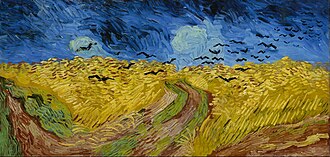 Campo de trigo con cuervos - Vincent van Gogh (1890)
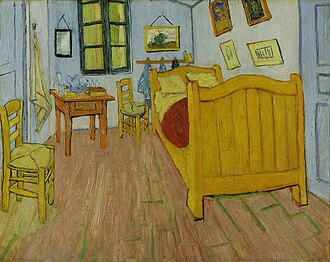 El dormitorio en Arlés - Vincent van Gogh (1888)
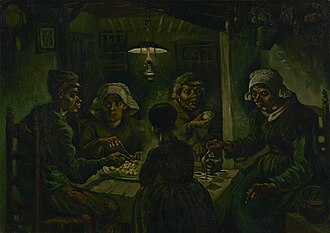 Los comedores de patatas - Vincent van Gogh (1885)
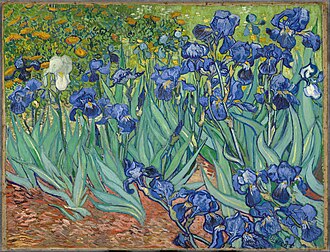 Lirios - Vincent van Gogh (1889)
Obras de artistas relacionados
 ¿De dónde venimos? ¿Qué somos? ¿Adónde vamos? - Paul Gauguin (1897-1898)
%201889.jpg) El Cristo amarillo - Paul Gauguin (1889)
El Cristo amarillo - Paul Gauguin (1889) Almuerzo sobre la hierba - Édouard Manet (1863)
 Olympia - Édouard Manet (1863)