John Ruskin
John Everett Millais · 1850s
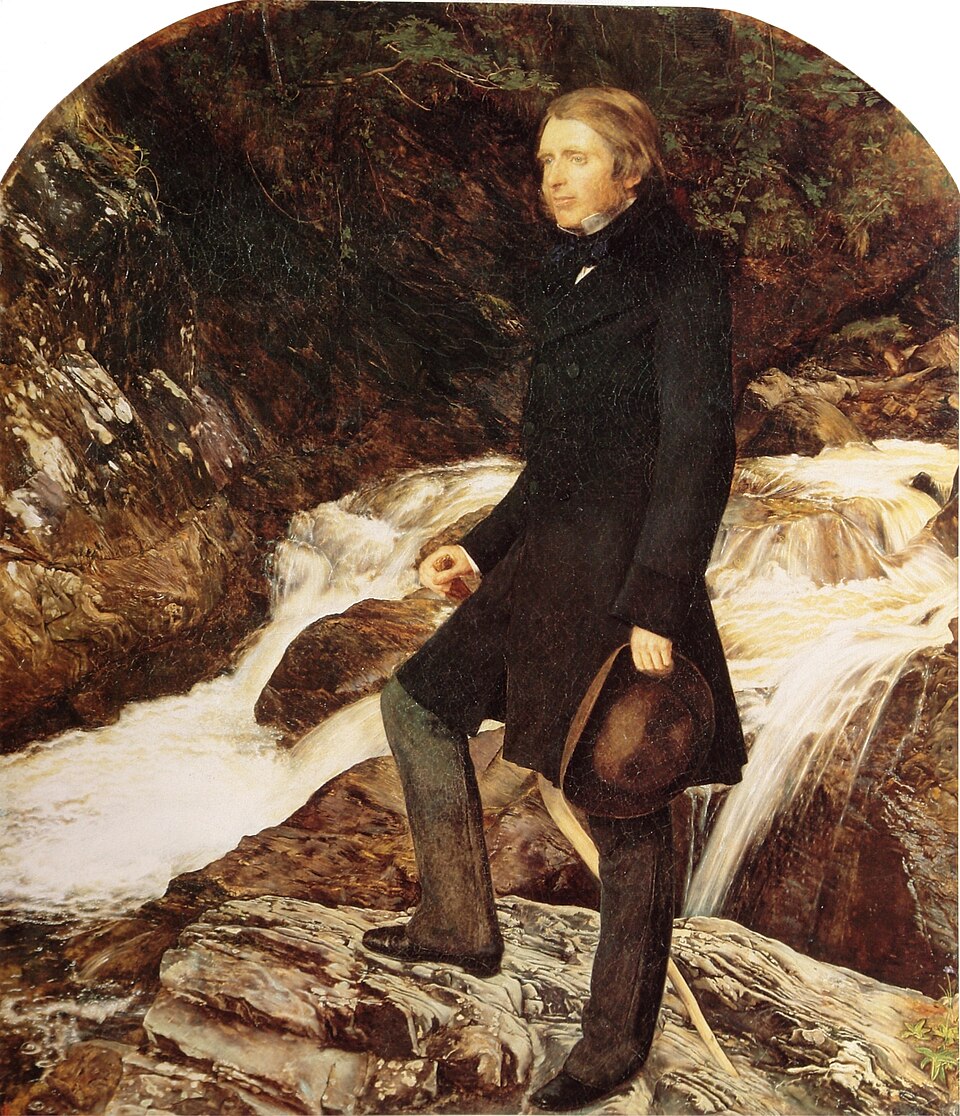
The great critic stands calmly beside a Scottish waterfall, every rock painted stone by stone. While Millais finished it, Ruskin's wife fell in love with the painter, and he called the last sittings the most hateful task of his life.
The story behind the painting
John Ruskin, the leading Victorian art critic, was an early champion of the Pre-Raphaelites, and part of their success came from his efforts. In the summer of 1853 he and Millais stayed together at Glenfinlas in the Trossachs, Scotland, where Ruskin studied the rock formations. Millais first painted The Waterfall, showing Ruskin's wife Effie sitting by a waterfall there, as a trial for the portrait, and finished it before starting Ruskin's portrait on 28 July 1853. The painting dates from 1853 to 1854; Wikidata records only the 1850s.
What to look for
Ruskin stands in front of the falls at Glenfinlas, and the landscape details, the water and the rocks that fascinated him, were painted on the spot. The final stages were done later in Millais's London studio. The canvas measures about 71 by 61 cm, a modest size for so much careful detail. The setting suits the sitter: Ruskin was especially interested in these rock formations and made his own studies of them, so the painter places the critic among the very stones he loved to examine, standing still while the water rushes past him.
Meaning and intent
By the time the portrait was being finished in London, Effie had fallen in love with Millais. She left Ruskin and sued for an annulment of the marriage, and she and Millais married the following year. Millais found it very hard to be in the same room as Ruskin and called the work the most hateful task he had ever had to perform. As soon as it was finished he broke off contact. Ruskin himself moved the portrait for a time so that his father would not see it, fearing he might damage or destroy it. The calm picture hides a painful story.
Legacy
In 1871 Ruskin gave the portrait to his friend Henry Wentworth Acland. It passed to his daughter, the photographer Sarah Angelina Acland, who kept it above her desk in Oxford and took a colour photograph of it. After passing through the family, it was sold at Christie's in 1965. In 2013 it was accepted by the British government in lieu of inheritance tax and allocated to the Ashmolean Museum, Oxford, where it is on display. It was shown in Pre-Raphaelite exhibitions at Tate Britain in 1984 and 2004, beside its first colour photograph at the Ashmolean in 2023 to 2024, and it appears in the 2014 film Effie Gray.
¿Sabías que…?
- Painted in 1853 to 1854, begun at Glenfinlas on 28 July 1853.
- The Waterfall, showing Effie, served as a trial for it.
- Ruskin gave it to Henry Wentworth Acland in 1871.
- Now in the Ashmolean Museum, Oxford.
Sobre el artista
John Everett Millais (1829-1896)
retrato · varón · de pie · Hermandad Prerrafaelita · museo Ashmolean
Más obras de John Everett Millais
 Ofelia - John Everett Millais (1851)
 El Cristo en casa de sus padres - John Everett Millais (1849)
 Isabella - John Everett Millais (1849)
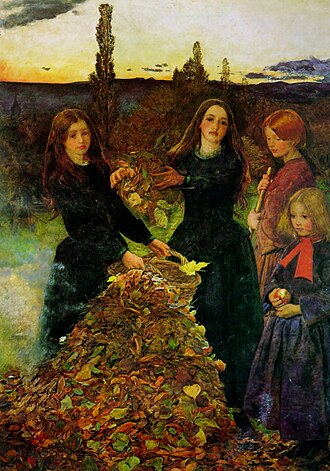 Hojas de otoño - John Everett Millais (1856)
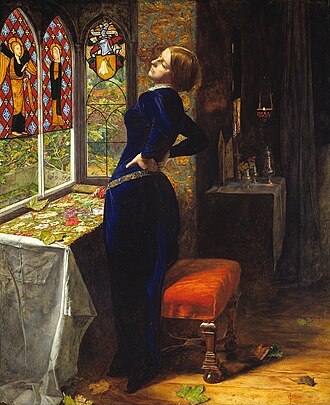 Mariana - John Everett Millais (1851)
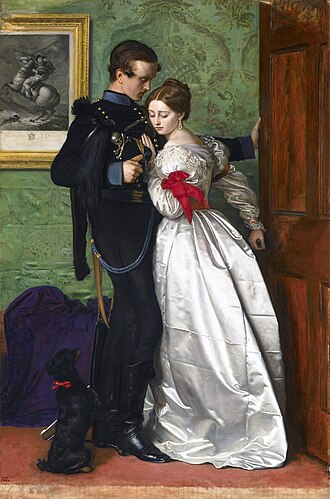 El brunswicker negro - John Everett Millais (1860)
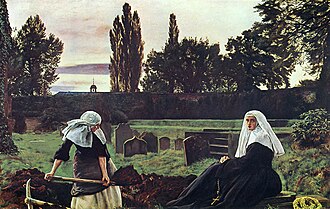 El valle del descanso - John Everett Millais (1850s)
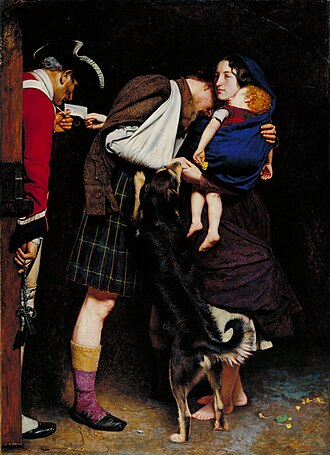 The Order of Release - John Everett Millais (1850s)
Obras de artistas relacionados
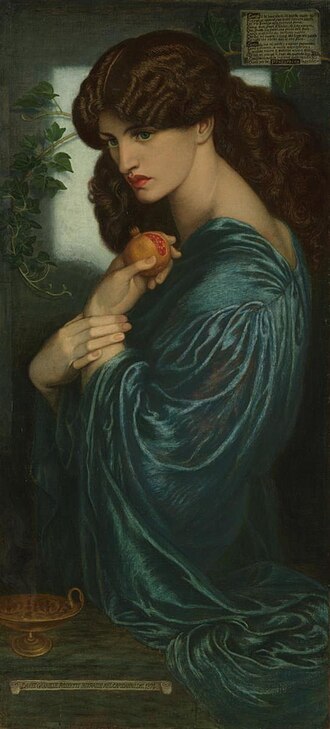 Proserpina - Dante Gabriel Rossetti (1874)
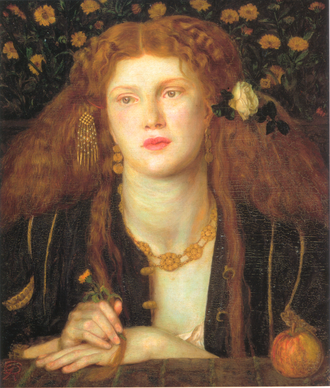 Bocca Baciata - Dante Gabriel Rossetti (1859)
 hilas y las ninfas - John William Waterhouse (1896)
 La señora de Shalott - John William Waterhouse (1888)