Salón privado
Henri de Toulouse-Lautrec · 1899
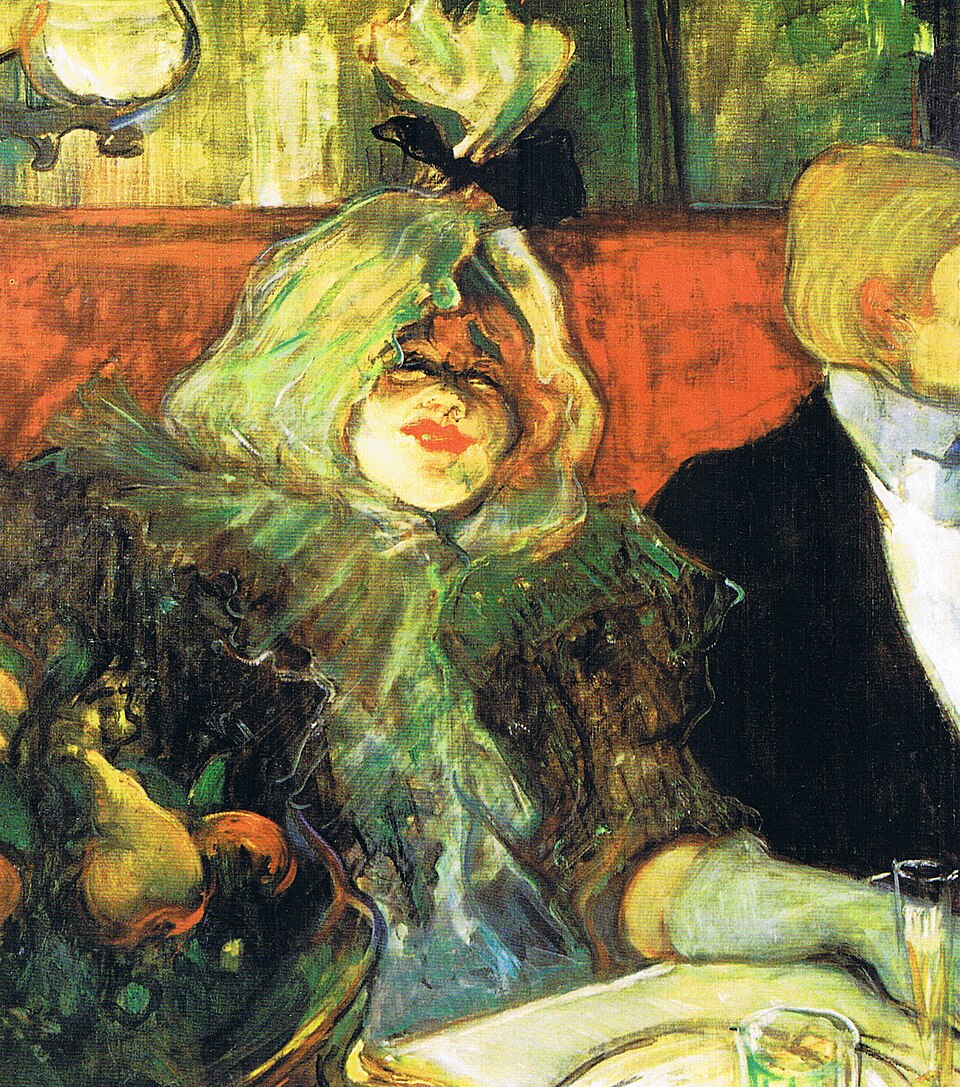
A woman in a gauze bonnet smiles with red lips across a supper table, while the man beside her is pushed half out of the picture. Toulouse-Lautrec painted it in 1899, just after leaving the clinic where he was treated for alcohol abuse.
The story behind the painting
In a Private Dining Room dates from 1899 and is held at the Courtauld Gallery in London. Toulouse-Lautrec made it after he came out of the clinic where he had been hospitalised for alcohol abuse, and the French source counts it among the most important works of his late manner. It has gone by several names. Maurice Joyant, the best known of his biographers, titled it En cabinet particulier, but it is also called Diner en tete-a-tete and Le Rat Mort.
What to look for
We are in a restaurant. In the foreground sits a woman, very probably Lucy Jourdain, one of the most popular elite courtesans of Montmartre. She wears a gauze bonnet and a pompous dress, and her full red mouth curls in a haughty, disdainful smile. The man is pushed to the right edge, partly hidden, marginal and anonymous. He may have been Charles Conder, the British painter and friend of Lautrec. Notice the light: it darkens her face, and her eyes seem closed.
Meaning and intent
At first glance the scene feels transgressive and pleasure-seeking, but the source points to a thin tension underneath. The woman looks absent, as if separated from her client, and the two figures gaze in different directions. She leaves no room for emotion or tenderness, and even her smile is closer to a grimace. Yet the picture neither stresses the erotic nor delivers a moral. Toulouse-Lautrec simply wants to tell a story, without drama or exaggeration: the life of a cocotte, in all its spontaneity.
Legacy
The title Le Rat Mort points to a real place. The Cafe-Bal du Rat Mort was a bar in Montmartre, sought out by writers but also by thieves and men looking for adventure, with sofas and furniture suited to amorous meetings. The French source calls it the true stronghold of the cocottes, high-class courtesans who were taken to dinner. Painted near the end of his life, the picture keeps that vanished world as he saw it, cool and unjudging, and it remains in the Courtauld Gallery today.
¿Sabías que…?
- Painted in 1899, after the artist left a clinic for alcohol abuse.
- Also known as Le Rat Mort and Diner en tete-a-tete.
- The woman is probably the courtesan Lucy Jourdain.
- Courtauld Gallery, London.
Sobre el artista
Henri de Toulouse-Lautrec (1864-1901)
Más obras de Henri de Toulouse-Lautrec
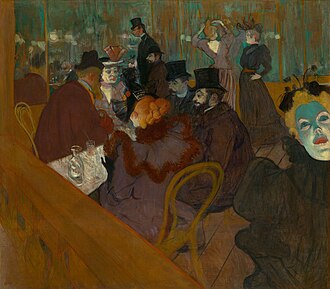 En el Moulin Rouge - Henri de Toulouse-Lautrec (1892)
%20Rousse%20(La%20Toilette)%20-%201889%20-%20Henri%20de%20Toulouse-Lautrec%20-%20Mus%C3%A9e%20d'Orsay%2C%20Paris.jpg) La toilette - Henri de Toulouse-Lautrec (1896)
La toilette - Henri de Toulouse-Lautrec (1896)%2C%201887-1889%20color%20corrected.jpg) The Hangover - Henri de Toulouse-Lautrec (1889)
The Hangover - Henri de Toulouse-Lautrec (1889)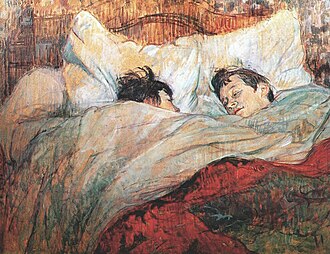 Pareja apoyada en almohadas - Henri de Toulouse-Lautrec (1890s)
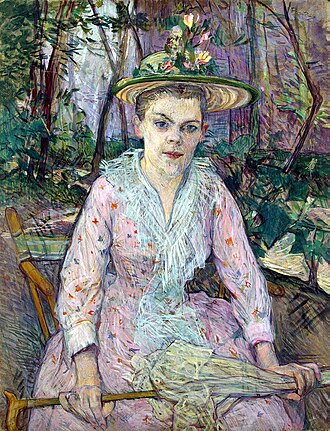 Mujer con sombrilla - Henri de Toulouse-Lautrec (1889)
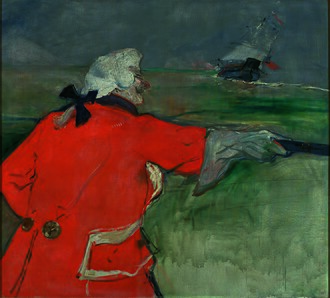 El almirante Viaud - Henri de Toulouse-Lautrec (1901)
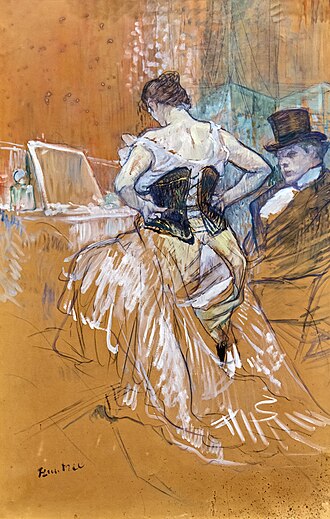 Conquista de paso - Henri de Toulouse-Lautrec (1896)
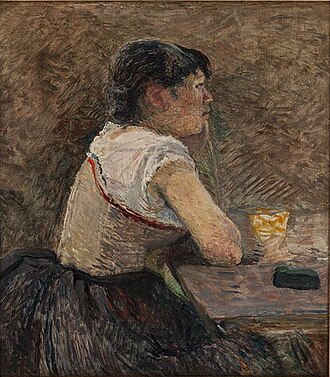 Bebedora de ajenjo en Grenelle. - Henri de Toulouse-Lautrec (1886)
Obras de artistas relacionados
 La noche estrellada - Vincent van Gogh (1889)
.jpg) Terraza de café por la noche - Vincent van Gogh (1888)
Terraza de café por la noche - Vincent van Gogh (1888) ¿De dónde venimos? ¿Qué somos? ¿Adónde vamos? - Paul Gauguin (1897-1898)
%201889.jpg) El Cristo amarillo - Paul Gauguin (1889)
El Cristo amarillo - Paul Gauguin (1889) Baile en el Moulin de la Galette - Pierre-Auguste Renoir (1876)
 El almuerzo de los remeros - Pierre-Auguste Renoir (1881)