Granjas cerca de Auvers
Vincent van Gogh · 1890
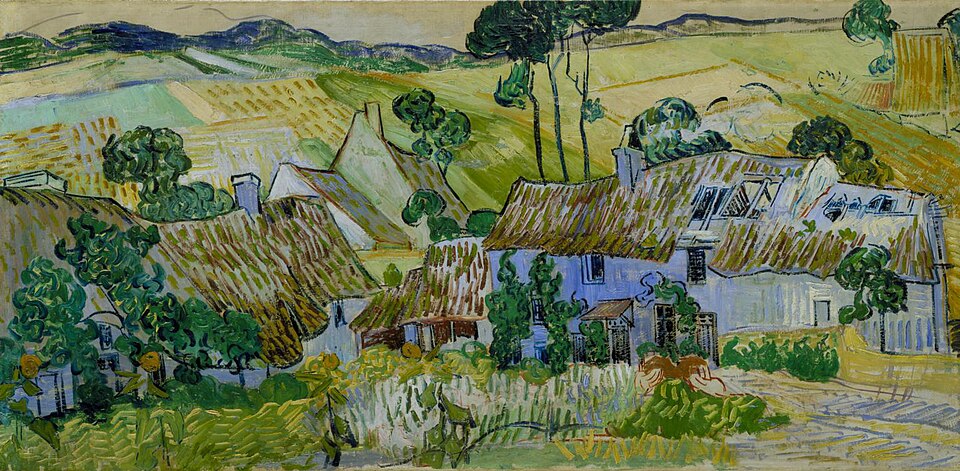
Mossy thatched roofs huddle beneath a hill, under a sky left almost bare. Van Gogh painted this wide, quiet scene just a month before his death.
The story behind the painting
In May 1890 Van Gogh left the asylum at Saint-Rémy and moved north to Auvers-sur-Oise, a small town just north of Paris, where he would spend the last few months of his life. Soon after arriving he wrote to his sister Wil that there were roofs of mossy thatch which were superb, and that he would certainly do something with them. Farms near Auvers, also called Thatched Cottages by a Hill, is one fulfilment of that promise. He painted it in July 1890, a month before he died. It resembles another work, Thatched Cottages and Houses, thought to have been made shortly after his arrival, showing how quickly these old rural roofs had captured his imagination in his final summer.
What to look for
Notice the shape of the canvas first: it is twice as wide as it is tall, about 50 by 100 centimetres, one of the double-square formats Van Gogh used for his last landscapes. Your eye travels sideways across it, as if walking along a lane. Look at the thatched roofs, heavy and rounded, and then at the fields and hill behind them; their curves repeat the roofs' shapes, so that buildings and land seem made of one rhythm. Now look up. The sky is left largely blank, and the brushwork everywhere is hasty. Together these suggest the painting is unfinished, a moment caught mid-work, which gives it a raw, immediate freshness.
Meaning and intent
Van Gogh's own words give the clearest clue to what drew him: the superb mossy thatch. These old cottages, sinking into their landscape, offered him forms that rhymed with the hills around them, and in the painting human dwellings and nature seem to grow from the same earth. Because the work was made so close to his death, viewers often look for premonitions in it, but the sources record no such meaning from the artist. What they do record is a painter still restlessly experimenting, trying a new elongated format and working quickly, leaving the sky open. The unfinished surface lets us stand close to his process in his final weeks.
Legacy
Farms near Auvers belongs to the remarkable output of Van Gogh's last weeks, and the double-square canvases of that time are among his most distinctive late landscapes. In 1933 the painting was bequeathed by C. Frank Stoop to the Tate Collection in London. It is currently on loan to the National Gallery in London, which is why both institutions are linked to it. For visitors today, its unfinished sky and quick strokes offer something rare: not a polished statement, but a glimpse of the artist at work in the summer of 1890, still finding joy in a row of mossy roofs beneath a hill.
¿Sabías que…?
- It is also known as Thatched Cottages by a Hill.
- Van Gogh painted it in July 1890, about a month before his death.
- Its canvas is a double square, roughly 50 by 100 centimetres.
- C. Frank Stoop bequeathed it to the Tate in 1933; it is on loan to the National Gallery, London.
Sobre el artista
Vincent van Gogh (1853-1890)
pintura del paisaje · National Gallery de Londres · casa
Más obras de Vincent van Gogh
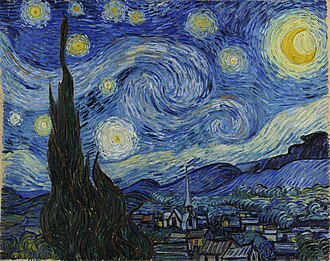 La noche estrellada - Vincent van Gogh (1889)
.jpg) Terraza de café por la noche - Vincent van Gogh (1888)
Terraza de café por la noche - Vincent van Gogh (1888)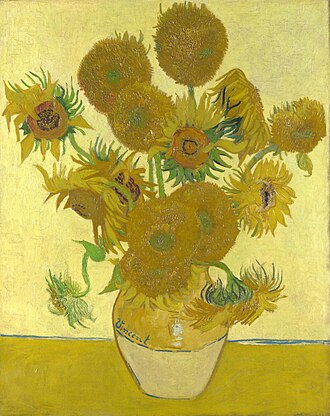 Los girasoles - Vincent van Gogh (1888)
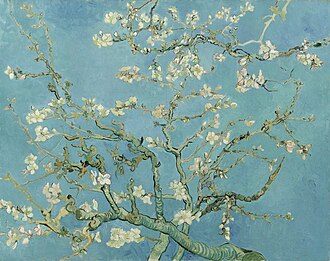 Almendro en flor - Vincent van Gogh (1890)
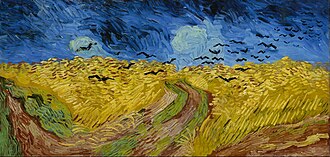 Campo de trigo con cuervos - Vincent van Gogh (1890)
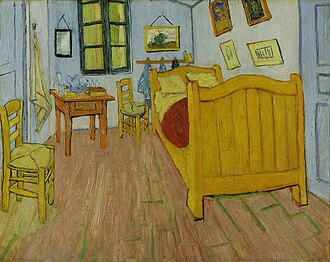 El dormitorio en Arlés - Vincent van Gogh (1888)
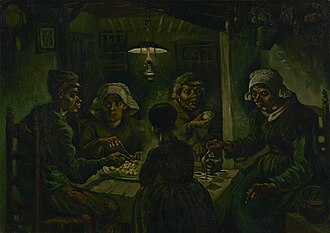 Los comedores de patatas - Vincent van Gogh (1885)
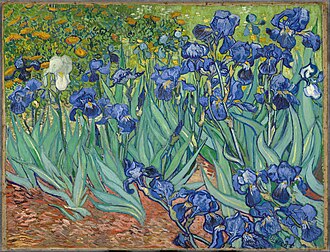 Lirios - Vincent van Gogh (1889)
Obras de artistas relacionados
 ¿De dónde venimos? ¿Qué somos? ¿Adónde vamos? - Paul Gauguin (1897-1898)
%201889.jpg) El Cristo amarillo - Paul Gauguin (1889)
El Cristo amarillo - Paul Gauguin (1889) Almuerzo sobre la hierba - Édouard Manet (1863)
 Olympia - Édouard Manet (1863)