Crucifixión
Tiziano · 1558
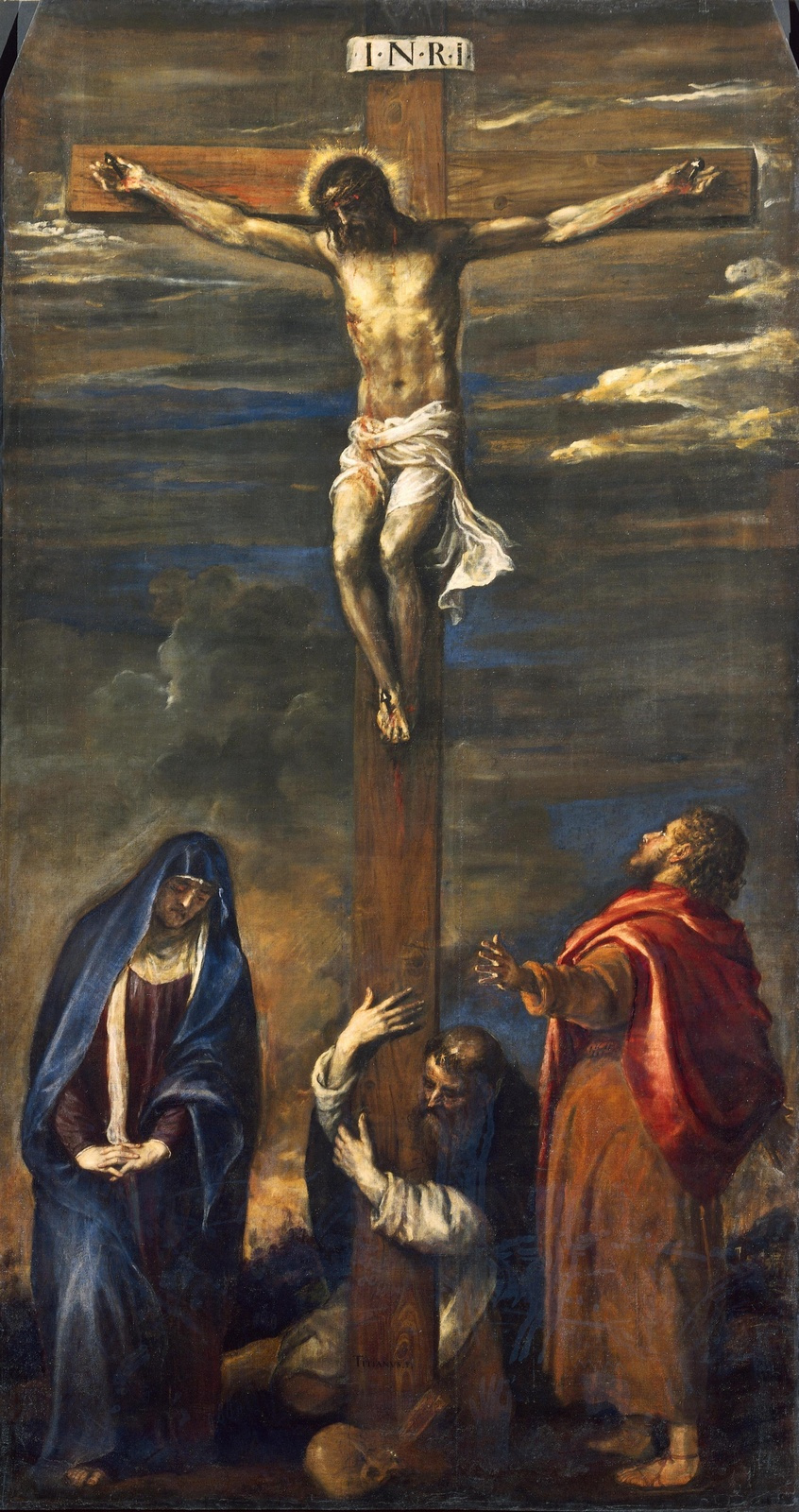
Darkness, flashes of moonlit white, and three mourners at the foot of the cross. Titian's life-size Crucifixion in Ancona turns grief almost entirely into light and colour.
The story behind the painting
The Crucifixion was the first of two paintings commissioned by the Venetian Pietro Cornovi della Vecchia, then living in Ancona. It is signed on the foot of the cross TITIANVS F. 1558 and was installed on the high altar of San Domenico in Ancona on 12 July 1558. It came in Titian's fifth decade of painting and marks his shift toward exploring tragedy and human suffering. At the same time he was finishing The Martyrdom of Saint Lawrence, a far more complex composition.
What to look for
The figures are life size, all in the foreground on a single plane. The Virgin stands on the left in solitary sorrow, her face sunken and her eyes flecked with red. Saint Dominic, kneeling, grips the base of the cross with long, mannerist fingers. Saint John is the only one looking up toward Christ. Christ himself is slightly smaller, suggesting distance, his skin in bronze and yellow tones, blood running down his arms into the loincloth. Look for the near-white flashes against dark blue, brown and red, the impasto patches Vasari called macchie, marks made with the finger on Christ's right hand, and a hint of fire in the background that the Bible does not mention.
Meaning and intent
Wikipedia sees here one of the earliest, perhaps the earliest, and most direct uses of Titian's method of contrasting light and colour to rouse one dominant emotion, here a tragic one. The deliberate placing of the mourners in the foreground invites the viewer to share their grief, and the work is described as a pioneering piece of Counter-Reformation art, which prized narrative clarity and emotional empathy. The freer brushwork may also reflect its destination, a dimly lit church.
Legacy
The canvas was moved to the choir in 1715, kept in the museum from 1884 to 1925, then cleaned, restored and rehung in the sanctuary of San Domenico in 1925, and restored again in 1940. Its sickly flesh tones and red-flecked eyes were themes taken up centuries later by Antoine-Jean Gros and Eugène Delacroix, and works such as Orazio Vecellio's Crucifixion with Three Angels of 1559 took inspiration from it.
¿Sabías que…?
- Signed and dated 1558 on the foot of the cross.
- Installed in San Domenico, Ancona on 12 July 1558.
- Life-size figures on a canvas about 371 by 197 cm.
- Restored in 1925 and 1940.
Sobre el artista
Tiziano (1488-1576)
arte religioso · Virgen María · Jesús de Nazaret · escuela veneciana · Juan el Evangelista · Crucifixión de Jesús · Domingo de Guzmán
Más obras de Tiziano
 Venus de Urbino - Titian (1538)
 La Asunción de la Virgen - Titian (1510s)
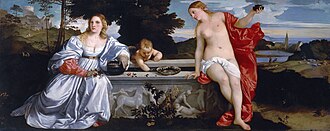 Amor sacro y amor profano - Titian (1510s)
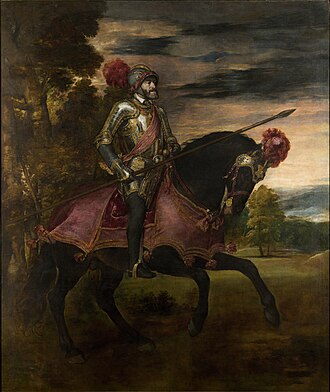 Carlos V a caballo en Mühlberg - Titian (1548)
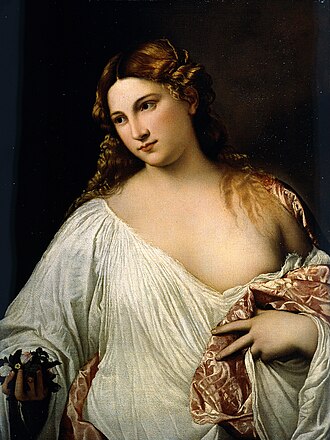 Flora - Titian (1517)
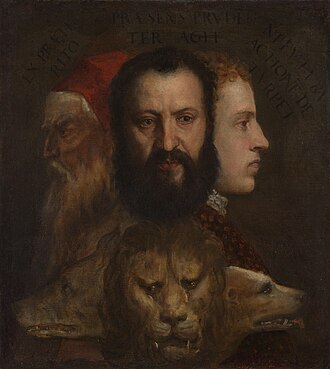 Alegoría de la Prudencia - Titian (1550)
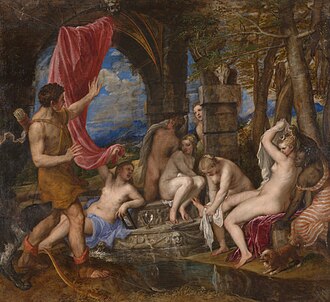 Diana y Acteón - Titian (1550s)
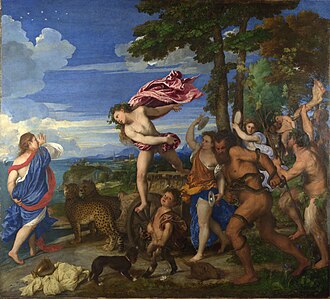 Baco y Ariadna - Titian (1520s)
Obras de artistas relacionados
 La Última Cena - Jacopo Tintoretto (1563)
 San Marcos liberando al esclavo - Jacopo Tintoretto (1540s)
 Las bodas de Caná - Paolo Veronese (1560s)
 Cena en casa de Leví - Paolo Veronese (1573)