Muchacho pelando fruta
Caravaggio · 1590s
%20-%20Boy%20Peeling%20Fruit%20-%20RCIN%20402612%20-%20Royal%20Collection.jpg)
A neat, well-dressed boy bends over a piece of fruit, knife in hand, absorbed in a simple task. It may be the very first painting we know by Caravaggio.
The story behind the painting
Boy Peeling Fruit is thought to be the earliest known work by Caravaggio, painted around 1592-1593, soon after he arrived in Rome from his native Milan in mid 1592. His movements then are uncertain. According to his contemporary Giulio Mancini, he stayed briefly with Monsignor Pandulfo Pucci, who fed his boarders only on greens; Caravaggio later nicknamed him Monsignor Salad. There he copied religious pictures, none of which survive, and apparently made a few works of his own for sale, of which this would be the only known example. It may also date from slightly later, when he worked for Giuseppe Cesari, the Cavalier d'Arpino. The composition was later among works seized from Cesari by Cardinal Scipione Borghese in 1607.
What to look for
Look first at the boy himself. Unlike many genre pictures of the time, he is not shown as a scruffy ragamuffin but clean and well dressed, his attention fixed on his hands. Then turn to the fruit he is peeling. It is something of a mystery: sources suggest a pear, which is probably correct, but it has been questioned. Some have proposed a bergamot, a pear-shaped citrus grown in Italy, though others object that it is sour and practically inedible. Nectarines or plums lie on the table nearby, but these are not usually peeled. Notice the stillness of the scene, the quiet concentration of a single gesture, held in place for us to study.
Meaning and intent
Seen simply, this is a genre painting of an everyday moment. Yet the Renaissance had a complex language of fruit, so an allegorical meaning is plausible. The scholar John T. Spike has suggested that the boy shows resistance to temptation, ignoring the sweeter fruits, the fruits of sin, in favour of the bitter bergamot. The source stresses that no specific reading is widely accepted, and that openness is part of the charm. We are left with a young man and a small task, and the question of whether we are watching a lesson in virtue or simply a moment of attention. The model may be the same youth who appears as the angel in Ecstasy of Saint Francis and as Cupid in The Musicians.
Legacy
Several versions of this composition are known, and all may be by Caravaggio. One suggestion is that, in the studio of the Cavalier d'Arpino, his paintings were put in the shop window, and when they caught a buyer's eye, he painted more versions to meet the demand. Scholars disagree about which is the original. John Spike pointed to a version sold in London, while others argue for the Ishizuka version or the one in the British Royal Collection, recorded by Wikidata. The Royal Collection picture has been displayed in the Cumberland Gallery at Hampton Court Palace since 2004. Other copies are in private collections in Berlin and Rome. Here, at the very start, the young painter's eye is already patient and exact.
¿Sabías que…?
- It is thought to be Caravaggio's earliest known work, painted around 1592-1593.
- The fruit being peeled may be a pear or a bergamot; scholars disagree.
- Several versions exist; the Royal Collection version has hung at Hampton Court Palace since 2004.
- Caravaggio nicknamed his early host Pandulfo Pucci Monsignor Salad.
Sobre el artista
Caravaggio (1571-1610)
escena de género · retrato · niño · Pintura barroca de Italia · fruta · camisa
Más obras de Caravaggio
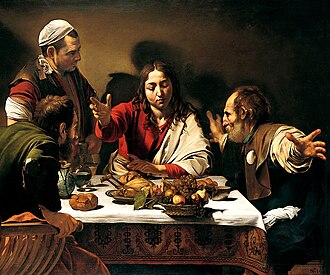 La cena de Emaús - Caravaggio (1601)
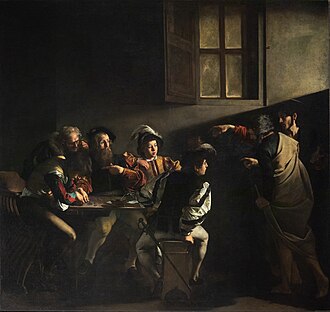 La vocación de San Mateo - Caravaggio (1609)
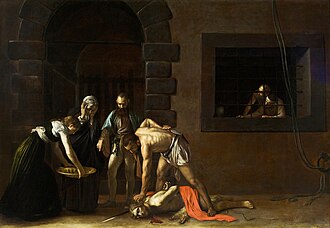 La decapitación de San Juan Bautista - Caravaggio (1608)
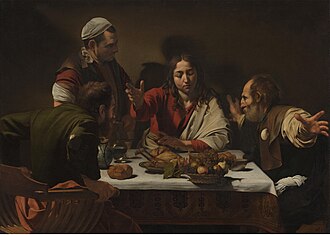 Los discípulos de Emaús - Caravaggio (1601)
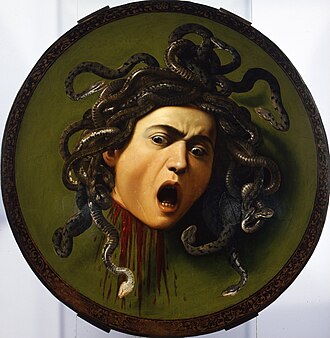 Cabeza de Medusa - Caravaggio (1597)
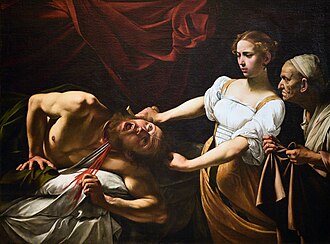 Judit decapitando a Holofernes - Caravaggio (1598)
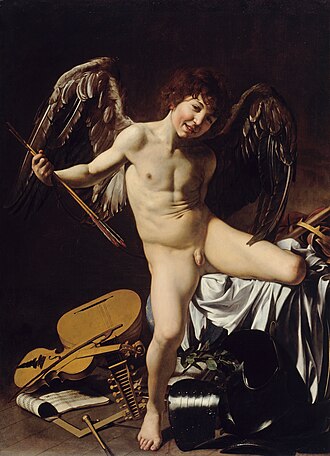 El amor victorioso - Caravaggio (1600s)
%2C%201595%20circa%2C%20534.jpg) Baco enfermo - Caravaggio (1595)
Baco enfermo - Caravaggio (1595)
Obras de artistas relacionados
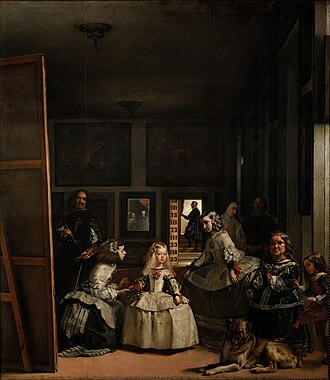 Las meninas - Diego Velázquez (1656)
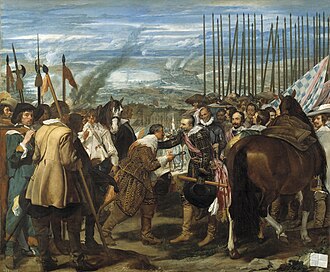 La rendición de Breda - Diego Velázquez (1635)
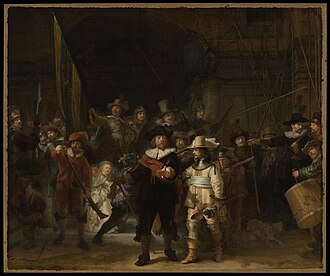 La ronda de noche - Rembrandt van Rijn (1642)
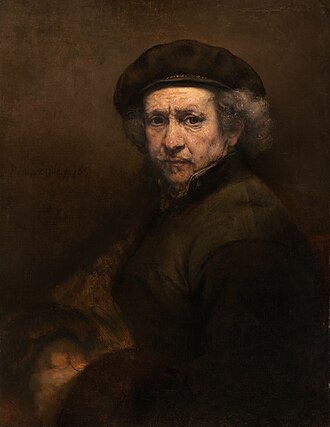 Autorretrato - Rembrandt van Rijn (1659)
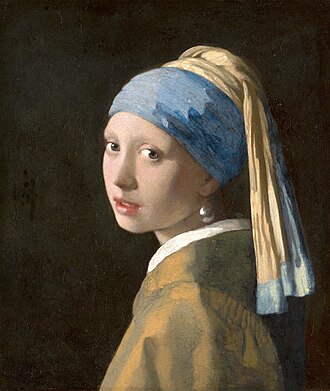 La joven de la perla - Johannes Vermeer (1665)
 La lechera - Johannes Vermeer (c. 1658)