Bagnacavallo Madonna
Alberto Durero · 1490s
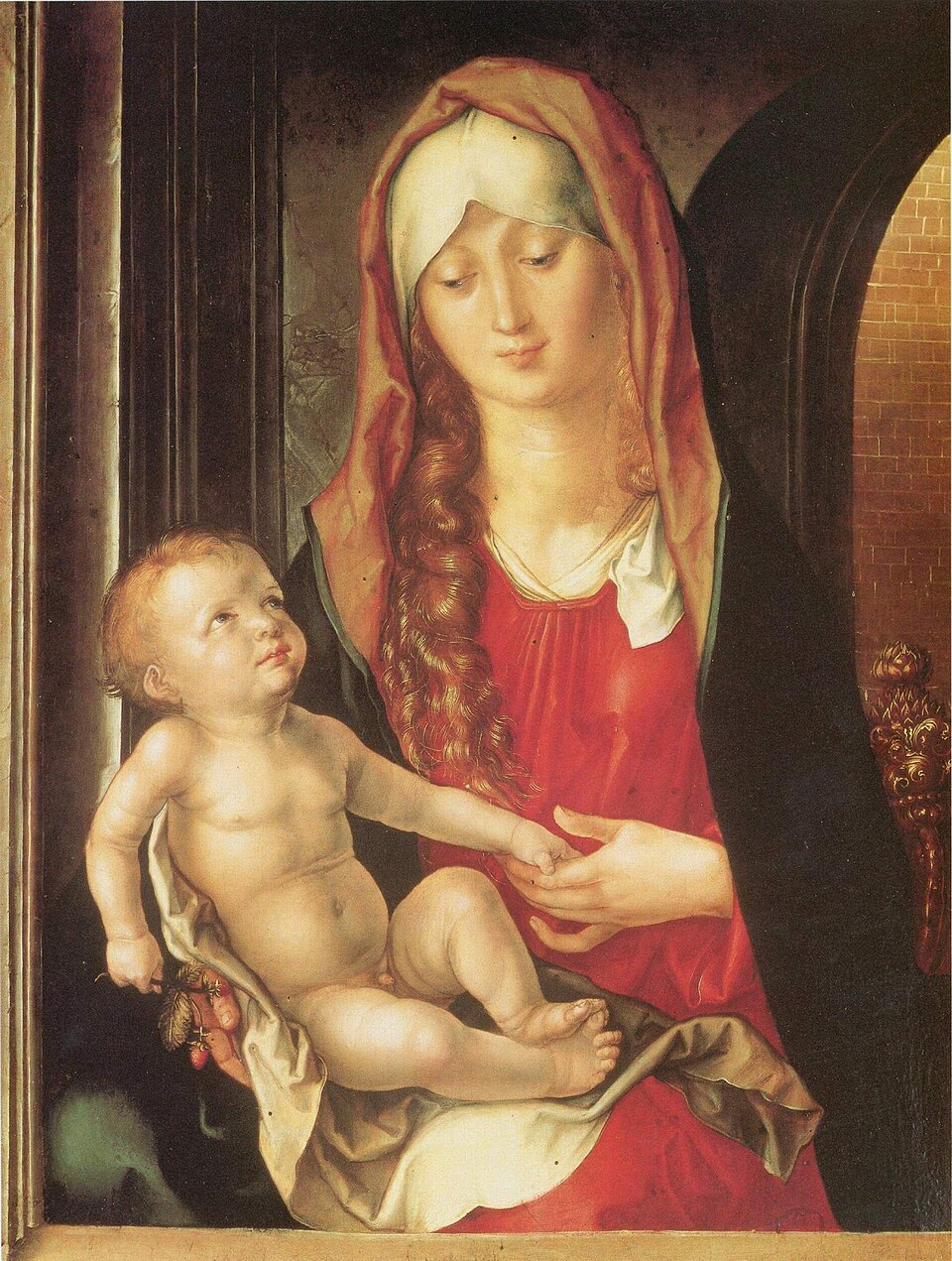
In a dark room, a young mother holds her child, who clutches a sprig of strawberry with one leaf missing. This small Dürer Madonna lay unrecognised in an Italian convent until after the Second World War.
The story behind the painting
The Bagnacavallo Madonna, also called the Madonna del Patrocinio, is an oil painting by Albrecht Dürer dating to before 1505; Wikidata places it in the 1490s. Its story as a known Dürer is recent. It was discovered after the Second World War in the convent of Capuchin nuns at Bagnacavallo, in the province of Ravenna, and in 1961 the Italian art historian Roberto Longhi recognised it as Dürer's work. A few years later it entered the collection that owns it today, the Magnani-Rocca Foundation at Mamiano di Traversetolo near Parma. How it reached Italy is uncertain, but the source suggests it could be one of the works Dürer carried with him from Germany on his second trip to Italy in 1505, which he used to fund his expenses.
What to look for
The setting is a dark room. On the left a window is shut with wooden planks; on the right an arch opens onto a walled enclosure. Mary is shown half-length with the Child on her lap. Watch the hands: the Child's left hand touches his mother's, while his other hand holds a sprig of a fruiting strawberry plant. Look closely at that sprig. Strawberry leaves grow in threes, but this one has only two leaves in the three-leaf arrangement. The painting is small, 48 by 36 centimetres, made for close viewing, so these quiet details reward patience.
Meaning and intent
Each element carries meaning. The walled enclosure seen through the arch symbolises the hortus conclusus, the enclosed garden associated with Mary. The strawberry is one of the plants symbolic of the Trinity, and the missing leaf indicates that the last person of the Trinity is present in the Child himself. The picture also shows Dürer absorbing Italian art. A preparatory drawing of 1495 is known, copied from a Child Jesus by Lorenzo di Credi, perhaps seen in Venice, and Mary's features resemble those in Giovanni Bellini's paintings, as in Dürer's Haller Madonna of the same period.
Legacy
Because it was identified only in 1961, this Madonna is a reminder that important works can still emerge from quiet places. Its attribution rests on Roberto Longhi's recognition and on its links with Dürer's drawing of 1495 and his Bellini-influenced Madonnas. The idea that Dürer may have sold it to pay for his Italian travels adds a human, practical side to the young artist's journey. Today it can be seen at the Magnani-Rocca Foundation, where the hidden play of hands and leaves invites a slow look, far from the convent where it waited so long to be recognised.
¿Sabías que…?
- Painted before 1505; Wikidata gives the 1490s.
- Found after World War II in a Capuchin convent at Bagnacavallo.
- Recognised as Dürer's by Roberto Longhi in 1961.
- Size: 48 x 36 cm; Magnani-Rocca Foundation.
Sobre el artista
Alberto Durero (1471-1528)
arte religioso · mujer · Virgen María · Niño Jesús · niño · madre · Renacimiento alemán
Más obras de Alberto Durero
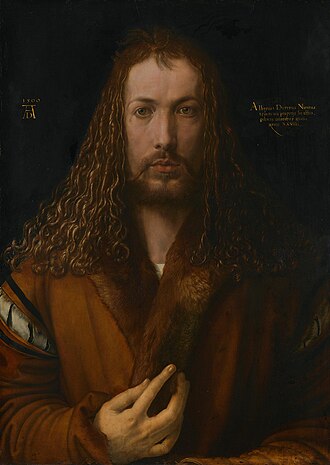 Autorretrato de Durero - Albrecht Dürer (1500)
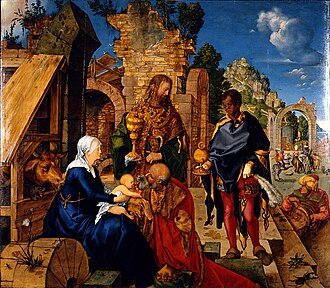 Adoración de los Magos - Albrecht Dürer (1504)
.jpg) Fiesta del Rosario - Albrecht Dürer (1506)
Fiesta del Rosario - Albrecht Dürer (1506)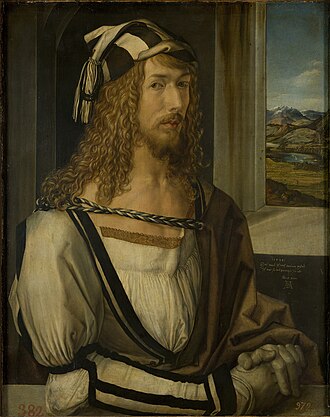 Autorretrato de Durero - Albrecht Dürer (1498)
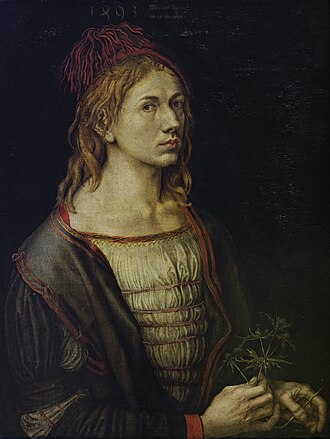 Autorretrato de Durero - Albrecht Dürer (1493)
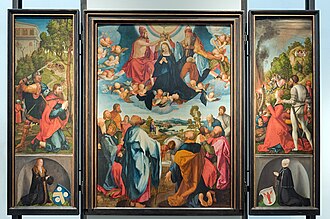 Altar Heller - Albrecht Dürer (1500s)
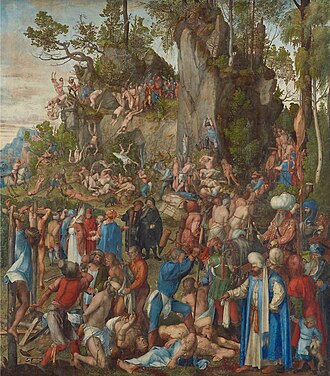 El martirio de los diez mil cristianos - Albrecht Dürer (1508)
%20-%20Google%20Art%20Project.jpg) Adoración de la Trinidad - Albrecht Dürer (1511)
Adoración de la Trinidad - Albrecht Dürer (1511)