Un anciano en traje militar
Rembrandt van Rijn · 1630s
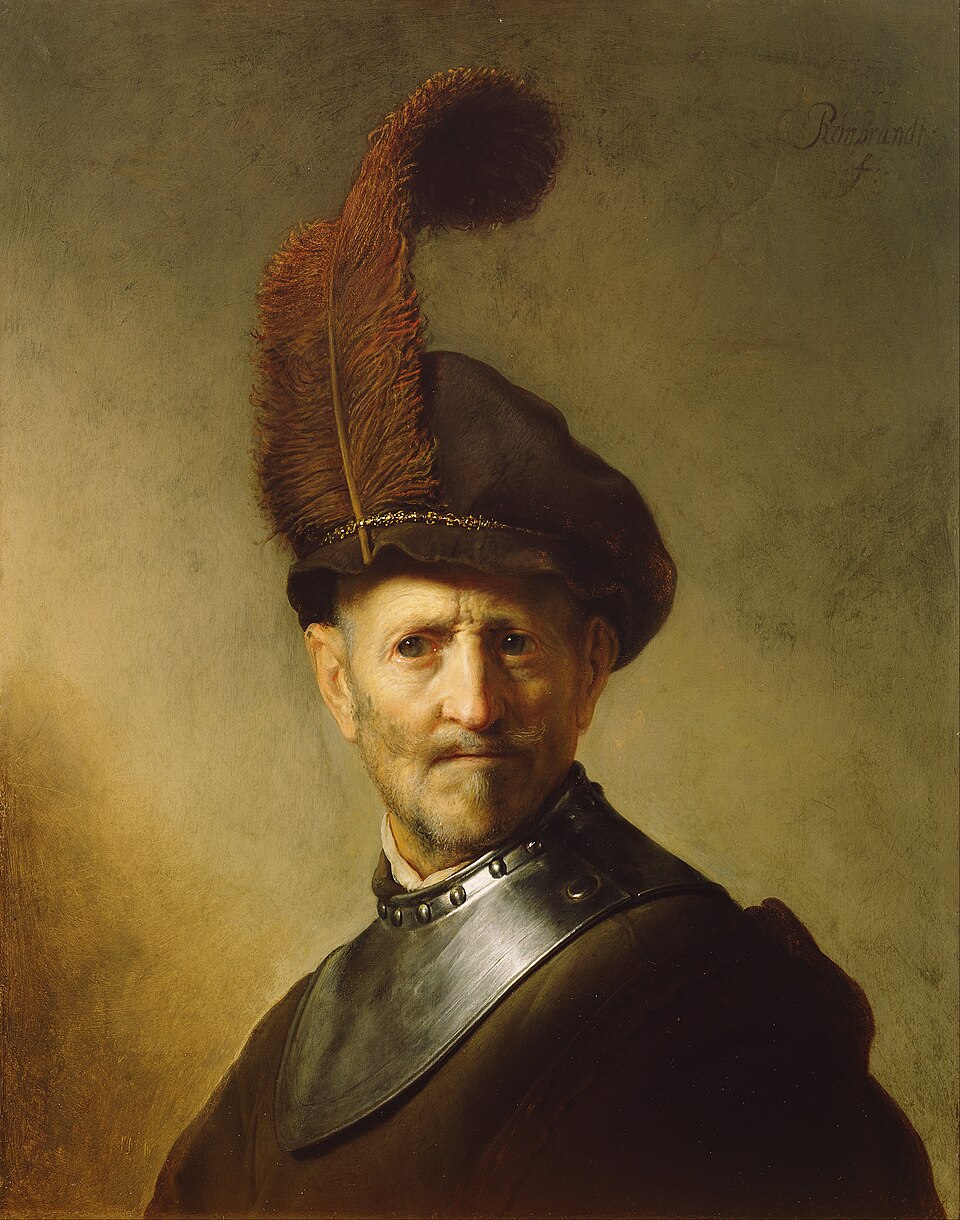
An anxious old man in a metal gorget and an ostrich-plumed hat looks straight at us. Hidden beneath him, upside down, is another face: a young man Rembrandt painted first and then turned away.
The story behind the painting
Rembrandt painted this oil on panel around 1630 or 1631, while he was living in Leiden. The panel is made of two planks of Baltic oak, felled in 1622 and joined vertically, from the same tree as the panels of two other works, a Head of a Young Girl and a Supper at Emmaus. The J. Paul Getty Museum bought the painting in 1978. In 1994 the Rembrandt Research Project questioned the attribution, but specialists such as Seymour Slive, Egbert Haverkamp-Begemann and Walter Liedtke kept it as Rembrandt's, and that view has generally been accepted since.
What to look for
The picture is a tronie, a study of a characterful face rather than a portrait of a particular person. The old man looks anxious. He wears a metal breastplate or gorget fastened with a rivet and a hat with an ostrich feather. His face is turned toward us while his body is in three-quarter view, so the line of the shoulders and the curve of the plume create depth. Rembrandt works the signs of age closely: wrinkles around nose and eyes, sparse beard and moustache, moist eyes rimmed by pinkish lower lids, all lit from the upper left.
Meaning and intent
The martial costume may symbolise Dutch military resistance against Habsburg Spain. The strong contrast of light and the opaque paint are typical of Rembrandt's work of the 1630s. The model, sometimes taken to be the painter's father, appears in other works too, such as the Old Man with a Fur Hat of 1630 in Innsbruck. Whether or not he was the father, the tronie lets Rembrandt explore worry and age as expressions in their own right, giving a nameless face the weight of a whole life.
Legacy
X-rays in 1968 revealed an earlier painting underneath, the head of a young man, upside down relative to the old man. In 2015 new technology partially reconstructed it in colour: a young man in three-quarter view, in a blue or green coat, also wearing a gorget. A 2019 study added more. Rembrandt first painted the young man, then, troubled by the vertical join in the panel, turned it around and painted the second portrait on top, placing the new face to coincide with the first so their shadowed parts aligned.
¿Sabías que…?
- Oil on oak panel, about 1630-1631, painted in Leiden.
- A tronie, a study of a face rather than a portrait.
- An upside-down portrait of a young man lies beneath, found by X-ray in 1968.
- At the J. Paul Getty Museum since 1978.
Sobre el artista
Rembrandt van Rijn (1606-1669)
Más obras de Rembrandt van Rijn
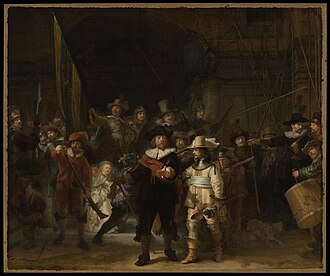 La ronda de noche - Rembrandt van Rijn (1642)
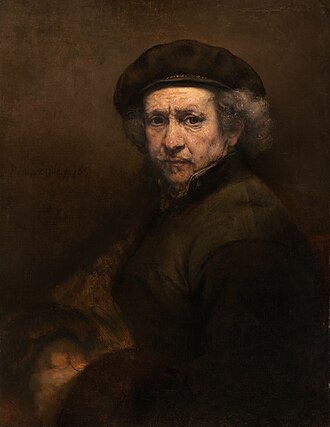 Autorretrato - Rembrandt van Rijn (1659)
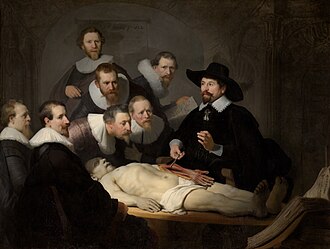 Lección de anatomía del Dr. Nicolaes Tulp - Rembrandt van Rijn (1632)
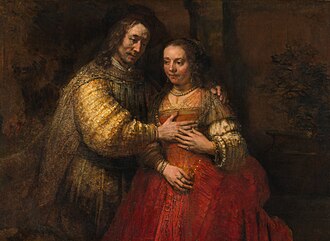 La novia judía - Rembrandt van Rijn (1660s)
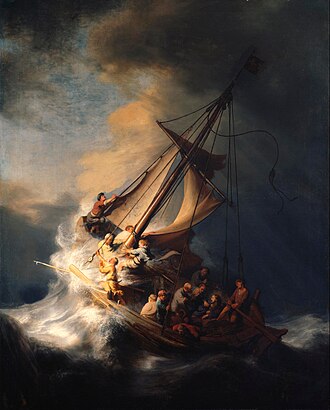 La tormenta en el mar de Galilea - Rembrandt van Rijn (1633)
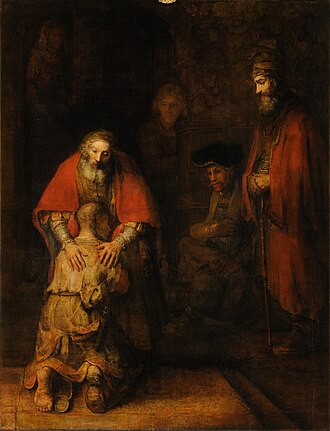 El retorno del hijo pródigo - Rembrandt van Rijn (1668)
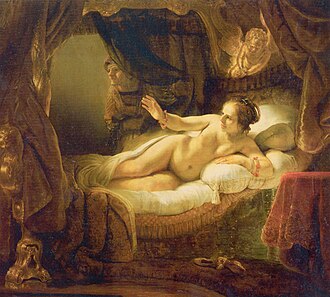 Dánae - Rembrandt van Rijn (1636)
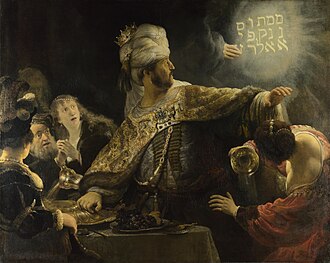 Banquete de Belsasar - Rembrandt van Rijn (1636)
Obras de artistas relacionados
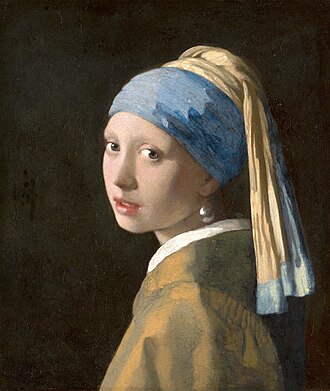 La joven de la perla - Johannes Vermeer (1665)
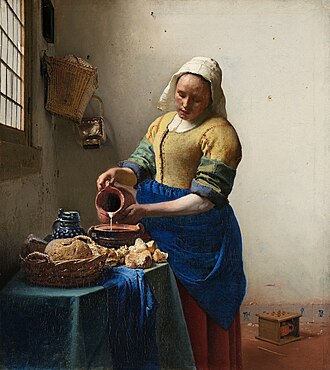 La lechera - Johannes Vermeer (c. 1658)
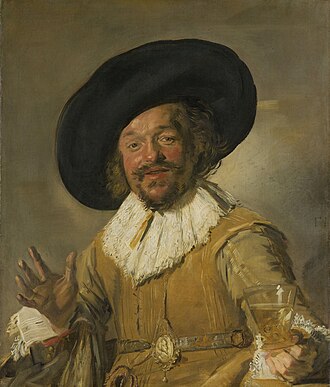 El alegre bebedor - Frans Hals (1620s)
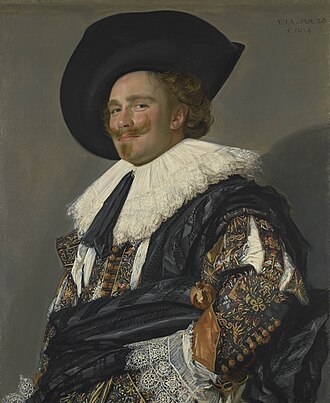 Caballero sonriente - Frans Hals (1624)