Allegory of Marriage
Tiziano · 1532
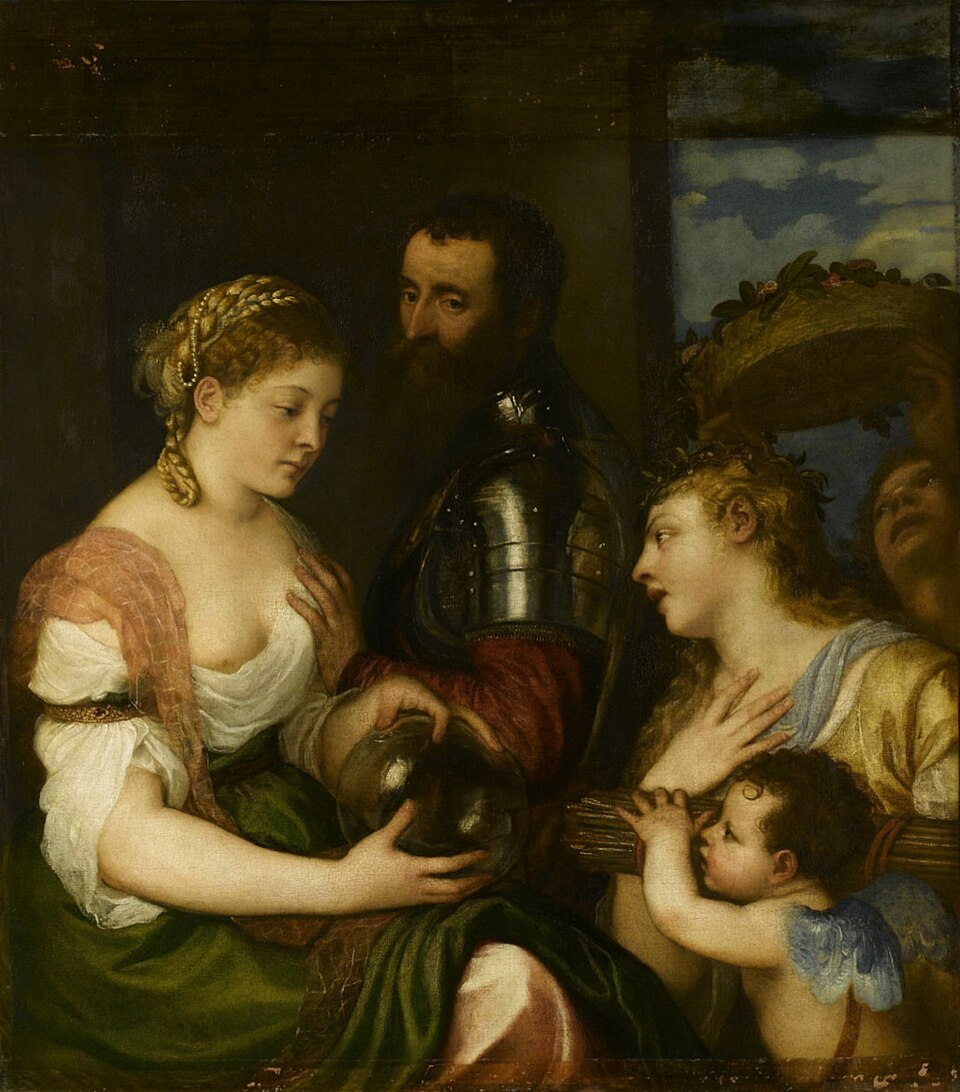
A lady in luminous red, green and yellow gazes into a crystal ball while a man in dark armour lays his hand on her breast. Nobody agrees on what Titian meant, and that mystery has travelled from Spain to an English king and a French one.
The story behind the painting
Titian painted this oil, now in the Louvre, around 1530 to 1535; Wikidata gives 1532. It has had several names: Allegory of Marriage, Allegory of Separation, and formerly Allegory of Alfonso d'Avalos. The old title came from the idea that it showed the Marquis of Vasto parting from his young wife, Mary of Aragon, before going to war against the Turks. Titian did know d'Avalos, who wrote to Aretino in November 1531 hoping to bring the painter to Correggio, but Georg Gronau doubted the link because the armoured man does not have the Marquis's features.
What to look for
On the left stand a well-dressed lady and a gentleman in armour, attended by a young woman and some children. The light colours of her dress, red, green and yellow, wrap her shapely form, while the man in his polished breastplate and spaulder stands out dark beside her; he turns to her but gazes out of the picture, his hand on her breast. A child with bow and arrows plays the God of Love. A woman with a wreath lays a hand on her breast. Further back, strongly foreshortened, a youth lifts a basket of flowers, his head against a deep blue sky.
Meaning and intent
Interpretations disagree. In the older reading, Amor, Victory and Hymen console a grieving wife who looks into a crystal ball, a symbol of the transience of human things. Charles Ricketts instead suggested the crystal holder may be Wisdom or Prudence, and the figures with flowers, wreaths and darts the pleasures the warrior turns his back on; he thought some trite allegory more likely than a pensive wife. Gronau saw in the lady the same roundness, profile and pearl-plaited golden hair as Titian's Saint Catherine in London. The subject, the sources admit, remains obscure.
Legacy
The painting belonged to Charles I of England at Whitehall after a sale in Spain, was copied by Peter Oliver in 1629, and was sold in London in 1650 as The family of ye Marquess of Guasto. It passed through Colonel Hutchinson and Everhard Jabach before Louis XIV acquired it in 1662. Many replicas exist, including two early copies in the British Royal Collection, a sign of its fame. It may have inspired Rossetti's The Beloved of 1865 to 1866. By 1910 Ricketts found it badly abraded and retouched under centuries of dirt.
¿Sabías que…?
- Painted about 1530-1535 (Wikidata: 1532).
- Once owned by Charles I of England, then Louis XIV from 1662.
- Its subject is still debated: marriage, separation, or a moral allegory.
- Several early copies exist, two in the British Royal Collection.
Sobre el artista
Tiziano (1488-1576)
Departamento de Pinturas del Museo del Louvre · escuela veneciana · alegoría · Venus · Cupido · flecha · matrimonio
Más obras de Tiziano
 Venus de Urbino - Titian (1538)
 La Asunción de la Virgen - Titian (1510s)
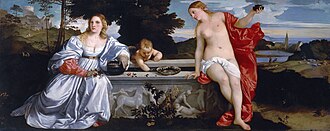 Amor sacro y amor profano - Titian (1510s)
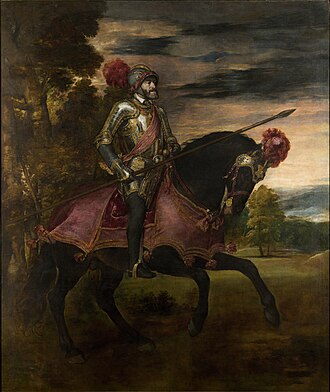 Carlos V a caballo en Mühlberg - Titian (1548)
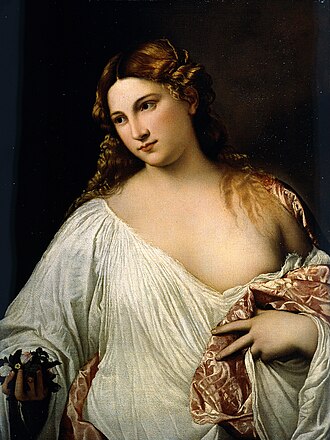 Flora - Titian (1517)
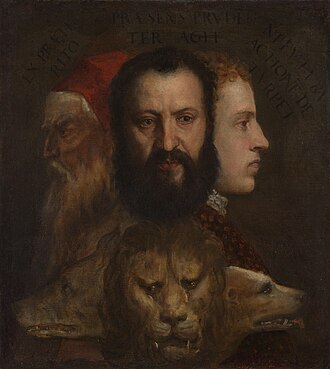 Alegoría de la Prudencia - Titian (1550)
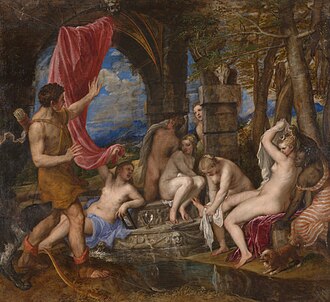 Diana y Acteón - Titian (1550s)
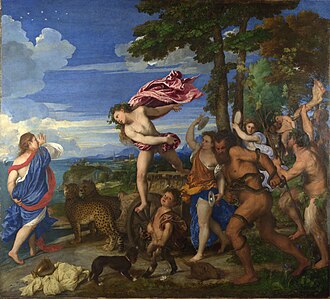 Baco y Ariadna - Titian (1520s)
Obras de artistas relacionados
 La Última Cena - Jacopo Tintoretto (1563)
 San Marcos liberando al esclavo - Jacopo Tintoretto (1540s)
 Las bodas de Caná - Paolo Veronese (1560s)
 Cena en casa de Leví - Paolo Veronese (1573)