Un camino cerca de Arles
Vincent van Gogh · 1888
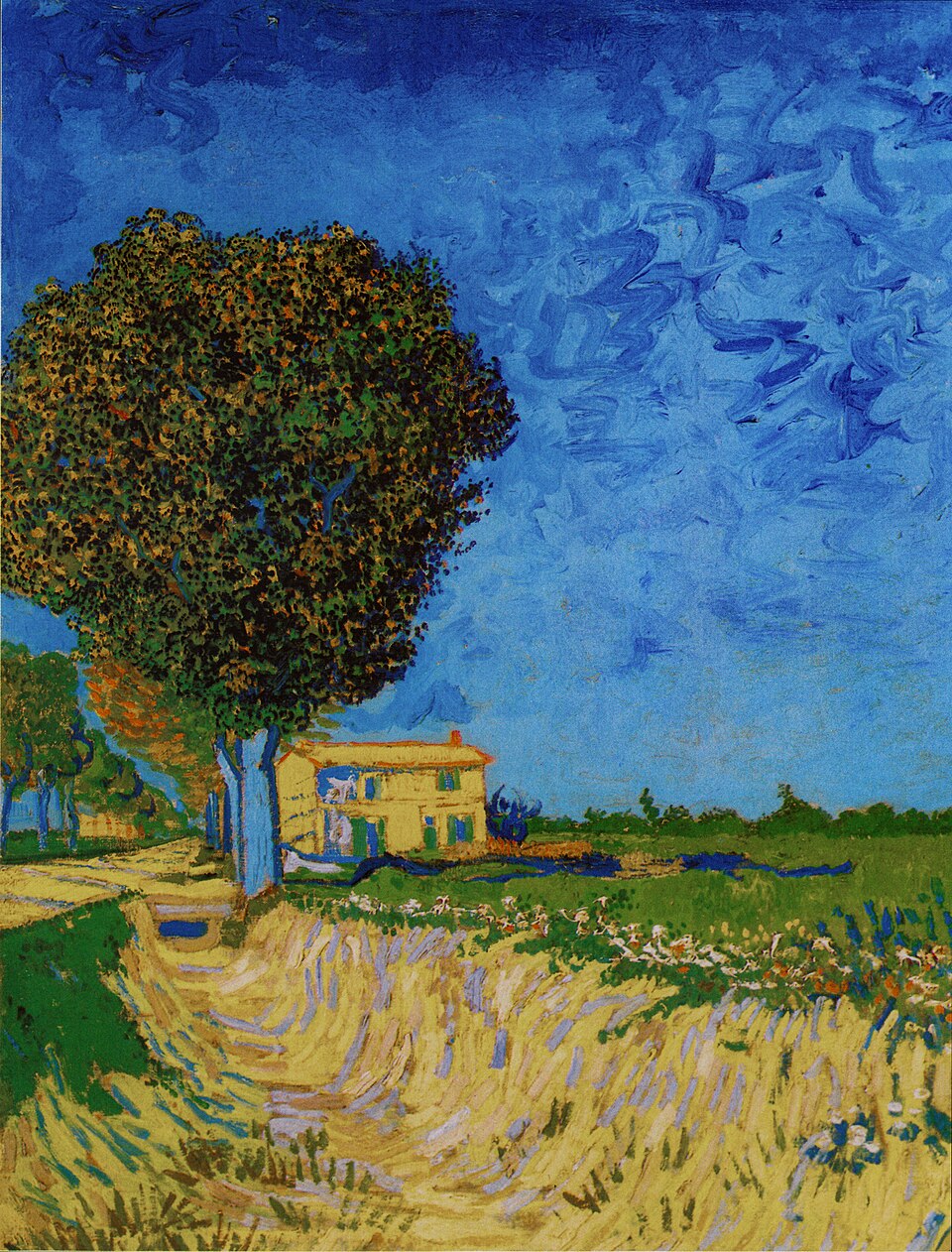
A quiet country lane, a line of trees, a yellow house glowing at the roadside: in 1888 Van Gogh turned an ordinary walk outside Arles into a small blaze of colour.
The story behind the painting
Van Gogh painted A Lane near Arles in 1888, during the period when he was living in Arles in the south of France. The canvas is modest in size, 61 by 50 centimetres, and its subject is equally unassuming: a lane lined with trees, running between the fields just outside the town. The written record of this particular picture is thin. Its sources tell us when and where it was made and what it shows, but little about the specific day or the circumstances of its creation. What we do know is the setting. Arles was where Van Gogh's palette burst into full brightness, and paintings of nearby roads, orchards and fields poured from his easel in this period. This little landscape belongs to that outpouring, a record of the countryside he walked through and looked at with fresh, southern eyes.
What to look for
Let your eye travel down the lane first. It runs between the fields, framed by trees on either side, pulling you gently into the distance. Then look to the side of the road, where a yellow house stands. That yellow is the anchor of the picture, a note of warmth that catches the light. The colour throughout is typical of Van Gogh in his Arles period: bright and alive, lighting up the whole canvas. Notice how the scene feels less like a careful record of a place and more like an impression of how it felt to be there. The upright format, slightly taller than it is wide, suits the trees and the long line of the lane. Take a moment to compare the warm tones of the house with the greens and blues around it; that contrast is where the painting hums.
Meaning and intent
Nothing dramatic happens here, and that is the point. The Wikipedia account of the painting describes its colours as conveying the idyllic nature of the moment, a view that is more perceived than experienced. In other words, Van Gogh is not simply documenting a road near Arles; he is painting a mood, a sense of calm and brightness in an ordinary rural scene. The house, the trees and the fields are the plain elements of country life, yet colour lifts them into something close to a celebration. Many of his Arles landscapes share this quality, finding joy in humble subjects. Because the sources say little more about his intentions for this specific canvas, it is best enjoyed as he left it: a lane, a house, a summer of light, offered without explanation.
Legacy
Today A Lane near Arles belongs to the Pomeranian State Museum (Pommersches Landesmuseum) in Greifswald, Germany. Wikidata also lists the Munich Central Collecting Point among its collections, the Allied depot that handled artworks in Germany after the Second World War, which hints at a more complicated journey than the canvas itself suggests; the available sources do not give the details. Its presence in Greifswald makes it a rare chance to meet Van Gogh's Arles period in a smaller regional museum on the Baltic coast. The painting matters not because it is famous, but because it shows the everyday work of a painter at the height of his colour, testing how far brightness alone could carry a simple view of the countryside.
¿Sabías que…?
- The painting measures 61 × 50 cm, a modest, upright canvas.
- It was painted in 1888, while Van Gogh was living in Arles.
- It now hangs in the Pommersches Landesmuseum in Greifswald, Germany.
- Wikidata records the Munich Central Collecting Point among its past holders.
Sobre el artista
Vincent van Gogh (1853-1890)
pintura del paisaje · impresionismo · árbol · casa · Arlés · Munich Central Collecting Point
Más obras de Vincent van Gogh
 La noche estrellada - Vincent van Gogh (1889)
.jpg) Terraza de café por la noche - Vincent van Gogh (1888)
Terraza de café por la noche - Vincent van Gogh (1888) Los girasoles - Vincent van Gogh (1888)
 Almendro en flor - Vincent van Gogh (1890)
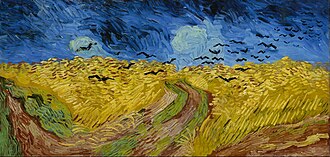 Campo de trigo con cuervos - Vincent van Gogh (1890)
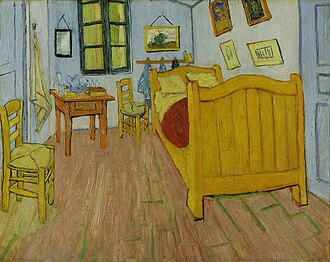 El dormitorio en Arlés - Vincent van Gogh (1888)
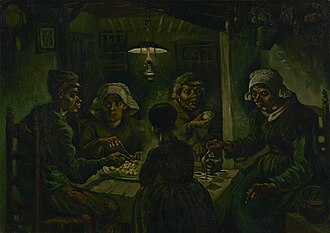 Los comedores de patatas - Vincent van Gogh (1885)
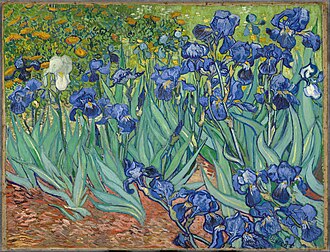 Lirios - Vincent van Gogh (1889)
Obras de artistas relacionados
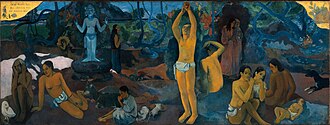 ¿De dónde venimos? ¿Qué somos? ¿Adónde vamos? - Paul Gauguin (1897-1898)
%201889.jpg) El Cristo amarillo - Paul Gauguin (1889)
El Cristo amarillo - Paul Gauguin (1889)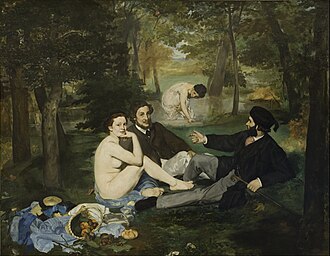 Almuerzo sobre la hierba - Édouard Manet (1863)
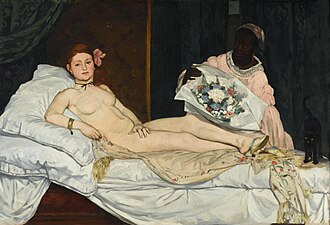 Olympia - Édouard Manet (1863)