Un hugonote, en el día de San Bartolomé
John Everett Millais · 1852
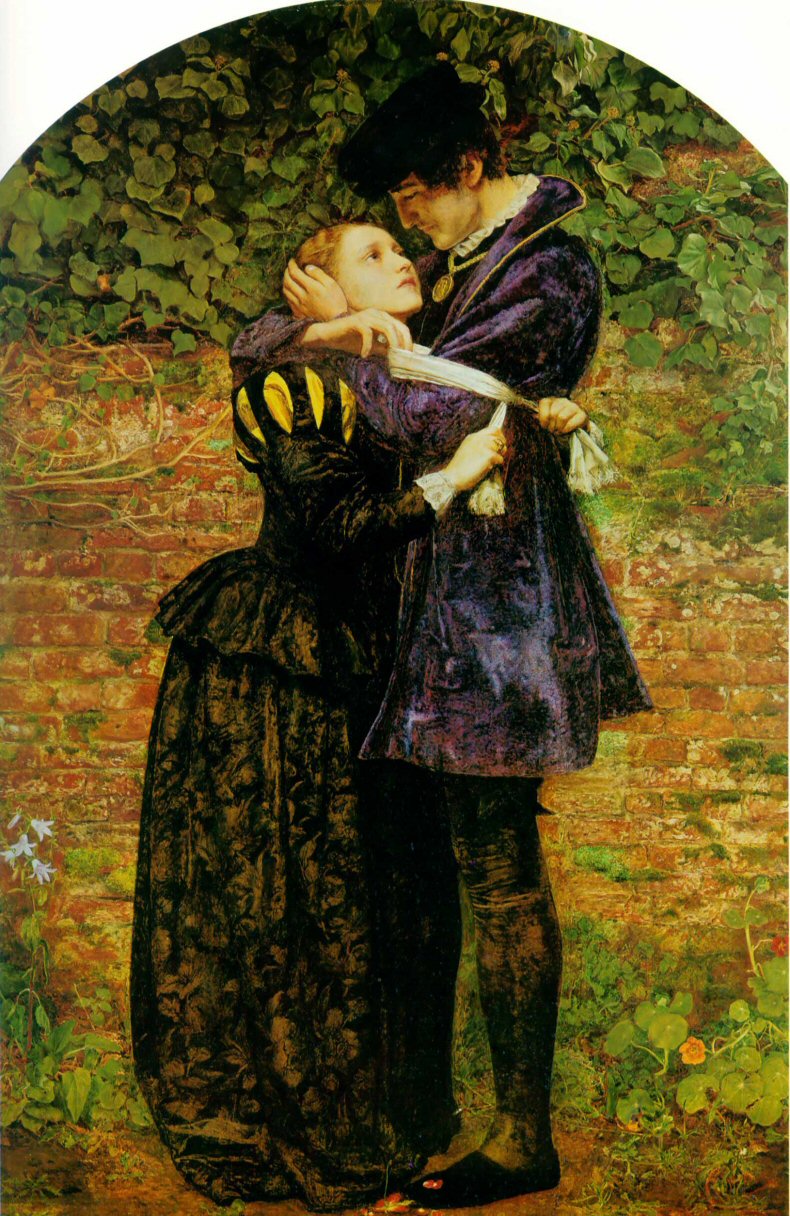
A young woman begs her lover to tie on a white armband that could save his life, and he gently refuses. Millais set this embrace on the eve of the St. Bartholomew's Day massacre of 1572.
The story behind the painting
Millais painted A Huguenot, on St. Bartholomew's Day in 1851 to 1852, at the height of his Pre-Raphaelite period. At first he planned simply to show lovers in a less dire predicament, but his friend William Holman Hunt supposedly persuaded him the subject was too trite. After seeing Meyerbeer's opera Les Huguenots at Covent Garden, in which Valentine fails to make her lover Raoul wear the armband, Millais adapted the picture to the massacre. He painted most of the background near Ewell in Surrey in late summer and autumn 1851, from a brick wall by an orchard, while living with Hunt at Worcester Park Farm.
What to look for
The woman, a Catholic, tries to tie a white armband on her beloved, a Protestant. He embraces her tenderly and looks into her pleading eyes, while with his other hand he firmly pulls the band away. Behind them rises the old brick wall, covered in plants. Some flowers may carry meanings from the language of flowers; the blue Canterbury bells at the left can stand for faith and constancy. When the cold came in November, Millais returned to London to paint the figures: the man's face came from family friend Arthur Lemprière, and Anne Ryan posed for the woman.
Meaning and intent
The full exhibited title explains the drama: he refuses to shield himself from danger by wearing the Roman Catholic badge. At the Royal Academy in 1852 it came with a quote from the order of the Duke of Guise telling Catholics to bind white linen around the arm at daybreak. The massacre began on 24 August 1572; around 3,000 Huguenots were killed in Paris and about 20,000 across France, and a few escaped by wearing white armbands. Choosing a pro-Protestant subject mattered, since the Pre-Raphaelites had been attacked for supposed Catholic sympathies.
Legacy
Shown in 1852 with Ophelia, the painting helped change attitudes toward the Pre-Raphaelites, and Tom Taylor praised it in Punch. Thomas Oldham Barlow engraved it in mezzotint in 1856, and it became Millais's first major popular success as a print, leading him to paint similar subjects such as The Order of Release, 1746, and The Black Brunswicker for a growing middle-class market. He intended The Escape of a Heretic, 1559 as its companion. Smaller watercolour versions and a reduced oil replica exist. The painting belongs to the privately owned Makins Collection.
¿Sabías que…?
- Painted in 1851-1852 and shown at the Royal Academy in 1852.
- Inspired by Meyerbeer's opera Les Huguenots.
- Background painted near Ewell in Surrey.
- Millais's first major popular success as an engraving.
Sobre el artista
John Everett Millais (1829-1896)
mujer · varón · escena de género · de pie · Hermandad Prerrafaelita · pareja
Más obras de John Everett Millais
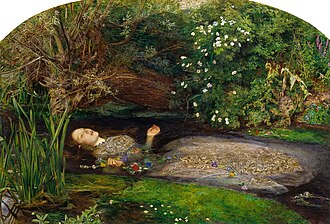 Ofelia - John Everett Millais (1851)
%20-%20Google%20Art%20Project.jpg) El Cristo en casa de sus padres - John Everett Millais (1849)
El Cristo en casa de sus padres - John Everett Millais (1849)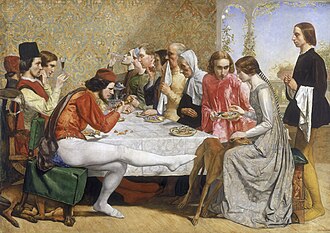 Isabella - John Everett Millais (1849)
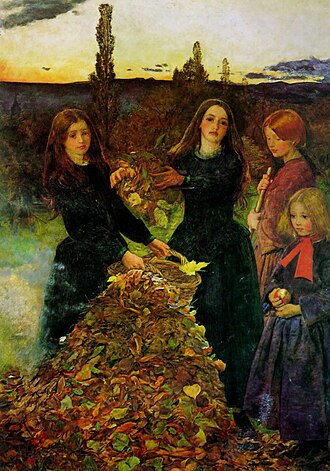 Hojas de otoño - John Everett Millais (1856)
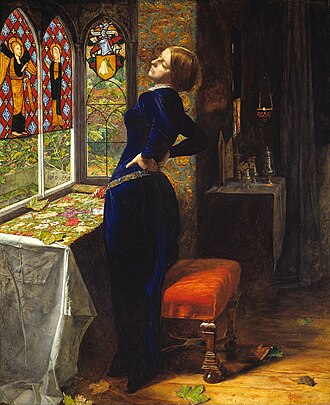 Mariana - John Everett Millais (1851)
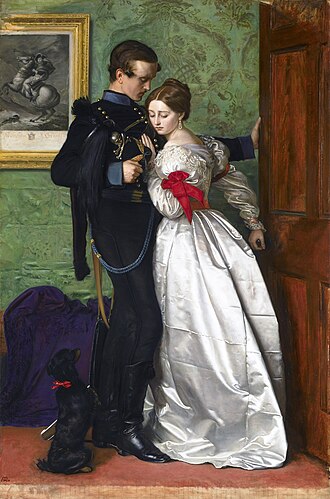 El brunswicker negro - John Everett Millais (1860)
 El valle del descanso - John Everett Millais (1850s)
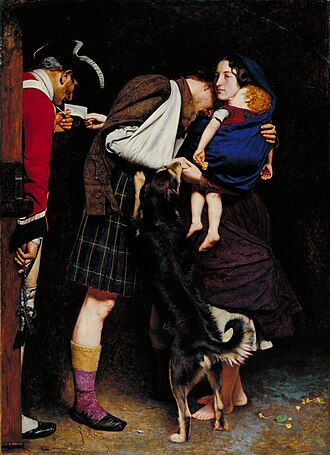 The Order of Release - John Everett Millais (1850s)
Obras de artistas relacionados
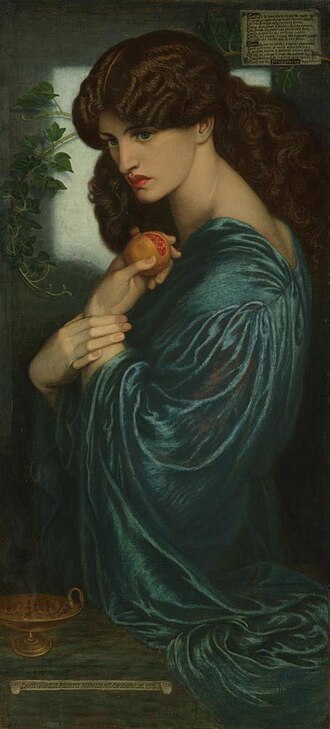 Proserpina - Dante Gabriel Rossetti (1874)
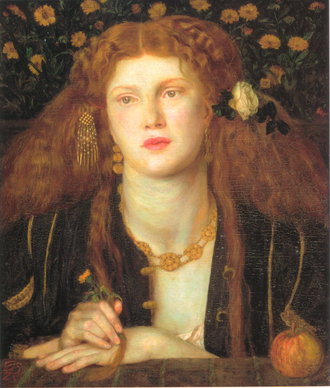 Bocca Baciata - Dante Gabriel Rossetti (1859)
 hilas y las ninfas - John William Waterhouse (1896)
.jpg) La señora de Shalott - John William Waterhouse (1888)
La señora de Shalott - John William Waterhouse (1888)