Woman with a Parrot
Gustave Courbet · 1866
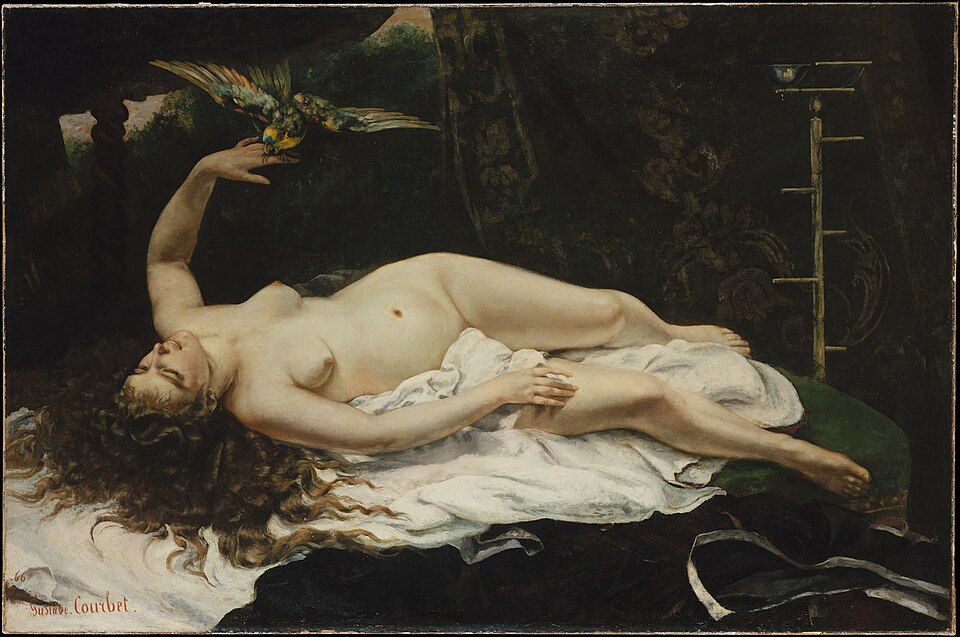
A woman lies back on rumpled drapery, her long red hair spilling across the bed, as a parrot lands on her raised hand. With this canvas, Courbet finally won over the Salon that had once rejected him.
The story behind the painting
Gustave Courbet, the leading French Realist, painted Woman with a Parrot in 1866. Two years earlier, in 1864, he had submitted a nude to the Paris Salon and seen it rejected as indecent. This time the jury accepted his work, making it the first nude by Courbet to be shown at the Salon. The same year he painted Le Sommeil, a far more controversial picture. The model for both was very likely Joanna Hiffernan, who posed for several other works by Courbet. The large canvas, nearly two metres wide, is now in the Metropolitan Museum of Art in New York, where it hangs in Gallery 811.
What to look for
The woman reclines on her back across a bed of drapery, one hand outstretched. On her outstretched hand a pet parrot is alighting, and nearby stands its perch. Let your eye run along the pale, smoothly modelled body and then to the great spill of waist-length red hair tumbling down toward the floor. Look also for her discarded clothes. Courbet chose a pose and polished flesh tones that suited the taste of the Academy, but the scattered garments and loose, untidy hair give the scene a lived-in, very real quality that academic nudes usually avoided.
Meaning and intent
This painting balances two worlds. Its pose and finish follow academic convention, which is why it could pass the Salon jury. Yet Courbet was a Realist, and the details that disturbed viewers, the cast-off clothes and dishevelled hair, insist that this is a real woman in a real room rather than a goddess from myth. That tension is the painting's meaning: an idealised form carrying an unidealised truth. The source notes that these details were controversial, though less so than Le Sommeil of the same year, so Woman with a Parrot can be seen as Courbet testing how far realism could go inside the official Salon.
Legacy
Its success at the 1866 Salon made it a reference point for other painters. When Édouard Manet showed his Young Lady in 1866, a clothed woman with a parrot, critics at the 1868 Salon immediately linked it to Courbet's nude, and the public nicknamed Manet's picture Lady with a Parrot. Both paintings now hang in the same museum in New York, where visitors can compare the two artists' answers to a shared motif. Woman with a Parrot remains a key work for understanding how Courbet brought Realism into the most traditional genre of all, the reclining nude, and changed what the Salon was willing to accept.
Did you know?
- It was Courbet's first nude accepted by the Paris Salon, in 1866.
- A nude he submitted in 1864 had been rejected as indecent.
- Joanna Hiffernan likely posed for it and for Le Sommeil.
- It hangs in Gallery 811 of the Metropolitan Museum of Art.
About the artist
Gustave Courbet (1819-1877)
woman · Metropolitan Museum of Art · nude · waist-length hair · bed · lying · red hair · drapery
More by Gustave Courbet
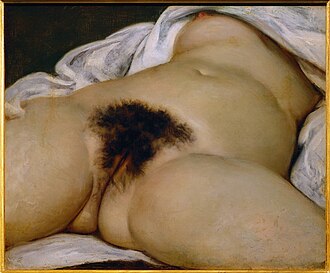 L'Origine du monde - Gustave Courbet (1866)
 A Burial at Ornans - Gustave Courbet (2020)
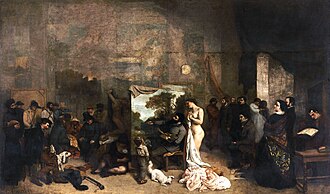 The Painter's Studio - Gustave Courbet (1855)
 The Stone Breakers - Gustave Courbet (1850)
 The Meeting, or Bonjour, Monsieur Courbet! - Gustave Courbet (1854)
 Young Ladies Beside the Seine - Gustave Courbet (1857)
.jpg) The Source - Gustave Courbet (1862)
The Source - Gustave Courbet (1862) Young Ladies of the Village - Gustave Courbet (1850s)
Paintings by related artists
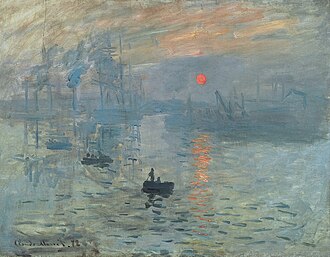 Impression, Sunrise - Claude Monet (1872)
 Water Lilies - Claude Monet (1906)
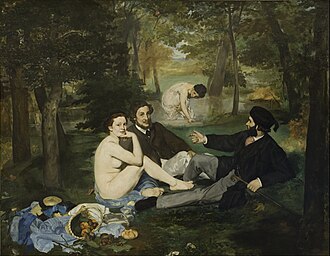 Luncheon on the Grass - Édouard Manet (1863)
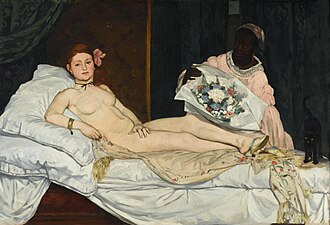 Olympia - Édouard Manet (1863)
 The Starry Night - Vincent van Gogh (1889)
.jpg) Café Terrace at Night - Vincent van Gogh (1888)
Café Terrace at Night - Vincent van Gogh (1888)