Unfinished Portrait of General Bonaparte
Jacques-Louis David · 1790s
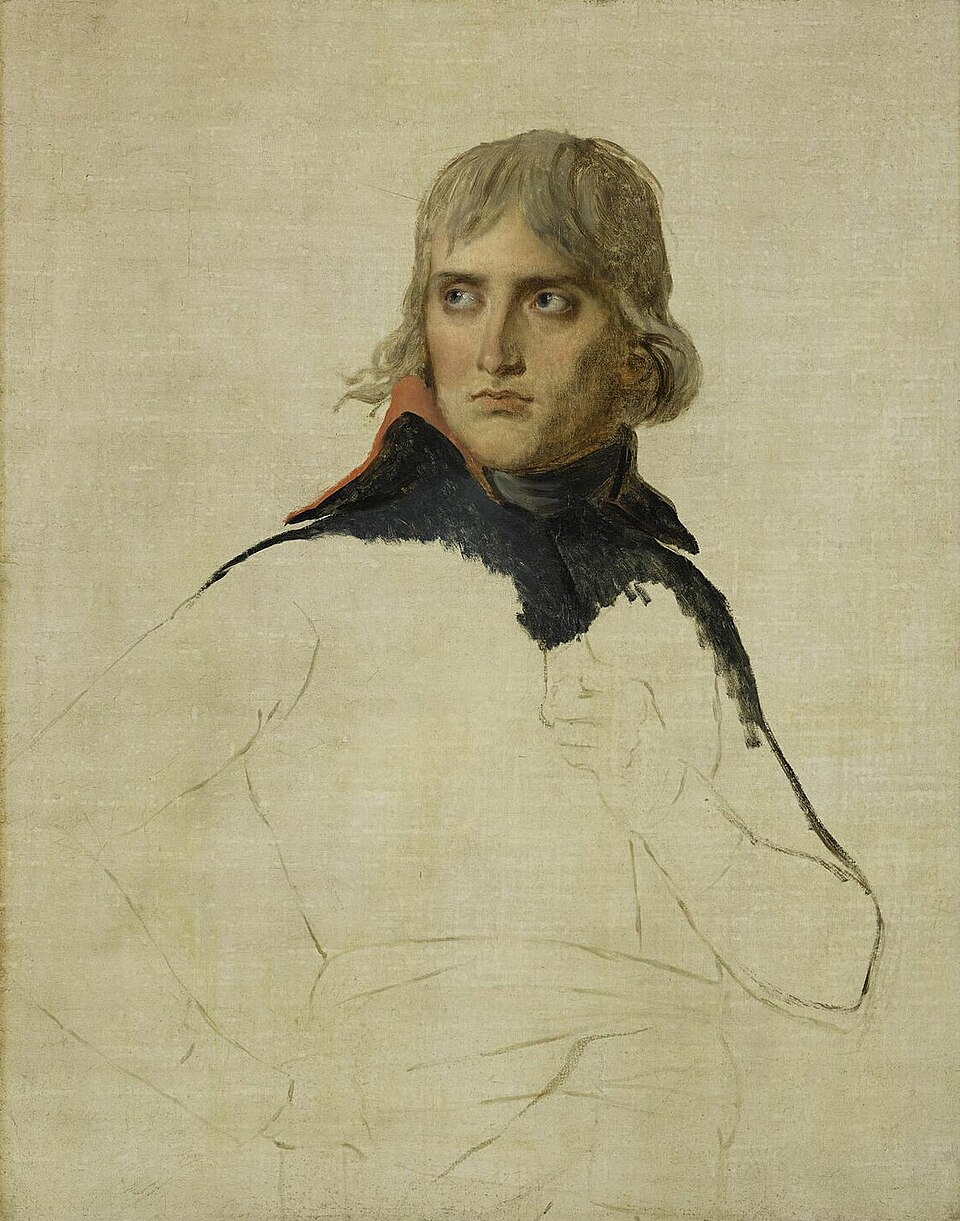
A young general's face glows out of bare primed canvas, his hair stirred by wind, his body only sketched. Bonaparte sat for David once, for three hours, and never came back, so the portrait stayed unfinished.
The story behind the painting
After signing the Treaty of Campo Formio, Bonaparte returned to France as a hero. David first glimpsed him on his arrival and made a quick sketch of his profile. They met properly at a reception given by Lagarde, secretary of the Directory; Bonaparte had accepted on condition that the painter was invited too. During their conversation the idea of a portrait was born. David asked the general to sit in his studio at the Louvre, the Horatii studio, but had to remind him several times before he came. The sitting, between December 1797 and April 1798, lasted three hours and was never repeated.
What to look for
On a ground of primed canvas, Bonaparte's face stands out, turned to his right with his eyes slightly raised. His fairly long, light hair is tossed by the wind. Only the top of the chest is painted, enough to show a dark blue uniform with a red collar and a black scarf. The rest of the body is drawn in Cassel earth, a brown pigment: one fist rests on the right hip, the other hand lies on the chest, and a sash seems to wrap the waist. The canvas, about 81 by 65 cm, is neither signed nor dated. Look at the contrast between the finished face and the ghostly outline below.
Meaning and intent
David planned to show Bonaparte on the plateau of Rivoli, holding the Treaty of Campo Formio, but the portrait painted from life was never completed. David set it aside to return to his large painting The Sabine Women, and it was also to continue that work that he declined Bonaparte's invitation to join him in Egypt; Vivant Denon went in his place. What remains is the moment of the sitting itself: a face caught quickly and directly, before the legend was built. Denon later cut down the canvas, keeping only the painted face and bust, so the work we see today is partly his choice.
Legacy
Vivant Denon acquired the painting and had it cut. In 1826 it was bought by Maret, Duke of Bassano, and stayed in that family until the 1930s; its last private owner there was the Countess of Viel Castel, born Maret de Bassano. It then passed to Germain Seligman and finally to the collector Carlos de Beistegui, who gave it to the Louvre in 1942 while keeping its use for life; it joined the national collections at his death in 1953. In 1955 the face served as the model, drawn by the painter Clement Serveau, for Napoleon's image on French banknotes. Wikipedia dates it 1798; Wikidata gives only the 1790s.
Did you know?
- Painted from life in a single three-hour sitting, 1797 to 1798.
- Never finished; Vivant Denon cut the canvas down to the face and bust.
- Given to the Louvre by Carlos de Beistegui, entering in 1953.
- Used as the model for Napoleon on French banknotes from 1955.
About the artist
Jacques-Louis David (1748-1825)
portrait · man · Department of Paintings of the Louvre · Neoclassicism · 1795-1820 in Western fashion
More by Jacques-Louis David
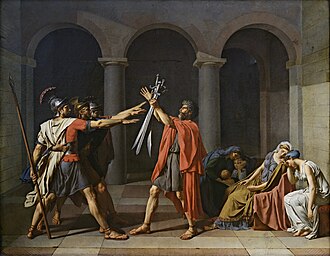 The Oath of the Horatii - Jacques-Louis David (1784)
.jpg) The Intervention of the Sabine Women - Jacques-Louis David (1799)
The Intervention of the Sabine Women - Jacques-Louis David (1799)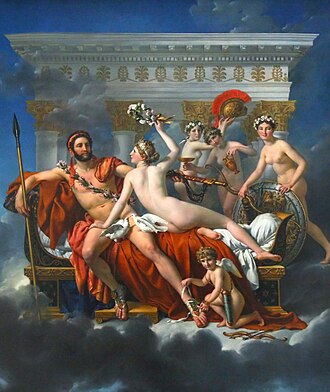 Mars Being Disarmed by Venus - Jacques-Louis David (1824)
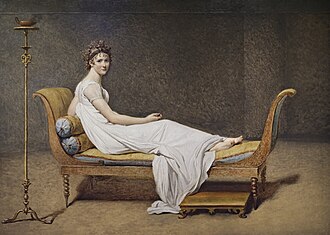 Portrait of Madame Récamier - Jacques-Louis David (1800)
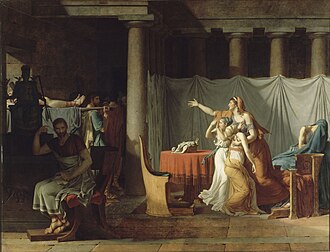 The Lictors Bring to Brutus the Bodies of His Sons - Jacques-Louis David (1789)
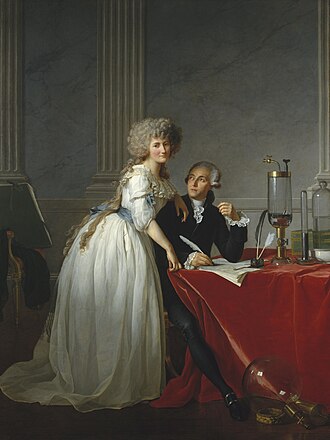 Portrait of Antoine-Laurent Lavoisier and his wife - Jacques-Louis David (1788)
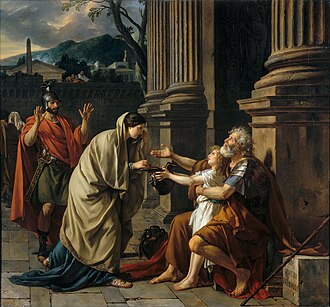 Belisarius Begging for Alms - Jacques-Louis David (1781)
Cupid and Psyche - Jacques-Louis David (1817)
Paintings by related artists
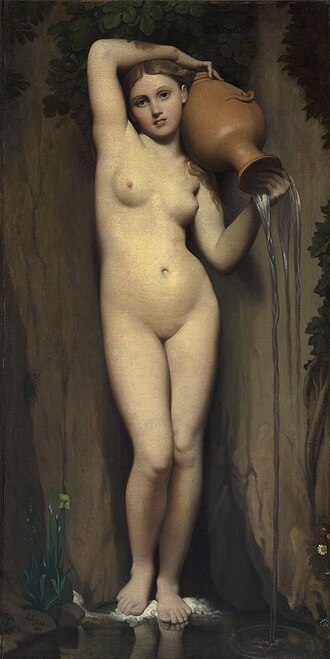 The Source - Jean-Auguste-Dominique Ingres (1856)
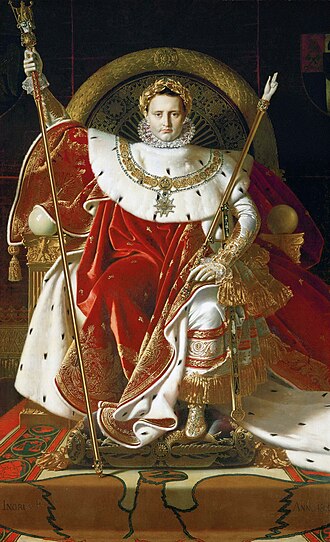 Napoleon I on his Imperial Throne - Jean-Auguste-Dominique Ingres (1806)
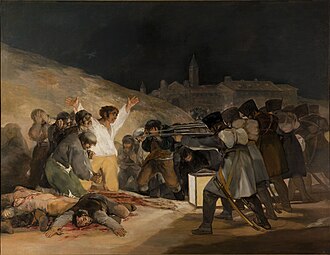 The Third of May 1808 - Francisco Goya (1814)
.jpg) La Maja nue - Francisco Goya (1800)
La Maja nue - Francisco Goya (1800)