Twelve Flemish proverbs
Pieter Bruegel the Elder · 1558
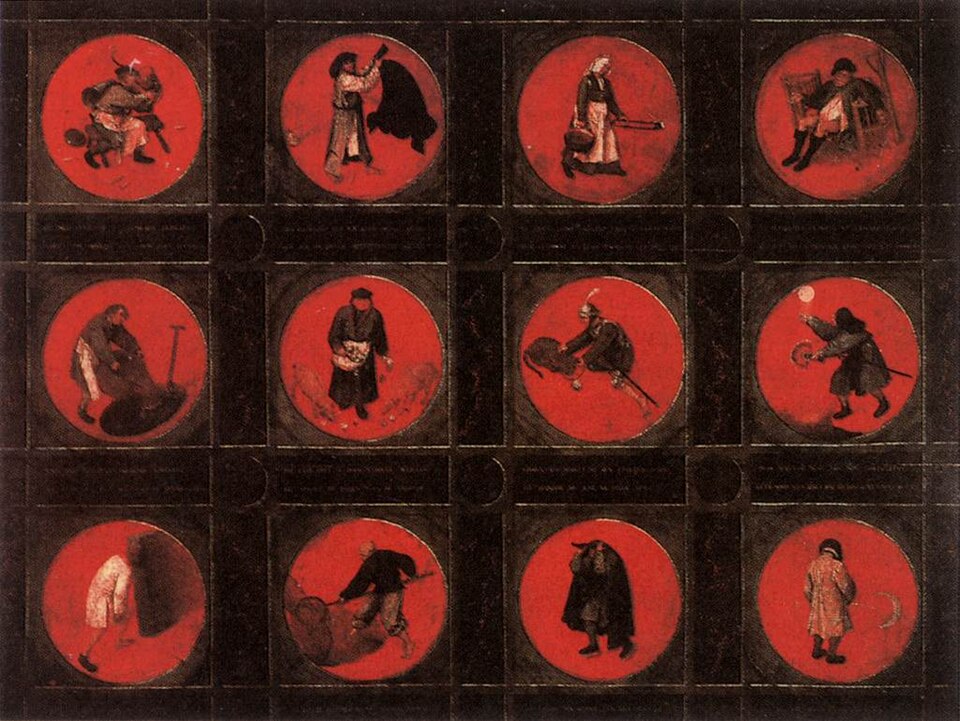
Twelve round little scenes, twelve human follies: a man pisses at the moon, another throws roses to pigs, a third bangs his head against a wall. Bruegel turned Flemish sayings into a gallery of very recognisable mistakes.
The story behind the painting
This panel gathers twelve painted medallions attributed to Pieter Bruegel the Elder and dated 1558. It is signed 15(5)8 BRVEGHEL on the twelfth medallion, the one showing a man pissing against the moon. According to French Wikipedia, the twelve roundels were probably at first the centres of twelve plates, later assembled into a single panel. The attribution remains uncertain, mainly because of the poor state of conservation: the vermilion background layers of the medallions have been restored. The work is kept at the Museum Mayer van den Bergh in Antwerp. Wikidata gives the panel a size of 75 by 98 cm.
What to look for
On a dark ground, twelve medallions about 21 cm across are lined up in three rows. Each holds one figure acting out a Flemish proverb, with an explanatory verse in old Dutch. Read them from top left: a gambler and drinker ruins health and wealth; a man turns his coat with the wind; another carries fire in one hand and water in the other; one sits between two stools in the ashes; one fills the well after the calf has drowned. Then come roses cast before swine, a would-be hero belling the cat, a man envious even of the sun on the water, and one fishing behind the net.
Meaning and intent
Each roundel is a small moral lesson spoken in the first person, as if the fool were confessing. Drinking and gambling bring poverty and shame. Changing sides with every wind, blowing hot and cold, and indecision all end in ruin. Remorse after the damage is done is useless; generosity to those who cannot value it is wasted. Armour makes a coward bold, envy spoils even sunshine, anger makes a man hurt himself, and some always get the lean while others take the fat. The eleventh figure hides under a blue cloak, a sign of a deceived husband who becomes more known the more he hides. The last aims too high.
Legacy
Bruegel returned to proverbs on a much larger scale in his famous Netherlandish Proverbs of 1559, painted the year after this panel, which gathers many sayings into a single crowded scene. The twelve medallions offer a more intimate approach, one figure and one lesson at a time. Because of its condition and uncertain attribution, the panel is less known than Bruegel's major works, but it shows early his talent for turning popular wisdom into lively, humorous images. It remains in Antwerp, at the Museum Mayer van den Bergh, where visitors can read its twelve small lessons one by one.
Did you know?
- Twelve medallions about 21 cm in diameter, oil on wood.
- Signed and dated 1558 on the twelfth medallion.
- The roundels may originally have been the centres of plates.
- Kept at the Museum Mayer van den Bergh, Antwerp.
Wikipedia (French) · Wikidata · Wikipedia (Pieter Bruegel the Elder)
About the artist
Pieter Bruegel the Elder (1525-1569)
More by Pieter Bruegel the Elder
%20-%20Google%20Art%20Project.jpg) The Hunters in the Snow - Pieter Bruegel the Elder (1565)
The Hunters in the Snow - Pieter Bruegel the Elder (1565)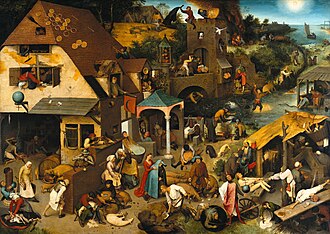 Netherlandish Proverbs - Pieter Bruegel the Elder (1551)
 The Triumph of Death - Pieter Bruegel the Elder (1560s)
%20-%20Blind%20leading%20the%20blind%20Google%20Art%20Project.jpeg) The Blind Leading the Blind - Pieter Bruegel the Elder (1568)
The Blind Leading the Blind - Pieter Bruegel the Elder (1568) The Peasant Wedding - Pieter Bruegel the Elder (1560s)
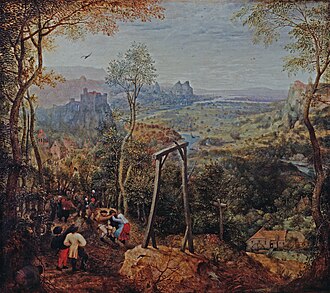 The Magpie on the Gallows - Pieter Bruegel the Elder (1568)
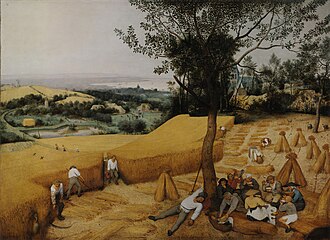 The Harvesters - Pieter Bruegel the Elder (1565)
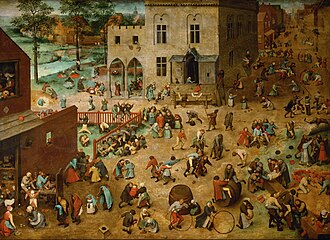 Children's Games - Pieter Bruegel the Elder (1560)
Paintings by related artists
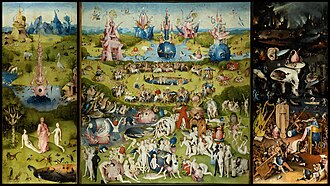 The Garden of Earthly Delights - Hieronymus Bosch
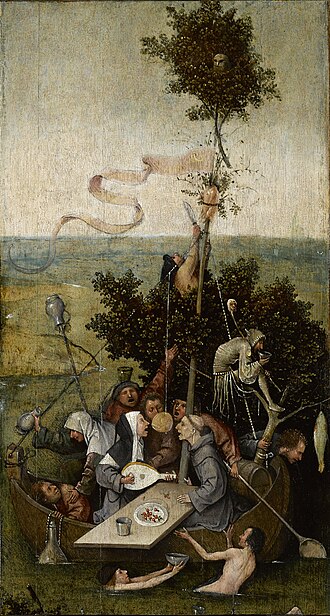 Ship of Fools - Hieronymus Bosch (1500s)
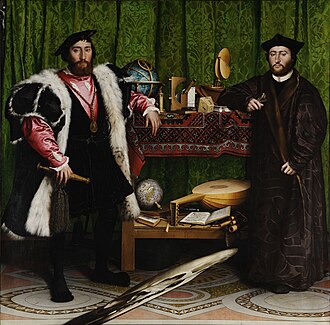 The Ambassadors - Hans Holbein the Younger (1533)
 The Body of the Dead Christ in the Tomb - Hans Holbein the Younger (1520s)