The Dream of Ossian
Jean-Auguste-Dominique Ingres · 1813
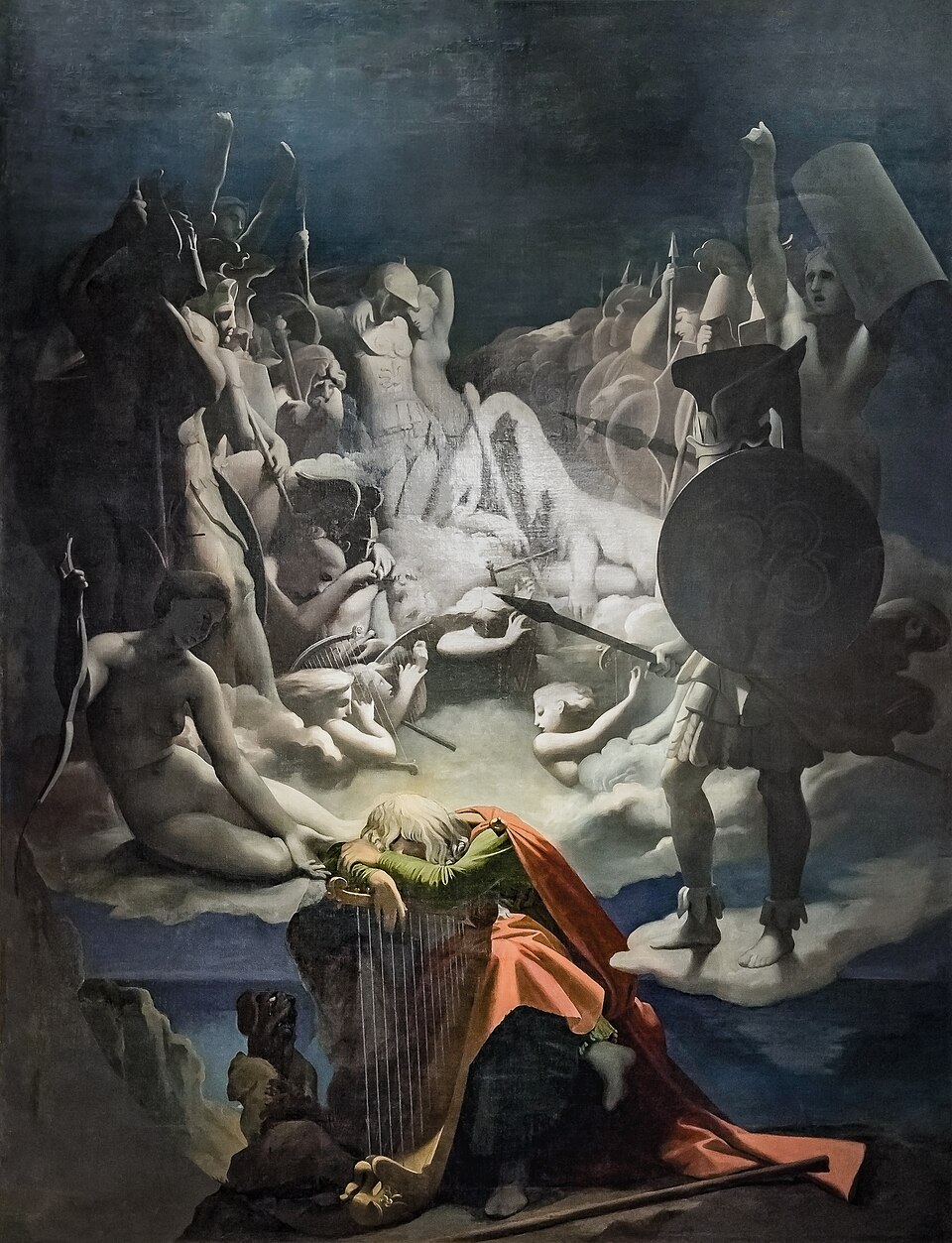
A blind old bard sleeps against his harp, and above him the ghosts of his family and fallen warriors rise in pale, stony clouds. Ingres painted the dream for Napoleon's bedroom ceiling, but the emperor never slept beneath it.
The story behind the painting
Ossian was said to be a blind Scottish poet of the 3rd century, whose poems James Macpherson claimed in the 1760s to have rediscovered and translated from Gaelic. Enthusiasm spread across Europe, and Napoleon, who read them in Melchiorre Cesarotti's Italian, became a fervent admirer. Ingres, also an admirer, drew the subject in 1809 in Rome. Between 1810 and 1812 the French governor of Rome, Miollis, commissioned two large paintings from him for the Quirinal Palace, and in 1813 Ingres completed The Dream of Ossian on a canvas fixed to the ceiling of Napoleon's bedroom there.
What to look for
Ossian sits in the centre foreground, leaning on his harp in a rocky landscape, a hound beside him. Above him rises his dream. On the right his son Oscar holds a spear and shield; on the left a seated woman holds a bow and reaches toward him, read by some as Ossian's wife Evirallina and by others as Oscar's wife Malvina. Behind her Ossian's father Fingal leads warriors, some embraced by naked women. In the middle four maidens play harps in the clouds before the long-haired Snow King Starno. Some figures look doubled, such as the warrior with the lance on the left, traces of changes never finished.
Meaning and intent
The scene comes from The War of Inisthona, where Malvina's harp charms Ossian to sleep and he dreams of the past. Ingres wrote his own summary: Fingal gave his lance to Ossian, who, having lost father and son, blind and sick, soothed his misery by singing of his friends. The dream also echoes Jean-François Le Sueur's 1803 opera Ossian, ou Les bardes, and François Gérard's 1801 Ossian Evoking Phantoms, to which Robert Rosenblum called it clearly indebted. But Gérard's Ossian summons the ghosts in a romantic frenzy, while Ingres's only dreams of them, in what Henry Okun called neoclassic calm.
Legacy
Napoleon never used the bedroom. After his fall the painting was removed from the Quirinal in 1815 and probably sold. Ingres bought it back in 1835, hoping to restore it from poor condition. It was originally oval, and he fitted it to a rectangular frame, asking his pupil Raymond Balze to sketch in the changes, work that was never finished. At his death in January 1867 Ingres left it to the museum of Montauban, now the Musée Ingres Bourdelle. Critics have called it grisaille and bizarre; others see Neoclassicism or Romanticism in it, and Thomas B. Hess heard in it the sobbing fury of Romantic painting.
Did you know?
- Painted in 1813 for the ceiling of Napoleon's bedroom in the Quirinal Palace, Rome.
- Napoleon never used the room; the painting left in 1815.
- Ingres bought it back in 1835 and changed it from oval to rectangular.
- Bequeathed by Ingres to the museum in Montauban in 1867.
About the artist
Jean-Auguste-Dominique Ingres (1780-1867)
cloud · soldier · harp · shield · music
More by Jean-Auguste-Dominique Ingres
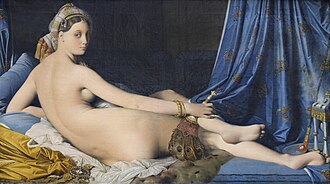 Grande Odalisque - Jean-Auguste-Dominique Ingres (1814)
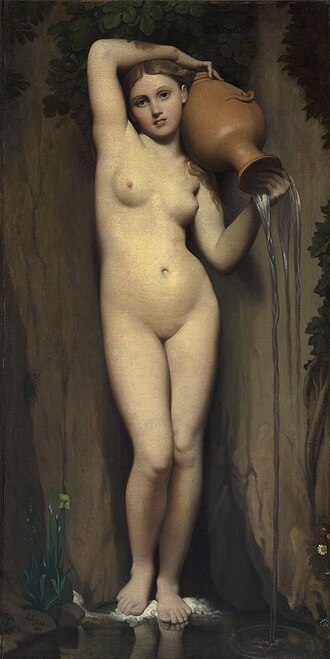 The Source - Jean-Auguste-Dominique Ingres (1856)
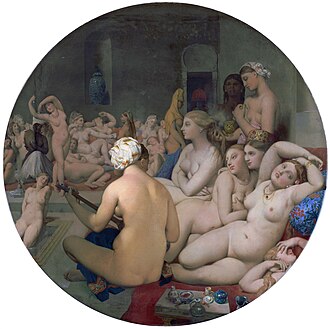 The Turkish Bath - Jean-Auguste-Dominique Ingres (1862)
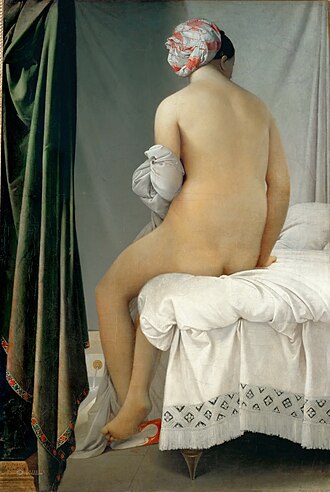 The Valpinçon Bather - Jean-Auguste-Dominique Ingres (1808)
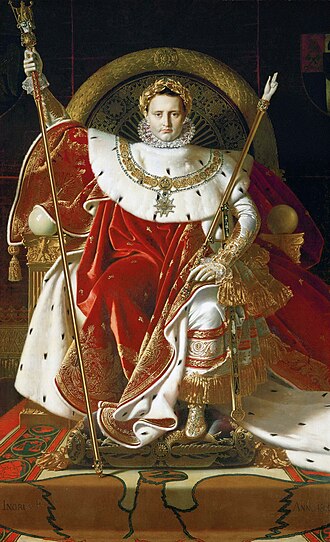 Napoleon I on his Imperial Throne - Jean-Auguste-Dominique Ingres (1806)
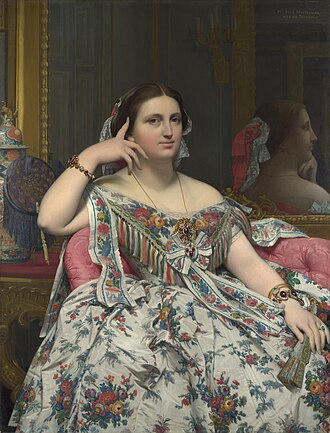 Madame Moitessier - Jean-Auguste-Dominique Ingres (1856)
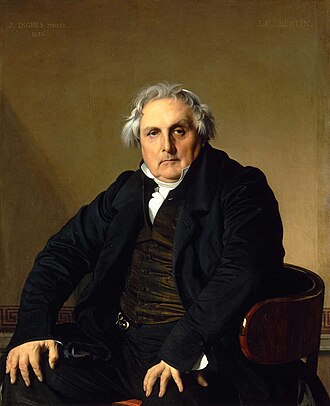 Portrait of Monsieur Bertin - Jean-Auguste-Dominique Ingres (1832)
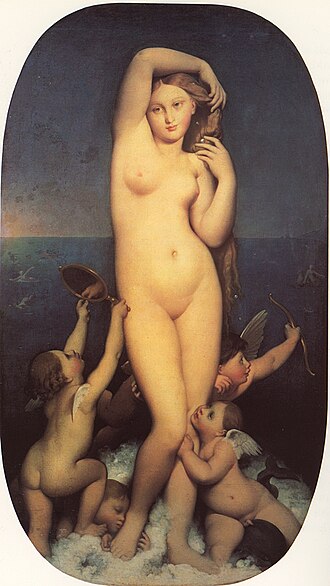 Vénus Anadyomène - Jean-Auguste-Dominique Ingres (1808)
Paintings by related artists
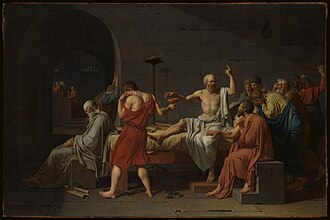 The Death of Socrates - Jacques-Louis David (1787)
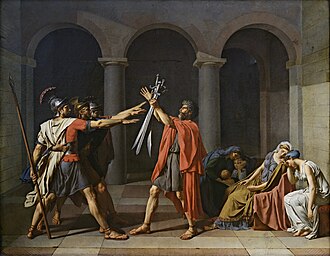 The Oath of the Horatii - Jacques-Louis David (1784)
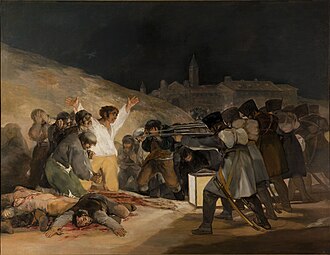 The Third of May 1808 - Francisco Goya (1814)
.jpg) La Maja nue - Francisco Goya (1800)
La Maja nue - Francisco Goya (1800)