The Coalmen
Claude Monet · 1875
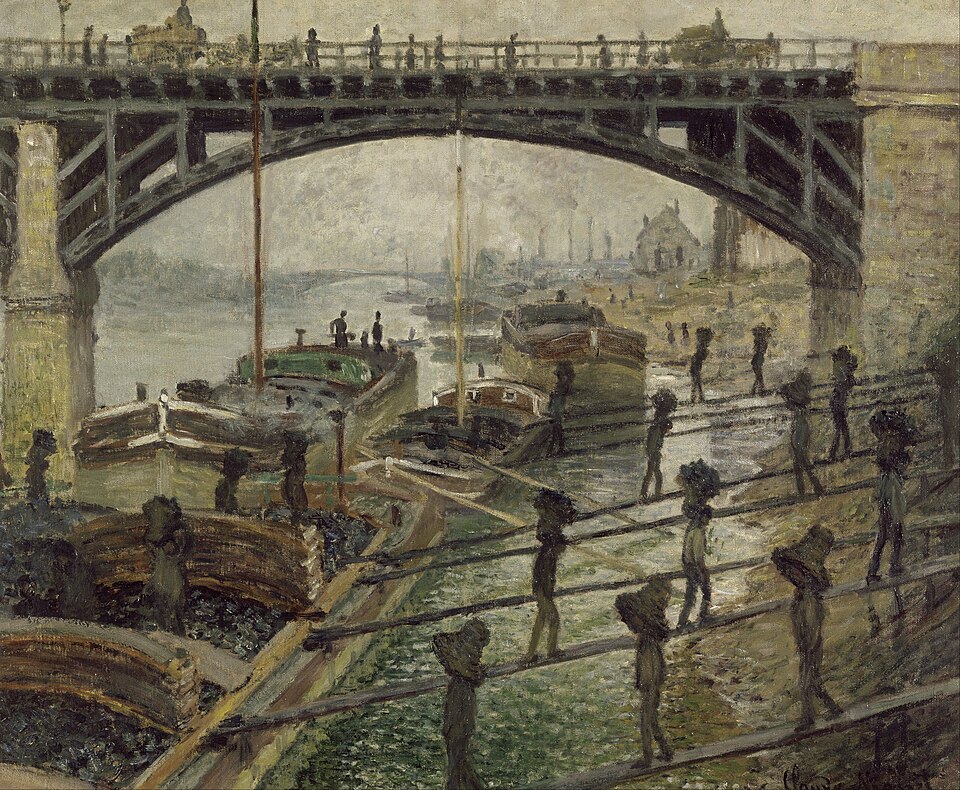
Dark figures file across planks under the heavy span of a bridge, carrying coal from the barges. In the middle of his bright Argenteuil years, Monet painted a riverbank of dust, shadow and labour.
The story behind the painting
Monet had lived in Argenteuil since late 1871 and painted the world around him, urban, rural and domestic. With this picture he moved closer to Paris, to a scene of barges being unloaded on the industrial banks near the Asnières bridge. The view looks downstream toward the Clichy bridge in the distance, with the railway bridge behind the viewer, so the painter stood in the commune of Clichy. Industry here burned a great deal of coal for its steam engines, and the workshops of Gustave Eiffel stood close by.
What to look for
A single span of the Asnières bridge cuts across the top of the canvas. The bridge was very recent, built to replace one destroyed in the war of 1870, with seven cast iron spans carrying a wooden structure on masonry piers, the same design as the rebuilt bridge at Argenteuil seen in other Monet works. Below it, the coal carriers move as shadows against the light, walking in opposite directions along the planks. The colours look as if dust has settled on them, far from the lively palette Monet usually used at the time.
Meaning and intent
The French Wikipedia article notes that Monet never showed special interest in social questions during his life, yet here he conveys a heavy feeling, strengthened by the mass of the bridge closing off the top of the picture, and a sense of dehumanisation in the backlit silhouettes passing each other. Art historians consider the influence of Japanese print masters such as Hiroshige and Hokusai beyond dispute. The subject is unusual for Monet in these years, which makes the painting a quiet, sombre exception in his work.
Legacy
The date of 1875 is not certain, but the painting was part of a public sale at the Hotel Drouot on 24 March 1875, alongside works by Berthe Morisot, Renoir and Sisley. The mood was so tense that insults between supporters and opponents of Impressionism turned into a brawl, and the sale could only begin after the police stepped in. The painting found a buyer, passed through several private collections and entered the French state collections in 1993, joining the Musee d'Orsay that year. It was shown at the fourth Impressionist exhibition and later in about forty exhibitions in Europe, the United States, Canada, Japan and Brazil.
Did you know?
- Painted around 1875, the date is not certain.
- The view is on the Clichy side, under the Asnieres bridge.
- Sold at the stormy Hotel Drouot sale of 24 March 1875.
- In the Musee d'Orsay since 1993.
About the artist
Claude Monet (1840-1926)
genre art · Musée d'Orsay · house · bridge · Asnières-sur-Seine
More by Claude Monet
 Impression, Sunrise - Claude Monet (1872)
 Water Lilies - Claude Monet (1906)
 Woman with a Parasol - Claude Monet (1875)
 Garden at Sainte-Adresse - Claude Monet (1867)
 Women in the Garden - Claude Monet (1866)
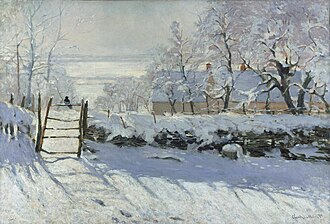 The Magpie - Claude Monet (1868)
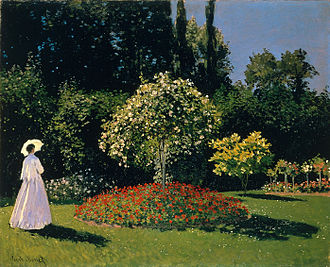 Woman in the Garden - Claude Monet (1867)
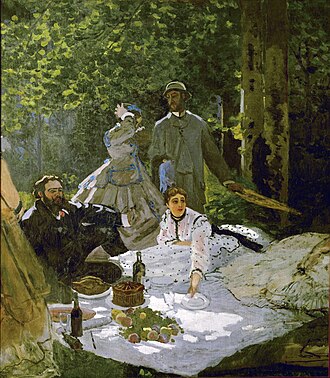 Luncheon on the Grass - Claude Monet (1866)
Paintings by related artists
 The Fighting Temeraire - J. M. W. Turner (1839)
 Rain, Steam and Speed - The Great Western Railway - J. M. W. Turner (1844)
 L'Origine du monde - Gustave Courbet (1866)
 A Burial at Ornans - Gustave Courbet (2020)
 Luncheon on the Grass - Édouard Manet (1863)
 Olympia - Édouard Manet (1863)
 Dance at Le Moulin de la Galette - Pierre-Auguste Renoir (1876)
 Luncheon of the Boating Party - Pierre-Auguste Renoir (1881)
 The Cradle - Berthe Morisot (1872)
 Summer's Day - Berthe Morisot (1879)
 L'Absinthe - Edgar Degas (1875)
 The Bellelli Family - Edgar Degas (1858)