Self-portrait
Jean-Auguste-Dominique Ingres · 1864
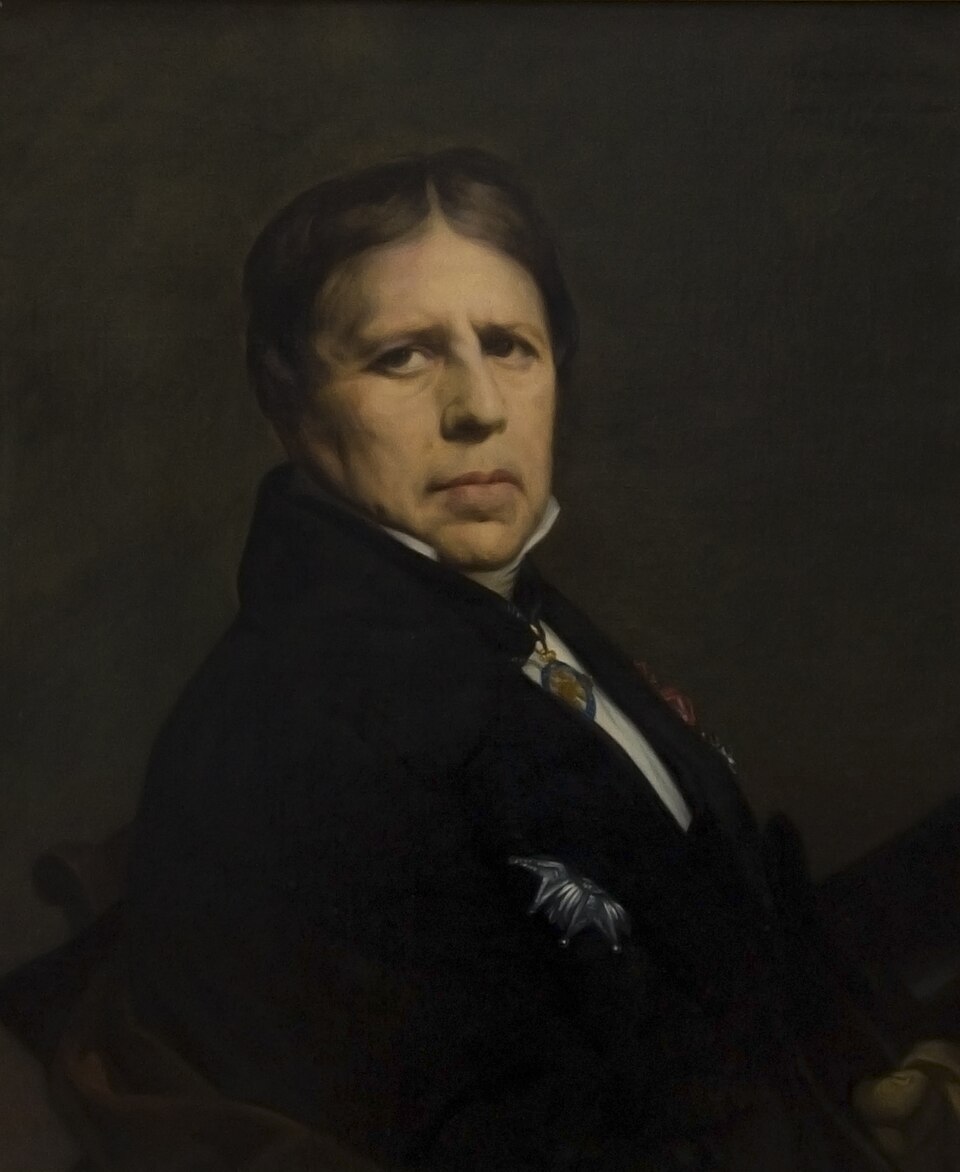
At eighty-four, ill and late with a promise, Ingres finally sent the Antwerp Academy his portrait: top hat, gloves, medals, and a face younger and slimmer than the truth. Behind the pride sits a fear of old age.
The story behind the painting
Ingres had long been an associate of the Academy of Antwerp, but could only become a full member after the death of Paul Delaroche, and he was asked to provide a work and a self-portrait for the academy's museum. Old and sick, he found it hard to comply. On 3 July 1865 he wrote to apologise for taking so long to send his portrait, blaming his age and uneven health. The academy insisted, and he eventually gave this picture in gratitude. He based it on self-portraits of 1858 and 1859, and all three go back to a photograph taken around 1855.
What to look for
Ingres poses not as an artist but as a well-to-do man of the world, ready to go out in a smart suit with top hat and gloves. He wears his honours proudly: the star of a Grand Officer of the Legion of Honour, the cross of the Prussian Order of Merit and a decoration from the Grand Duke of Tuscany. Notice the fabrics, the black cloth of the jacket against the silk collar, and the hard nose of the fleshy face against fine, sleek hair. Unlike the 1859 Fogg version, the light differs and the hat casts no shadow. He signed it emphatically, painted by himself for the celebrated Academy of Antwerp.
Meaning and intent
The look is self-satisfied, penetrating and slightly mocking, and the meeting between painter and viewer is very direct. Ingres was eighty-four, yet he painted himself handsomer, younger and slimmer, and younger even than in the Fogg version made five or six years before. The portrait confirms the status he had reached. It is also read as an expression of his fear of death and decline, an ultimate attempt to hold off fate. He wrote that he thought a great deal about his old age, and that it would take revenge on him.
Legacy
The painting belongs to the Royal Museum of Fine Arts in Antwerp and is one of Ingres's last portraits; he died in January 1867. A related, more severe portrait from 1858 is in the Uffizi in Florence. The sources differ on details: Wikipedia gives the size as 64 by 53 cm while Wikidata records 96.7 by 86 cm, and Wikipedia dates it both 1864 and 1864 to 1865. The photograph behind it was also etched by Alphonse Masson and published in the magazine l'Artiste on 5 April 1857.
Did you know?
- Painted for the Academy of Antwerp when Ingres was eighty-four.
- Based on a photograph of about 1855 and two earlier self-portraits.
- He shows three orders: French, Prussian and Tuscan.
- Now in the Royal Museum of Fine Arts, Antwerp.
About the artist
Jean-Auguste-Dominique Ingres (1780-1867)
self-portrait · Royal Museum of Fine Arts Antwerp · Jean-Auguste-Dominique Ingres
More by Jean-Auguste-Dominique Ingres
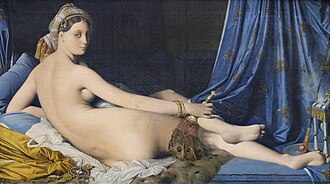 Grande Odalisque - Jean-Auguste-Dominique Ingres (1814)
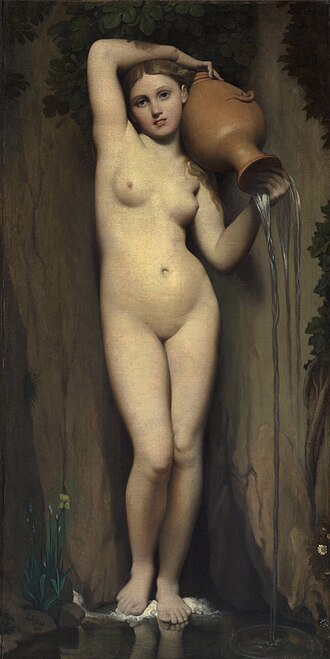 The Source - Jean-Auguste-Dominique Ingres (1856)
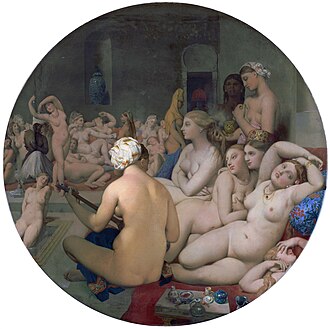 The Turkish Bath - Jean-Auguste-Dominique Ingres (1862)
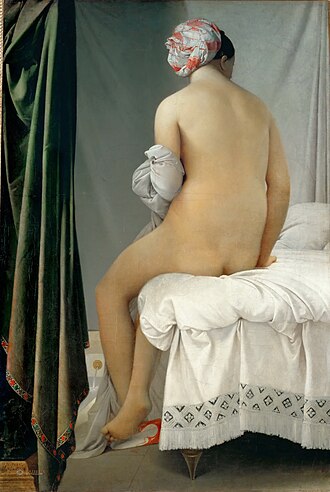 The Valpinçon Bather - Jean-Auguste-Dominique Ingres (1808)
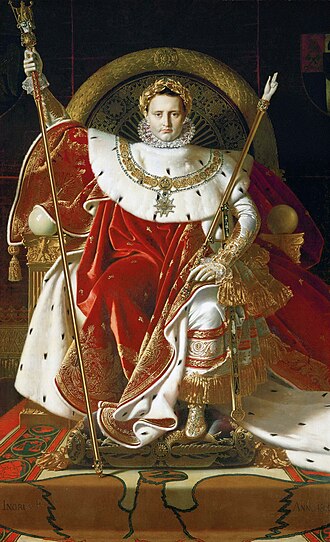 Napoleon I on his Imperial Throne - Jean-Auguste-Dominique Ingres (1806)
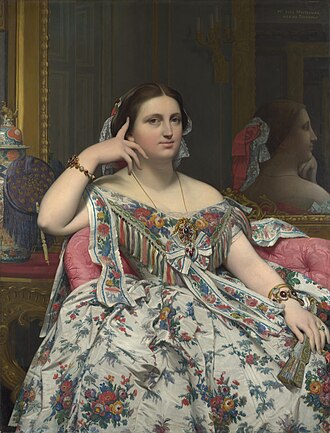 Madame Moitessier - Jean-Auguste-Dominique Ingres (1856)
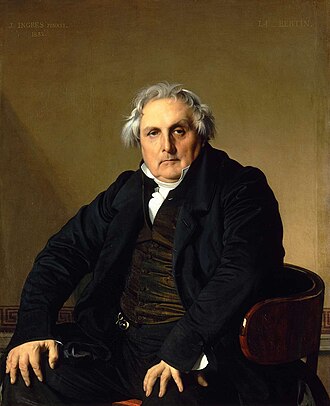 Portrait of Monsieur Bertin - Jean-Auguste-Dominique Ingres (1832)
 Vénus Anadyomène - Jean-Auguste-Dominique Ingres (1808)
Paintings by related artists
 The Death of Socrates - Jacques-Louis David (1787)
 The Oath of the Horatii - Jacques-Louis David (1784)
 The Third of May 1808 - Francisco Goya (1814)
 La Maja nue - Francisco Goya (1800)