Self-Portrait Aged 24
Jean-Auguste-Dominique Ingres · 1804
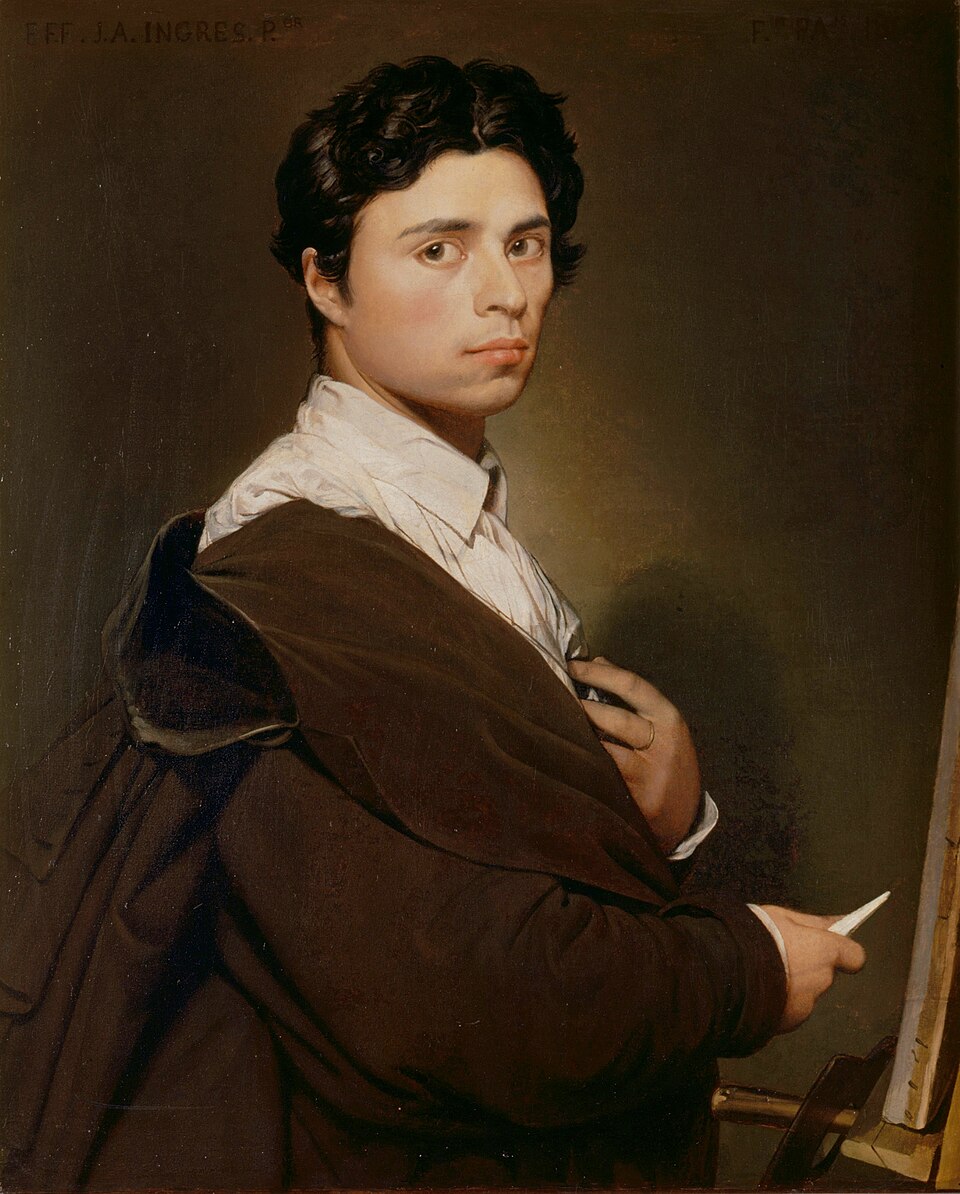
A young painter in a brown cloak looks out at us, chalk in hand, before an easel. It is Ingres at 24, but not quite: decades later he repainted his own youth, and the first version now lies hidden underneath.
The story behind the painting
Ingres first painted this, his earliest self-portrait, in 1804, after winning the Prix de Rome. It marked the start of a period when he wanted to make his name as a portraitist. The original was shown at the Paris Salon of 1806 and met with such disheartening criticism that Ingres declared he would not exhibit at the Salon again. Some time after 1850 he reworked the painting heavily. Researchers at the French museums' research and restoration centre concluded that the original self-portrait still lies beneath the present surface, which is why scholars have wondered why he did not simply start a new picture.
What to look for
In its present form Ingres stands before an easel with a canvas, holding chalk in his right hand, an oversized brown carrick, a cape-like overcoat with a velvet collar, resting on his upper back. His head is turned three quarters toward us. His left hand is pressed to the left side of his chest. Look at the lines and contrasts: clearly defined contours, strong play of dark and light, and brushwork that gives the face the feel of real skin, with a flush of rosacea on the cheeks. The canvas measures about 77 by 61 cm.
Meaning and intent
The earlier look survives only through copies. In 1807 his fiancée Marie-Anne-Julie Forestier painted one in which Ingres seems to wipe an empty canvas with a handkerchief marked with a red I, a wedding band on his finger. A photograph by Charles Marville, taken months before the reworking, shows a sketch of his childhood friend François Gilibert on the canvas, perhaps added in answer to critics of the blank one. In the final version the handkerchief is gone, the neck is straightened and the face rounded. Andrew Carrington Shelton suggests the hand on his chest clutches something tied to Gilibert, who died around the time of the last changes.
Legacy
The painting is now in the Musée Condé at Chantilly. Its history kept multiplying: in 1861 Madame Gustave Héquet painted a copy, now in the Metropolitan Museum of Art, that looks like the 1804 version, yet x-rays found a copy of the later version underneath, so a later hand probably changed it to match Forestier's copy or another early copy. Scholars have read the portrait in many ways, from a romantic bond with Gilibert to a study in realism. One writer saw in its stationary pose the implicit fact of relentless change.
Did you know?
- First painted in 1804, reworked after 1850.
- Shown at the Paris Salon of 1806 to harsh criticism.
- The original version lies under the present surface.
- Now in the Musée Condé, Chantilly.
About the artist
Jean-Auguste-Dominique Ingres (1780-1867)
man · Neoclassicism · self-portrait · Condé Museum · easel
More by Jean-Auguste-Dominique Ingres
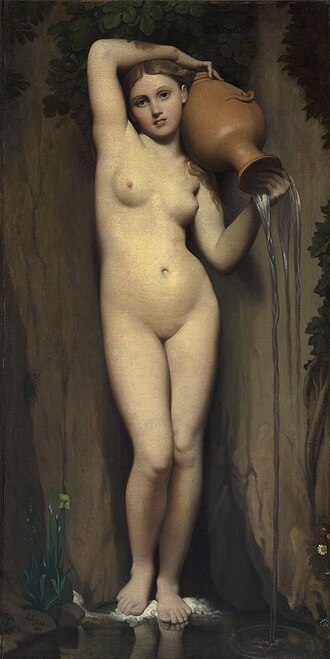 The Source - Jean-Auguste-Dominique Ingres (1856)
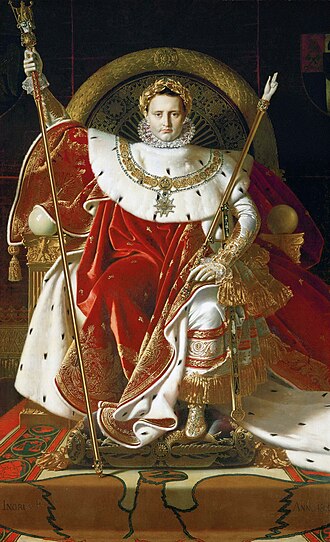 Napoleon I on his Imperial Throne - Jean-Auguste-Dominique Ingres (1806)
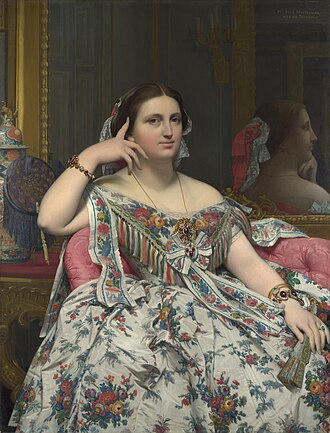 Madame Moitessier - Jean-Auguste-Dominique Ingres (1856)
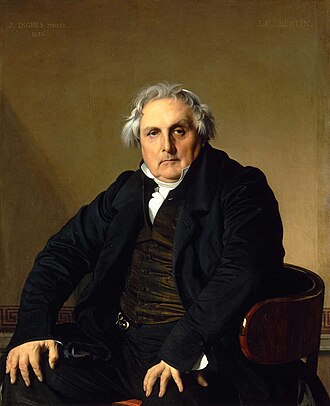 Portrait of Monsieur Bertin - Jean-Auguste-Dominique Ingres (1832)
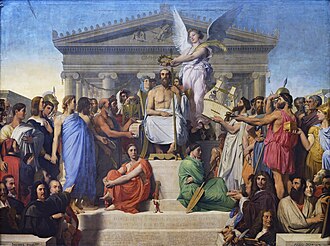 The Apotheosis of Homer - Jean-Auguste-Dominique Ingres (1827)
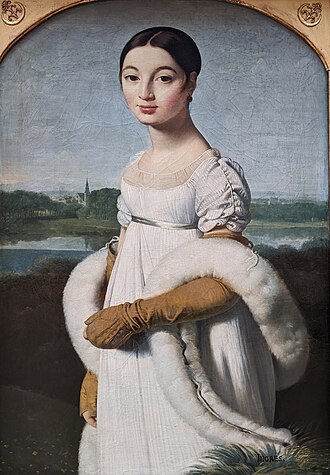 Mademoiselle Caroline Rivière - Jean-Auguste-Dominique Ingres (1806)
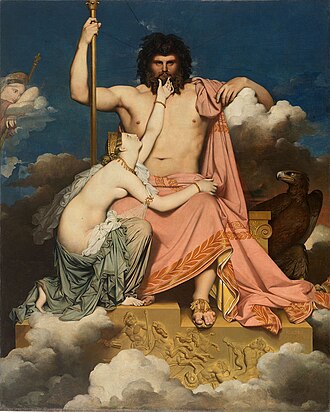 Jupiter and Thetis - Jean-Auguste-Dominique Ingres (1811)
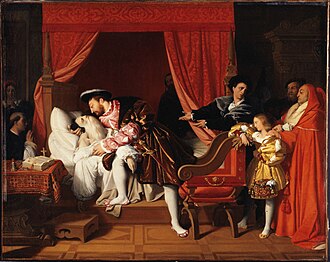 The Death of Leonardo da Vinci - Jean-Auguste-Dominique Ingres (1818)
Paintings by related artists
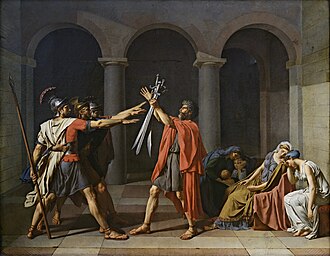 The Oath of the Horatii - Jacques-Louis David (1784)
.jpg) The Intervention of the Sabine Women - Jacques-Louis David (1799)
The Intervention of the Sabine Women - Jacques-Louis David (1799)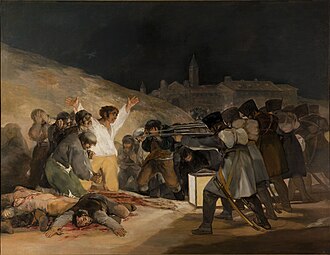 The Third of May 1808 - Francisco Goya (1814)
.jpg) La Maja nue - Francisco Goya (1800)
La Maja nue - Francisco Goya (1800)