Saint Jerome Hears the Trumpet of the Last Judgment
Jacques-Louis David · 1779
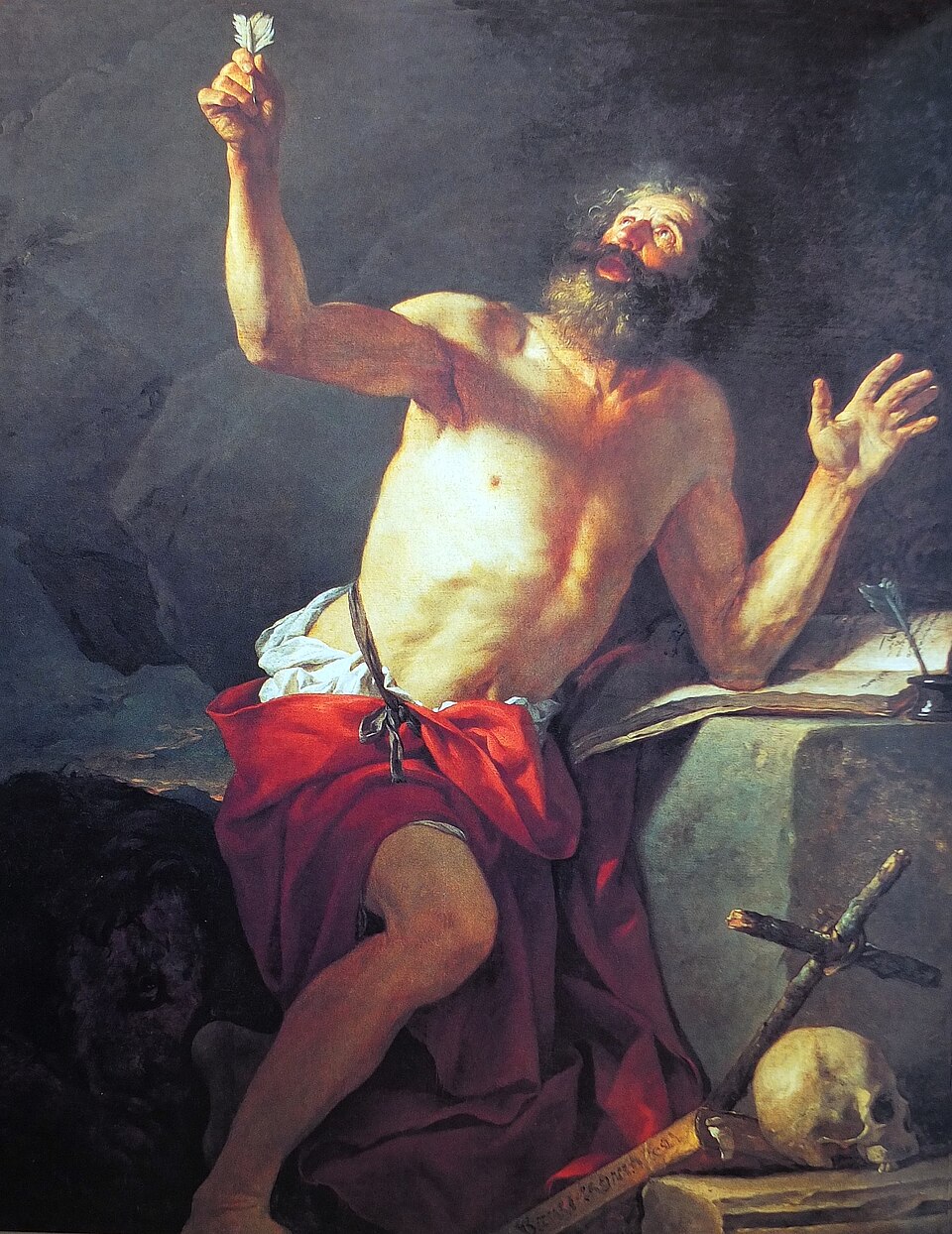
An old scholar, half naked in his cell, stops writing as the trumpet of the Last Judgment sounds. The young Jacques-Louis David painted him in 1779, and two centuries later the canvas set off a long struggle in Quebec over who should keep it.
The story behind the painting
Jacques-Louis David painted Saint Jerome Hears the Trumpet of the Last Judgment in 1779, and it was exhibited at the Salon of 1781 at the Louvre in Paris. Jerome, one of the four Doctors of the Church, spent years translating the Bible into Latin, the version known as the Vulgate. After David's death in 1825 the painting entered the collection of Cardinal Joseph Fesch, and later that of the history and genre painter Gustave Mailand, grandfather of the sisters Henriette and Geneviève Cramail, who brought it to Quebec City between 1901 and 1908.
What to look for
The canvas is about 174 by 124 cm according to Wikidata. Jerome appears as a half clad hermit in his cell, surrounded by his familiar attributes: a cross, a skull and the Bible. In his right hand he holds a quill, a sign that he is at work on the Vulgate. He wears the red garment of a cardinal, a reminder of his role as secretary to Pope Damasus I. The title tells you the moment: the sound of the final trumpet reaching him in the middle of his labour.
Meaning and intent
Every object in the cell speaks of a double life. The quill and the book stand for Jerome the scholar, the man who gave the Western Church its Latin Bible. The skull alludes to the other side of his life, penance and the constant thought of death. By choosing the instant when Jerome hears the trumpet of the Last Judgment, David joins both ideas: all the learning in the world must still answer to the end of time.
Legacy
In 1938 the Cramail sisters gave the painting to the parish of Notre-Dame de Québec, to replace works lost in a fire at the cathedral in 1922. From 1995 to 2013 it was shown at the National Gallery of Canada, then kept at the Musée de la civilisation for conservation. When the parish sought to sell it in 2016, several museums tried to acquire it, and on 23 April 2018 the government of Quebec announced its intent to classify it as heritage. The sources differ on its home: Wikidata lists the Musée de la civilisation, while Wikipedia says it now hangs in the Montreal Museum of Fine Arts. It is one of only two paintings by David in a Canadian collection.
Did you know?
- Painted by Jacques-Louis David in 1779, shown at the Salon of 1781.
- Given to the parish of Notre-Dame de Québec in 1938.
- Quebec moved to classify it as heritage in April 2018.
- One of only two paintings by David in Canada.
About the artist
Jacques-Louis David (1748-1825)
More by Jacques-Louis David
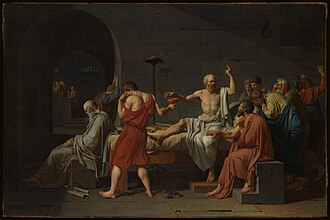 The Death of Socrates - Jacques-Louis David (1787)
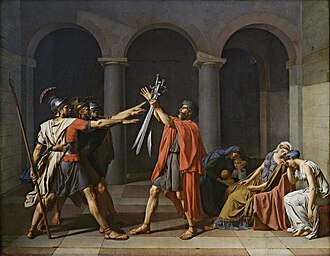 The Oath of the Horatii - Jacques-Louis David (1784)
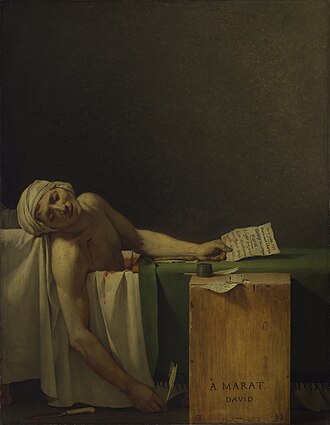 The Death of Marat - Jacques-Louis David (1793)
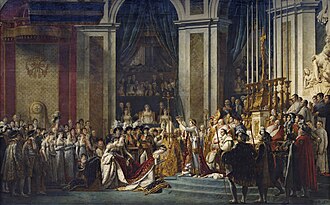 The Coronation of Gabo Napoleon - Jacques-Louis David (1807)
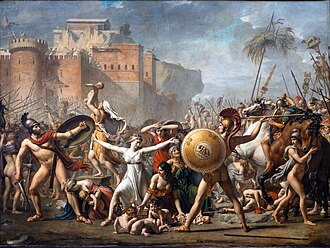 The Intervention of the Sabine Women - Jacques-Louis David (1799)
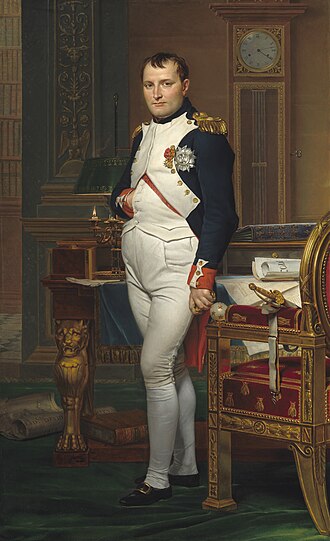 The Emperor Napoleon in His Study at the Tuileries - Jacques-Louis David (1812)
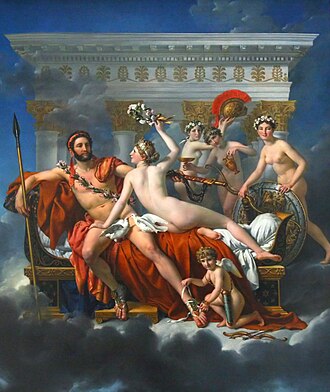 Mars Being Disarmed by Venus - Jacques-Louis David (1824)
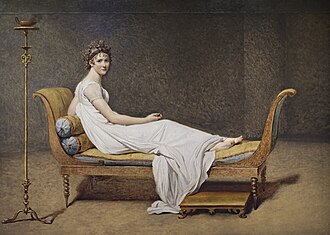 Portrait of Madame Récamier - Jacques-Louis David (1800)
Paintings by related artists
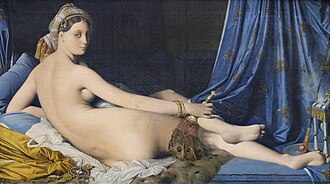 Grande Odalisque - Jean-Auguste-Dominique Ingres (1814)
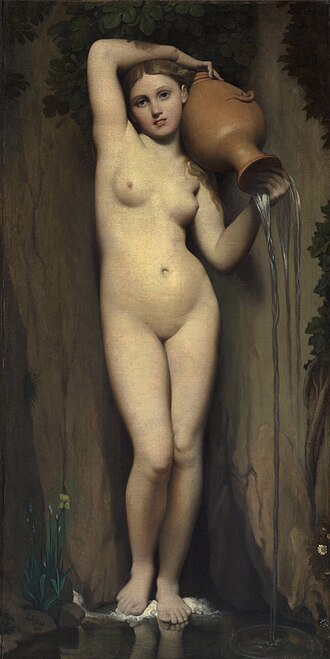 The Source - Jean-Auguste-Dominique Ingres (1856)
 The Third of May 1808 - Francisco Goya (1814)
 La Maja nue - Francisco Goya (1800)