Porträt Carl Hagenbeck mit dem Walroß Pallas
Lovis Corinth · 1911
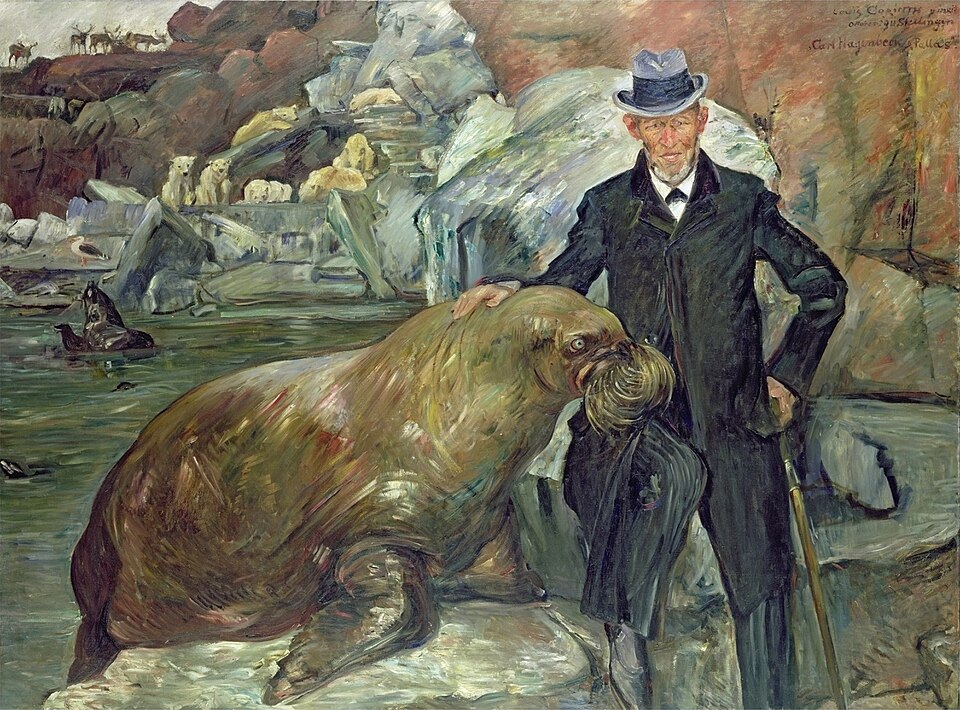
A famous zoo director leans on a pool edge, one hand resting on the neck of a huge walrus. Lovis Corinth painted Carl Hagenbeck and Pallas in October 1911, only weeks before a stroke changed his life.
The story behind the painting
The portrait was a commission from Alfred Lichtwark, director of the Hamburger Kunsthalle. Lichtwark had been delighted by Corinth's second portrait of the historian Eduard Meyer from 1910 to 1911 and asked him to paint another portrait for the museum. Corinth's wife Charlotte Berend-Corinth wrote in her catalogue that it was painted at Hagenbeck's zoo in Hamburg, meaning the animal park Hagenbeck had opened in 1907 in Stellingen. On 10 October 1911 Corinth wrote to Lichtwark about the work, and the next day he described his troubles, above all with the walrus, to Charlotte, adding a pen sketch of Pallas.
What to look for
The canvas is large, about 200 by 271 cm. Hagenbeck stands facing us at the seal pool in a dark suit, dark coat, white shirt and grey hat with a dark band, a walking stick in his left hand. He leans on the edge of the enclosure with his right knee bent and lays his right hand on the walrus's neck. Pallas, a popular walrus bull, sits propped on his front flippers in profile and fills about a third of the picture. Behind them are rocks and water with two more seals, and in the upper left corner several reindeer or other deer. The inscription at upper right reads Lovis Corinth pinxit October 1911 Stellingen Carl Hagenbeck & Pallas.
Meaning and intent
Corinth's letter to Charlotte referred to a picture of you with the bull, meaning his Girl with Bull of 1902, in which he had painted her with a bull. So the walrus portrait echoes an earlier pairing of a person and a powerful animal. Not everyone was convinced. The art historian Horst Uhr judged that the portrait is not among Corinth's most successful works, mainly because the big game hunter and founder of the famous zoo is shown with the grim looking walrus. At best, he wrote, it is an interesting, if not entirely successful, contribution to the portrait genre.
Legacy
In December 1911 Corinth suffered a stroke that left him partly paralysed. On the night of 31 December he wrote to Lichtwark from his sickbed, asking to show the painting in an exhibition. Lichtwark acquired it in 1911 for the Kunsthalle's collection of pictures of Hamburg, together with the Meyer portrait and a view over the Koehlbrand, and the museum commission approved the purchase on 17 December 1911. In 1912 the portrait was shown at the Berlin Secession. After Corinth's death, Hagenbeck's son Heinrich, later director of the zoo, wrote to Charlotte about the picture and the much loved Pallas. It remains in the Hamburger Kunsthalle.
Did you know?
- Painted in October 1911 at Hagenbeck's animal park in Stellingen, Hamburg.
- Commissioned by Alfred Lichtwark for the Hamburger Kunsthalle.
- Pallas the walrus fills about a third of the 200 by 271 cm canvas.
- Corinth had a stroke two months after finishing it.
About the artist
Lovis Corinth (1858-1925)
portrait · man · Hamburger Kunsthalle
More by Lovis Corinth
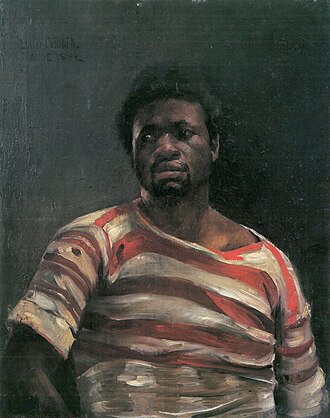 Black Othello - Lovis Corinth (1884)
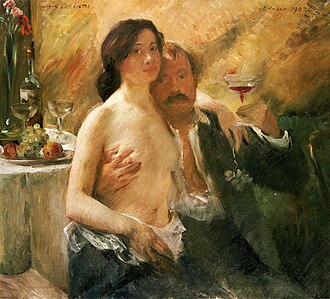 Self portrait with his wife Charlotte Berend-Corinth and a sekt glass - Lovis Corinth (1902)
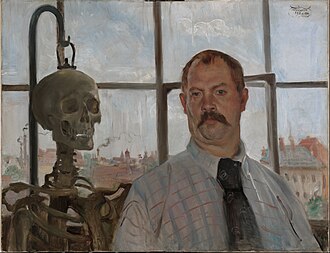 Self-portrait with Skeleton - Lovis Corinth (1896)
 Innocentia - Lovis Corinth (1890)
 Susanna in the Bath - Lovis Corinth (1890)
 The Red Christ - Lovis Corinth (1922)
 Reading Woman - Lovis Corinth (1911)
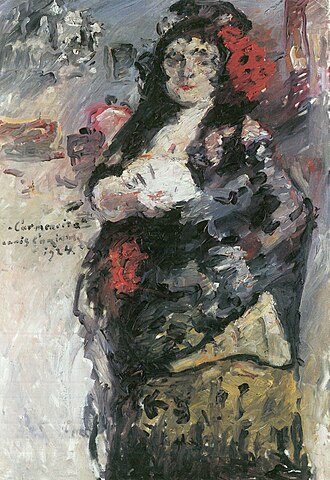 Carmencita - Lovis Corinth (1924)