Portrait of a Man
Raphael · 1502
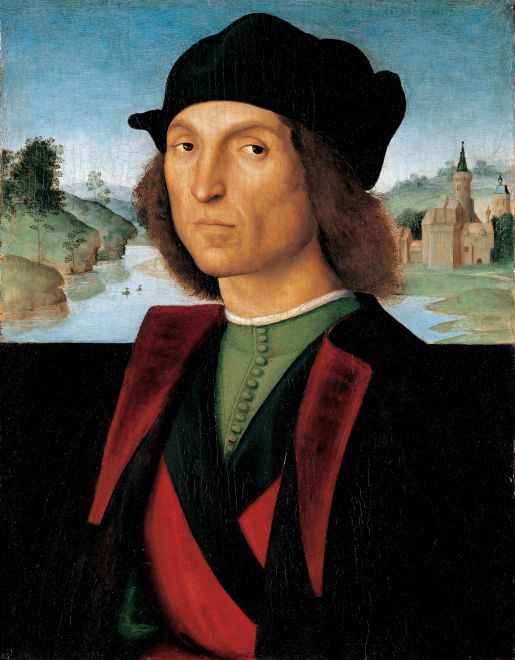
A young man in a black hat and red doublet looks at us from in front of a river valley where two ducks swim. An old inscription on the back says he is a Duke of Urbino painted by Raphael, and scholars have argued about it ever since.
The story behind the painting
Raphael painted this oil on panel around 1502 to 1504. Wikidata gives 1502. The identification of the sitter rests on an inscription on the back: it records the gallery of the Marquis Bovio in Bologna, on Strada Santo Stefano, and calls the picture a portrait of a Duke of Urbino in Raphael's first manner. The name Guidobaldo was first put forward by Filippini, who drew on a letter from Pietro Bembo to Cardinal Bibbiena mentioning a portrait of the Duke, and on a mention by Baldi. Historians now compare it with the portrait of Guidobaldo da Montefeltro in the Uffizi.
What to look for
The man is shown bust-length, turned three-quarters and looking at the viewer. He wears a black hat over thick, frizzy hair, an open black coat with red lapels, a red doublet with black edges crossed and tied at the waist, and a green shirt buttoned at the collar with a white border. Behind him a high parapet cuts across a landscape of hills fading toward a river valley, where two ducks swim, with shrubs and medieval buildings, among them a church and its bell tower. The panel measures 47 by 37 cm.
Meaning and intent
The painting looks north and south at once. Its overall composition and the buildings of the setting recall Flemish portraitists such as Hans Memling. The atmosphere, the warm tones and the composition point to the Italian school, and in particular to Venetian influences on the school of Perugino, Raphael's teacher. The date is tied to Raphael's Resurrection of Christ in the São Paulo Museum of Art, which has a similar cool colouring of blues and greens. A young painter is gathering lessons from several traditions in one small panel.
Legacy
The attribution has not been unanimous. Giovanni Battista Cavalcaselle first rejected the inscription, then accepted it with reservations, admitting the influence of Francesco Francia, to whom he had given the work. Adolfo Venturi rejected the traditional attribution, while Filippini confirmed it in 1925, allowing for a likely intervention by Francia around 1506, when Raphael was probably in Bologna. Bernard Berenson, Roberto Longhi and Ettore Camesasca accept it as Raphael. The portrait is kept in the Liechtenstein Museum in Vienna.
Did you know?
- Painted by Raphael around 1502 to 1504.
- An inscription on the back calls it a portrait of a Duke of Urbino.
- Possibly Guidobaldo da Montefeltro, though not all scholars agree.
- Kept in the Liechtenstein Museum, Vienna.
About the artist
Raphael (1483-1520)
portrait · man · High Renaissance
More by Raphael
 Sistine Madonna - Raphael (1510s)
 La fornarina - Raphael
 Madonna of the Goldfinch - Raphael (1500s)
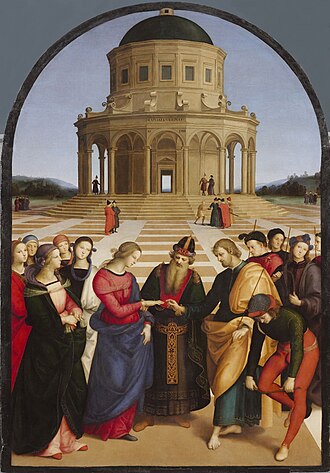 The Marriage of the Virgin - Raphael (1504)
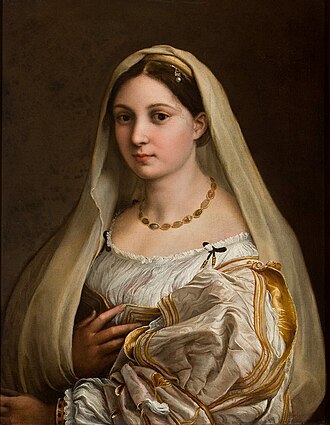 La velata - Raphael (1510s)
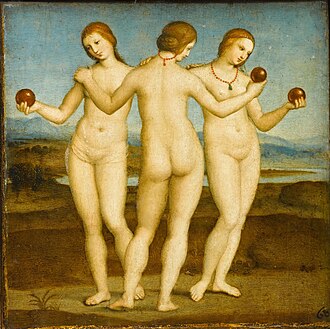 Three Graces - Raphael (1504)
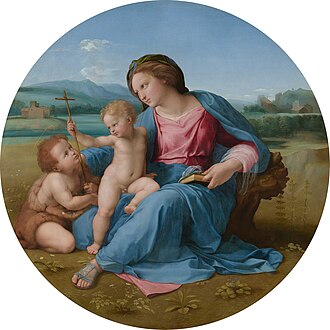 Alba Madonna - Raphael (1510)
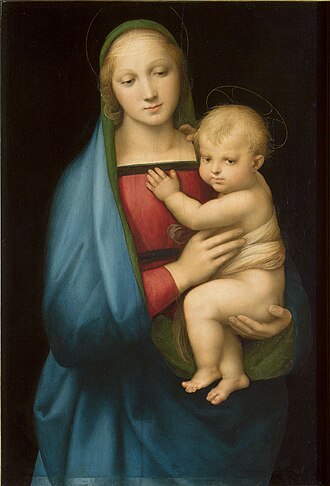 Madonna del Granduca - Raphael (1500s)
Paintings by related artists
 Venus of Urbino - Titian (1538)
 Assumption of the Virgin - Titian (1510s)
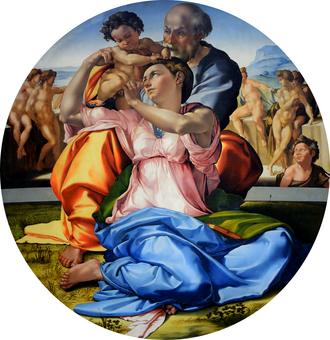 Doni Tondo - Michelangelo (1500s)
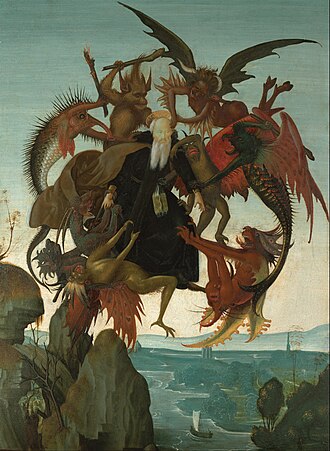 The Torment of Saint Anthony - Michelangelo (1487)
 Mona Lisa - Leonardo da Vinci (1503-1519)
 Lady with an Ermine - Leonardo da Vinci (1490)
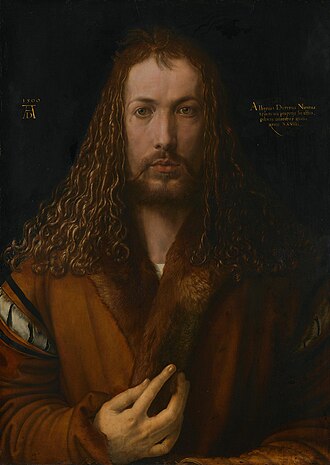 Self-Portrait with Fur-Trimmed Robe - Albrecht Dürer (1500)
 Adoration of the Magi - Albrecht Dürer (1504)
 The Birth of Venus - Sandro Botticelli (c. 1485)
 Primavera - Sandro Botticelli (1480s)
 The Garden of Earthly Delights - Hieronymus Bosch
 Ship of Fools - Hieronymus Bosch (1500s)