Portrait of a Lady with a Unicorn
Raphael · 1500s
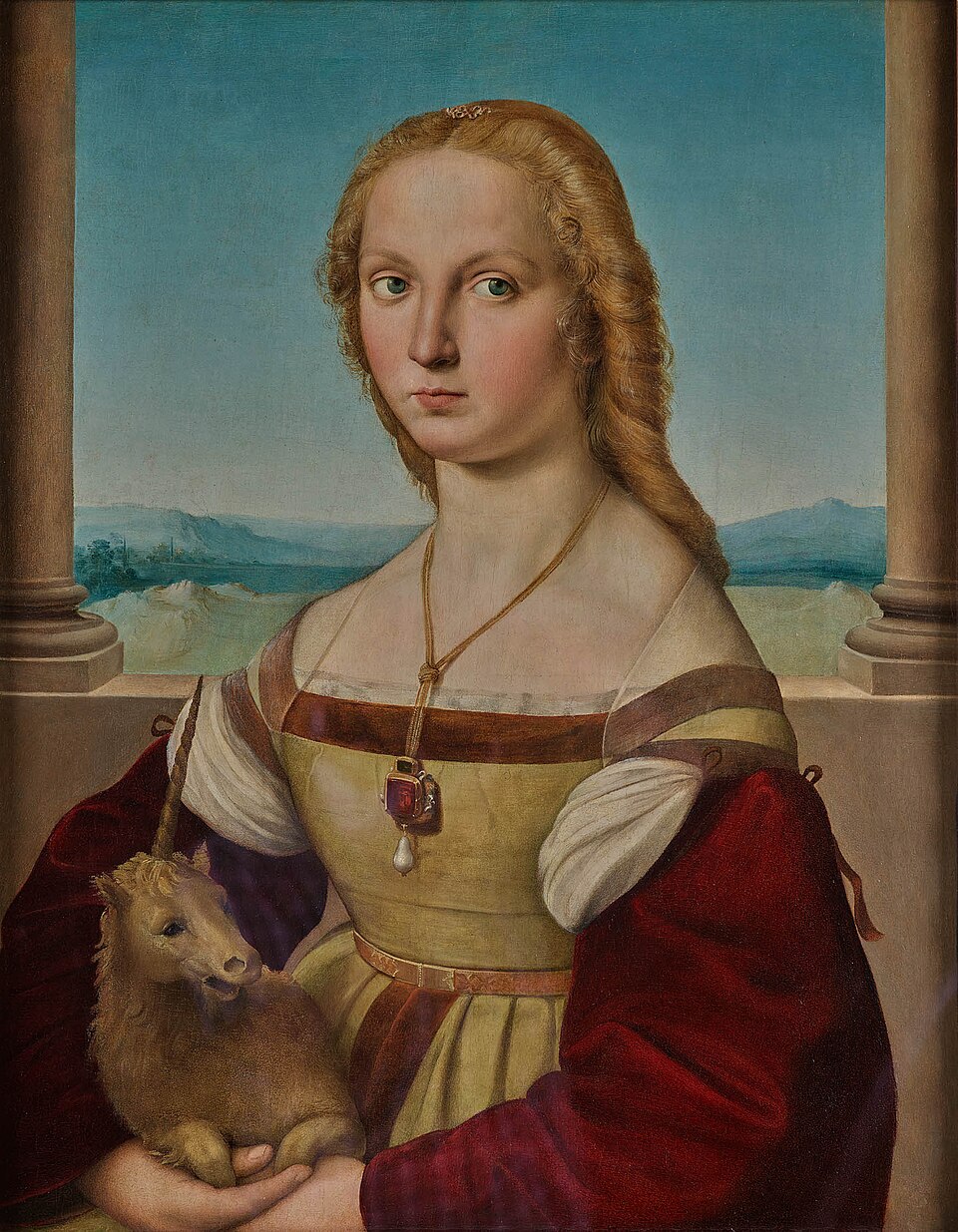
A young woman holds a tiny unicorn in her lap and meets us with a cool, watchful gaze. For more than two centuries nobody could see that unicorn: it had been painted over and turned into Saint Catherine's wheel.
The story behind the painting
Art historians date the portrait to around 1505 to 1506; Wikidata gives only the 1500s. It was painted around the same time as Raphael's Portrait of Maddalena Doni, most likely a little after. The unicorn was traditionally a symbol of chastity, so the picture may have been a betrothal or marriage portrait, showing the bride's virtue. One guess at her identity is Laura Orsini della Rovere, who would have been 12 or 13 then, and whose noble house used the unicorn. Wikipedia stresses that this is only speculation, with no direct proof.
What to look for
The setting comes straight from Leonardo's Mona Lisa, painted in Florence between 1503 and 1506: a figure in a loggia opening onto a landscape, shown three-quarter length. Christof Thoenes, quoted by Wikipedia, notes that however openly Raphael borrows the pose and framework, the cool watchfulness of this young woman's gaze is very different from the enigmatic ambiguity of the Mona Lisa. Look at her bare shoulders and the small white animal resting in her arms. The painting, about 65 by 51 cm, was originally oil on panel and was later transferred to canvas.
Meaning and intent
Around 1682 an unknown artist reworked the picture. He added the attributes of Saint Catherine of Alexandria: the unicorn became a torture wheel, a heavy cloak covered her bare shoulders, and a martyr's palm was placed in her other hand. A 1760 inventory accepted her as Saint Catherine and gave the work to Perugino. In 1927 Roberto Longhi proposed Raphael and called for a closer look. During the transfer and restoration of 1934 to 1936 the overpainting was found and removed, and the unicorn came back.
Legacy
Further restoration in 1959 revealed, through radiography, a small dog under the unicorn, a symbol of marital fidelity. It served as a sketch for the unicorn's final shape; Raphael never finished the dog and it was not visible in the finished picture. So the panel carries three layers of meaning: a dog for fidelity, a unicorn for chastity, and a saint's wheel added by a stranger. Today it is held in the Galleria Borghese in Rome.
Did you know?
- Painted around 1505-1506, inspired by the Mona Lisa.
- Overpainted around 1682 as Saint Catherine.
- Restored in 1934-1936, revealing the unicorn.
- A small dog was found under the unicorn by radiography in 1959.
About the artist
Raphael (1483-1520)
portrait · High Renaissance · Galleria Borghese · Borghese Collection · young adult woman · unicorn · unidentified woman
More by Raphael
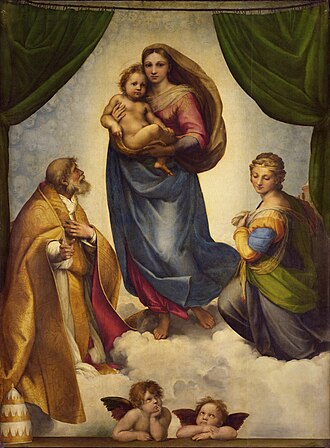 Sistine Madonna - Raphael (1510s)
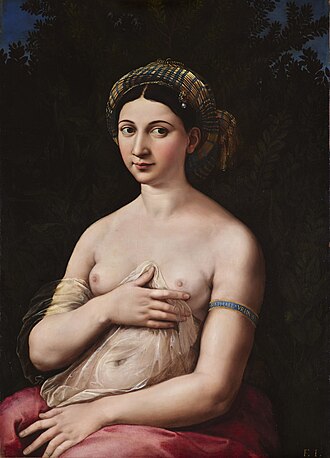 La fornarina - Raphael
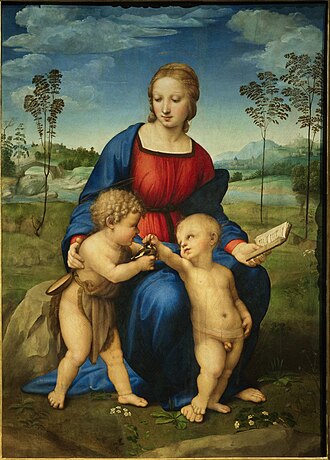 Madonna of the Goldfinch - Raphael (1500s)
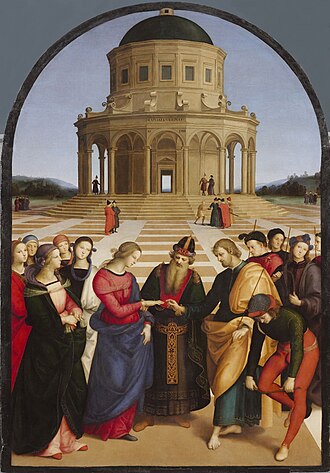 The Marriage of the Virgin - Raphael (1504)
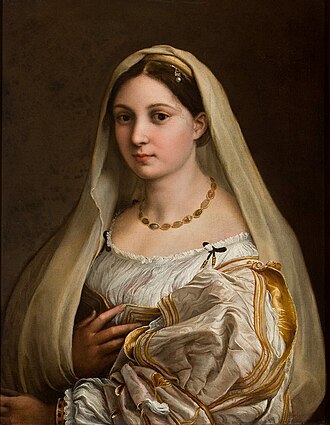 La velata - Raphael (1510s)
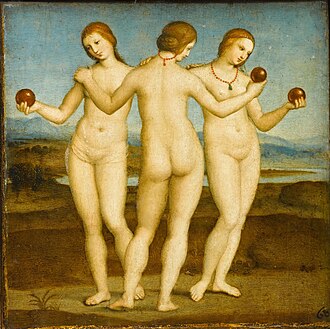 Three Graces - Raphael (1504)
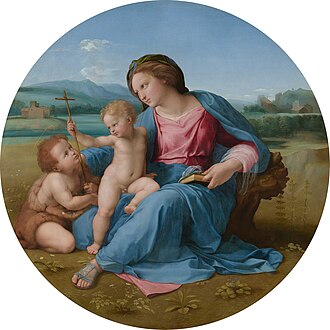 Alba Madonna - Raphael (1510)
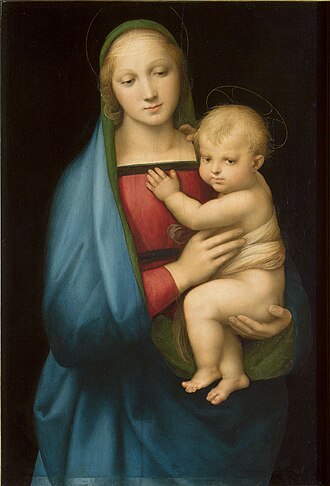 Madonna del Granduca - Raphael (1500s)
Paintings by related artists
 Venus of Urbino - Titian (1538)
 Assumption of the Virgin - Titian (1510s)
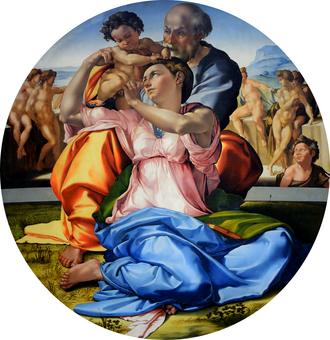 Doni Tondo - Michelangelo (1500s)
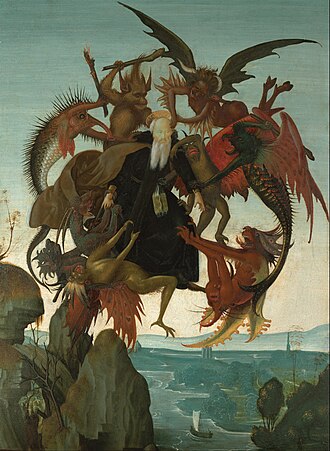 The Torment of Saint Anthony - Michelangelo (1487)
 Mona Lisa - Leonardo da Vinci (1503-1519)
 Lady with an Ermine - Leonardo da Vinci (1490)
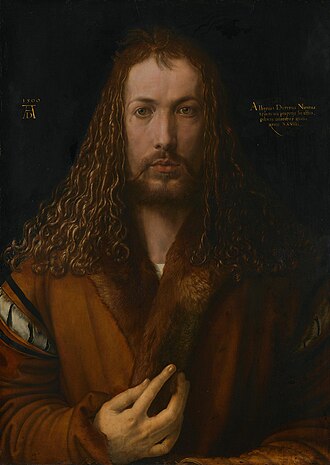 Self-Portrait with Fur-Trimmed Robe - Albrecht Dürer (1500)
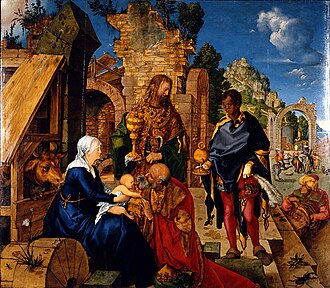 Adoration of the Magi - Albrecht Dürer (1504)
 The Birth of Venus - Sandro Botticelli (c. 1485)
 Primavera - Sandro Botticelli (1480s)
 The Garden of Earthly Delights - Hieronymus Bosch
 Ship of Fools - Hieronymus Bosch (1500s)