Portrait d'Alexandre Lenoir
Jacques-Louis David · 1816
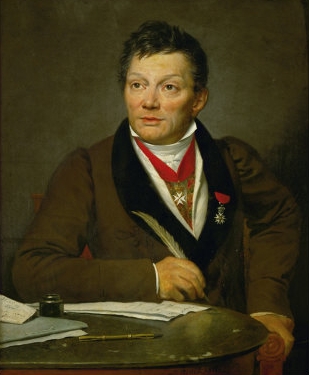
A friend painted by a friend. Jacques-Louis David wiped out Alexandre Lenoir's eyes three times before he found the look he saw, and Lenoir later said the likeness was perfect.
The story behind the painting
Alexandre Lenoir, the founder of the Musée des monuments français in 1795, was a close friend of David. They met in the ranks of the National Guard in the turbulent early years of the Revolution. David was thirteen years older, and their friendship held firm even when they stood on opposite political sides. For at least a year David came to the Lenoir home to give drawing lessons to Zélia, the couple's eldest daughter. Lenoir himself said the best portraits of him were by David.
What to look for
Lenoir described the painting himself: David painted him on an oak panel, and the likeness was perfect. He added that David never sacrificed the truth, and that three times he erased the eyes before settling on the expression he perceived. Look closely at the gaze, then at the decoration around the sitter's neck. It has been identified as the Order of the Golden Spur, given to Lenoir in 1815. According to Antoine Schnapper, scientific examination shows it is absent from the X-ray, which suggests it was added later.
Meaning and intent
The portrait is a record of loyalty as much as of a face. David listed it himself as made in 1810 to 1811, and it was probably taken up again around 1817, while the painter lived in exile in Brussels; Lenoir's own account says it was finished in Brussels in 1817. Wikidata gives the date as 1816, so the sources do not agree on a single year. What they share is the sense of a slow, careful search for the true character of a friend.
Legacy
The painting belongs to the Louvre's Department of Paintings, inventory R.F. 2300. The Louvre also holds two drawings David made in 1809, one in black chalk of Alexandre Lenoir and one in graphite of his wife, Adélaïde Binart. According to contemporaries cited by Froissart, those drawings would be the most faithful likenesses of the couple. Together, the drawings and this panel keep alive a friendship that began in revolution and survived political quarrels, exile and the passing of years.
Did you know?
- Lenoir founded the Musée des monuments français in 1795.
- David erased the sitter's eyes three times, by Lenoir's account.
- The neck decoration seems to have been added later.
- Held by the Louvre, inventory R.F. 2300.
About the artist
Jacques-Louis David (1748-1825)
portrait · man · Department of Paintings of the Louvre · sitting · Neoclassicism · table · quill · paper
More by Jacques-Louis David
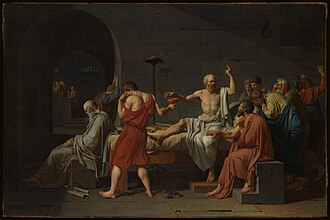 The Death of Socrates - Jacques-Louis David (1787)
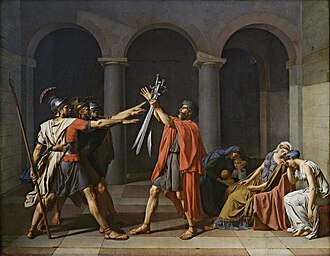 The Oath of the Horatii - Jacques-Louis David (1784)
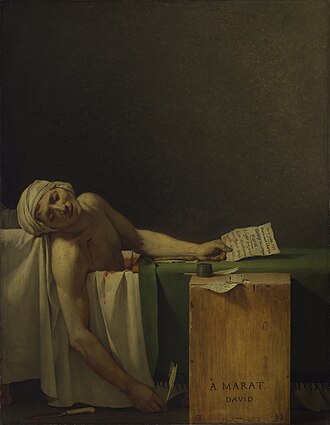 The Death of Marat - Jacques-Louis David (1793)
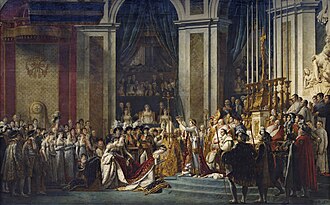 The Coronation of Gabo Napoleon - Jacques-Louis David (1807)
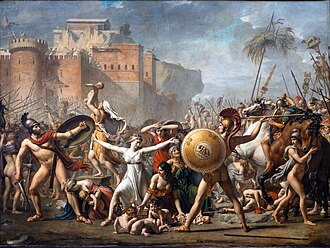 The Intervention of the Sabine Women - Jacques-Louis David (1799)
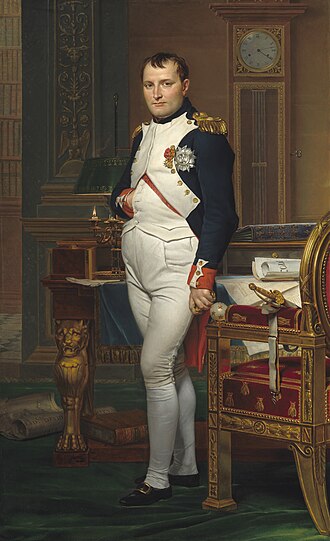 The Emperor Napoleon in His Study at the Tuileries - Jacques-Louis David (1812)
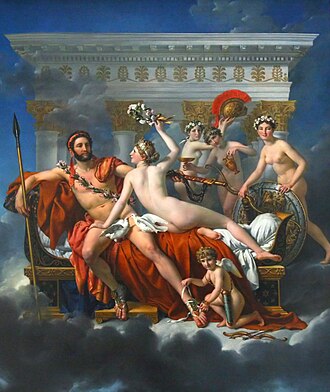 Mars Being Disarmed by Venus - Jacques-Louis David (1824)
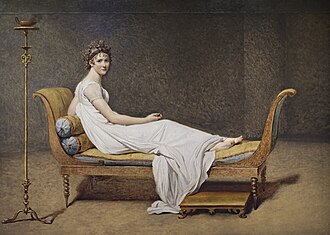 Portrait of Madame Récamier - Jacques-Louis David (1800)
Paintings by related artists
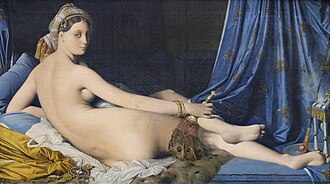 Grande Odalisque - Jean-Auguste-Dominique Ingres (1814)
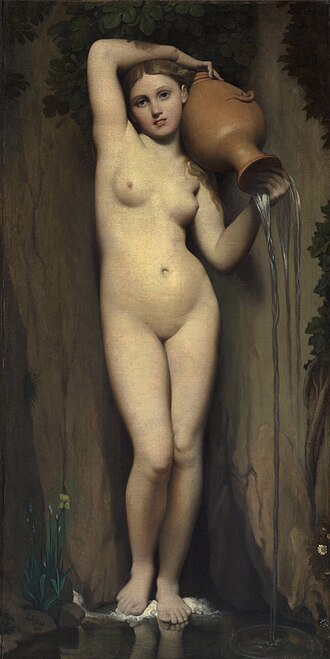 The Source - Jean-Auguste-Dominique Ingres (1856)
 The Third of May 1808 - Francisco Goya (1814)
 La Maja nue - Francisco Goya (1800)