Mary Magdalene
Raphael · 1505
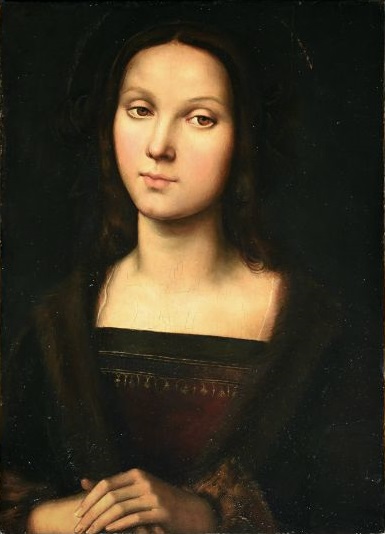
A quiet woman emerges from a black background, hands resting on an unseen ledge, a thin gold halo above her hair. Lost for almost four centuries, this small panel was attributed to Raphael by experts only in October 2023.
The story behind the painting
According to the French Wikipedia article, Raphael painted this oil on poplar panel around 1505. Its trail can be followed in archives: a notarial deed of 1565 in Pesaro lists a Magdalene by Raphael, together with his self-portrait now in the Uffizi, as owned by the Fontana family, makers of majolica. Both works appear later in the 1623 inventory of the Della Rovere dukes of Urbino. Vittoria Della Rovere inherited the collection in 1631 and it was sent to Florence, but many works were lost or sold on the way, and the Magdalene vanished from the record.
What to look for
Mary Magdalene is shown half-length, turned three-quarters to the left, lost in thought, her dreamy gaze sliding off to the right. The figure rises out of a dark ground in soft, modulated tones that recall Leonardo's sfumato, while the pose, hands resting on an imaginary parapet, comes from Flemish painting, especially Hans Memling. Look closely at the jacket edged with fur, drawn in very fine strokes of the brush tip, and at the patterns on the neckline and left sleeve. The article compares it with a Louvre Virgin and Child with the same dark background and from the same years.
Meaning and intent
Mary Magdalene was often painted bare, with long loose hair. Here, the article notes, Raphael paints her exactly like a Virgin, in a pose that commands respect. The model is said to be Chiara Fancelli, wife of Perugino, Raphael's teacher, and a similar Magdalene in the Palatine Gallery is attributed to Perugino. The bibliography cites a 2023 study by Annalisa Di Maria and colleagues titled, in translation, when the pupil surpasses the master. Wikidata lists no museum for the work, which the article places in a French private collection.
Legacy
Before its rediscovery, the panel had been kept in a private collection in north London and reappeared at an auction in Surrey, catalogued as a nineteenth-century work because of a cradle added to the back of the thinned poplar panel. A gallerist then saw a great master's hand and reattributed it to the school of Leonardo, and French collectors bought it online. After the attribution, it was shown to the public for the first time for one month from 20 April 2024 in the Basilica of Saint Mary Magdalene at Saint-Maximin-la-Sainte-Baume, where the saint's tomb is kept.
Did you know?
- Oil on poplar panel, about 1505, 46.4 by 33.7 cm.
- Recorded in Urbino archives, then lost after 1631.
- Attributed to Raphael by experts in October 2023.
- First shown publicly in April 2024 at Saint-Maximin-la-Sainte-Baume.
About the artist
Raphael (1483-1520)
religious art · High Renaissance · Mary Magdalene
More by Raphael
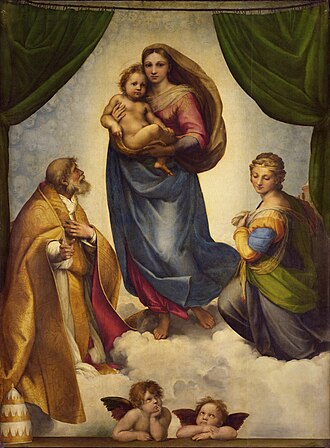 Sistine Madonna - Raphael (1510s)
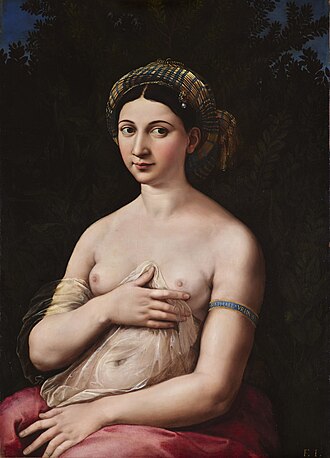 La fornarina - Raphael
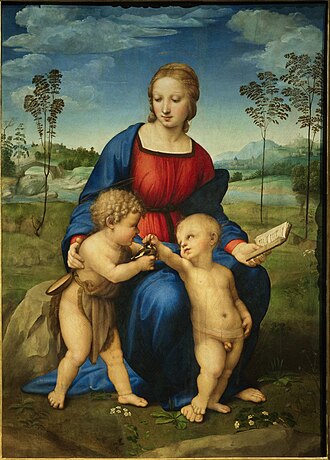 Madonna of the Goldfinch - Raphael (1500s)
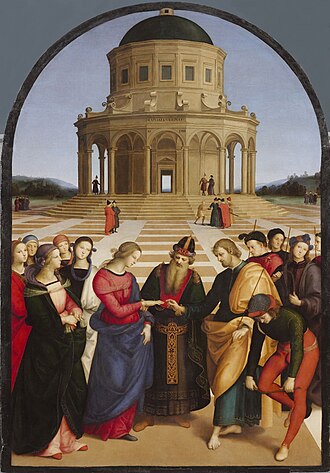 The Marriage of the Virgin - Raphael (1504)
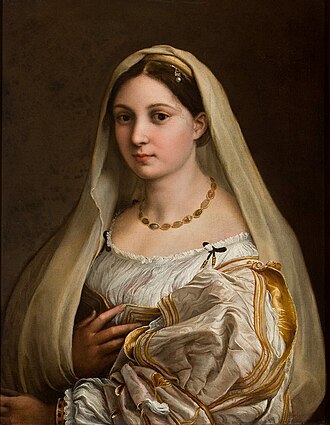 La velata - Raphael (1510s)
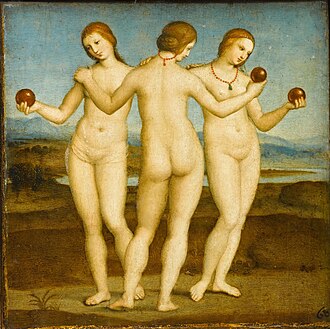 Three Graces - Raphael (1504)
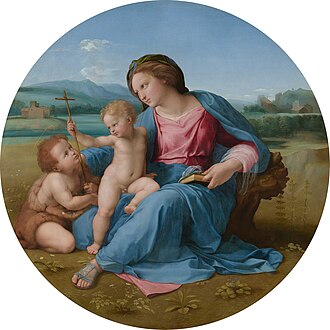 Alba Madonna - Raphael (1510)
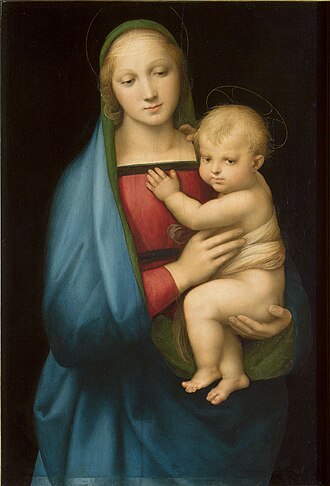 Madonna del Granduca - Raphael (1500s)
Paintings by related artists
 Venus of Urbino - Titian (1538)
 Assumption of the Virgin - Titian (1510s)
 Doni Tondo - Michelangelo (1500s)
 The Torment of Saint Anthony - Michelangelo (1487)
 Mona Lisa - Leonardo da Vinci (1503-1519)
 Lady with an Ermine - Leonardo da Vinci (1490)
 Self-Portrait with Fur-Trimmed Robe - Albrecht Dürer (1500)
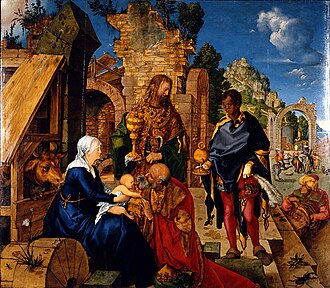 Adoration of the Magi - Albrecht Dürer (1504)
 The Birth of Venus - Sandro Botticelli (c. 1485)
 Primavera - Sandro Botticelli (1480s)
 The Garden of Earthly Delights - Hieronymus Bosch
 Ship of Fools - Hieronymus Bosch (1500s)