Libyan Sibyl
Michelangelo · 1512
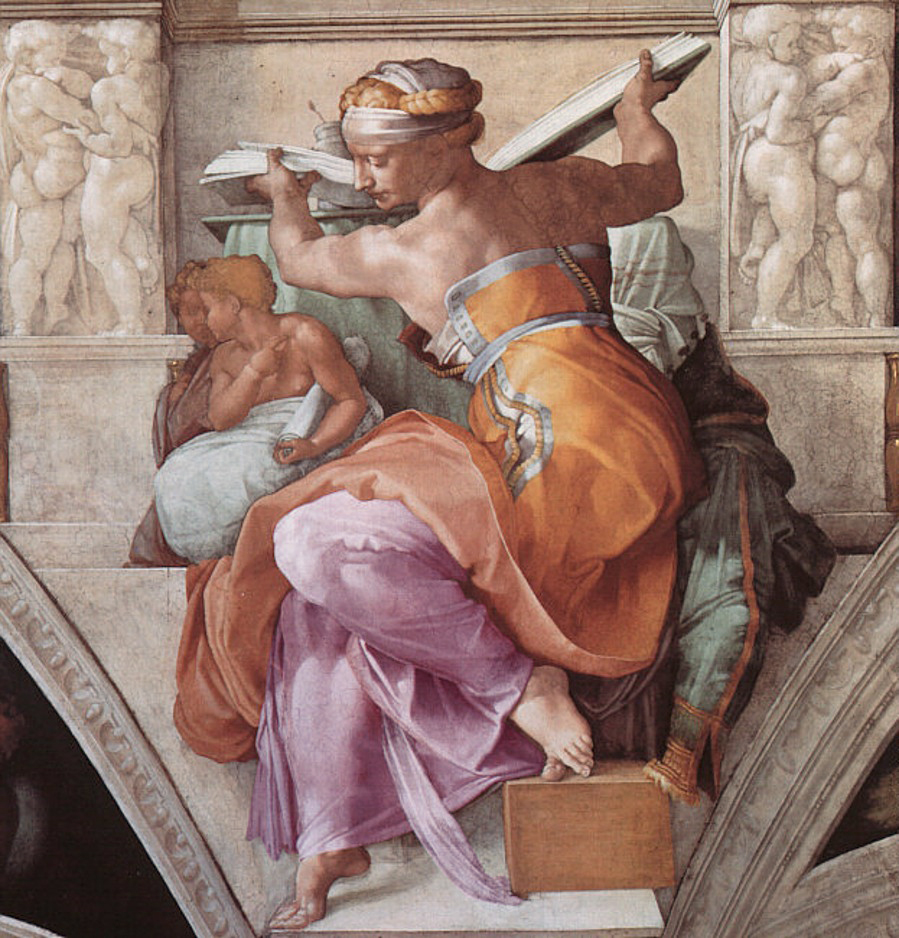
High on the Sistine Chapel ceiling, a prophetess twists on her throne and lifts a huge book of prophecies. Michelangelo painted her in October 1512, among the very last figures of the vault.
The story behind the painting
The Libyan Sibyl, about 395 by 380 cm, is one of the frescoes Michelangelo painted on the ceiling of the Sistine Chapel in Rome. He worked bay by bay, starting near the entrance used by the pope and his retinue for solemn entries and ending with the bay above the altar. The Libyan Sibyl sits in the ninth bay from the door, and she was one of the last figures to be painted, in October 1512. By then Michelangelo had spent years on the vault, and her pose shows a painter at full confidence.
What to look for
She belongs to the series of seers placed on great architectural thrones. Each is flanked by two young assistants, between pedestals with painted reliefs of pairs of putti, and her name, LIBICA, is written in a cartouche held by a putto below. Her pose is one of the most complex on the ceiling. Feet, legs, torso and head share the same tilt, so the body seems to turn on itself, a serpentine figure rising upward. The right foot rests on its tip. Her upper body is half bare, showing her shoulders. The colours are delicate violets, pinks, yellows, greys and greens, both bright and muted, full of shimmering light.
Meaning and intent
She is caught lifting the book of prophecies, her muscular arms spread wide, recalling the Virgin in the Doni Tondo turning to take her son. Yet a second reading is possible: she may instead be putting the book down and sitting. This question, which may look trivial, long occupied 16th-century treatises. Almost hidden behind her, two small cherubs look at each other; one, holding a scroll under his arm, turns in profile and points to the sibyl with his right hand. The complex pose became a model and an inspiration for many Mannerist painters.
Legacy
A preparatory drawing for the Libyan Sibyl is in the Metropolitan Museum of Art in New York, letting us see how Michelangelo studied the body before painting it. The French article on the fresco, partly translated from Italian, draws on Pierluigi De Vecchi's book on the Sistine Chapel and on Alain Le Ninèze's Libica, Michel Ange et la Sibylle of 2012. Today the sibyl still turns above the visitors of the Vatican Museums, the figure caught forever between rising and sitting down.
Did you know?
- Fresco on the Sistine Chapel ceiling, about 395 x 380 cm.
- One of the last figures painted, in October 1512.
- Her twisting pose inspired many Mannerist painters.
- A preparatory drawing is in the Metropolitan Museum of Art.
About the artist
Michelangelo (1475-1564)
High Renaissance · mythological painting · Vatican Museums
More by Michelangelo
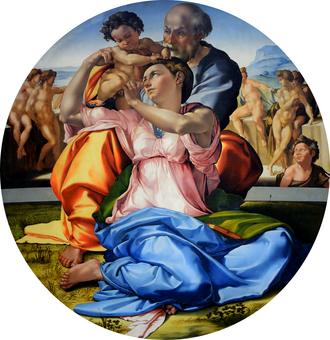 Doni Tondo - Michelangelo (1500s)
 The Torment of Saint Anthony - Michelangelo (1487)
 The Entombment - Michelangelo (1500s)
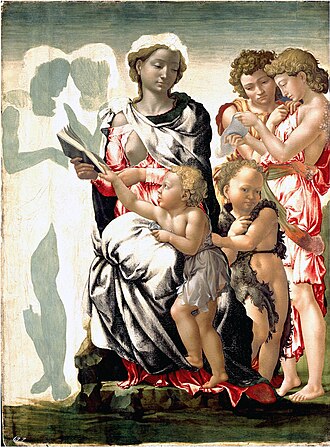 Manchester Madonna - Michelangelo (1494)
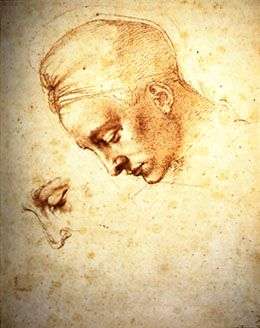 Leda and the Swan - Michelangelo (1530)
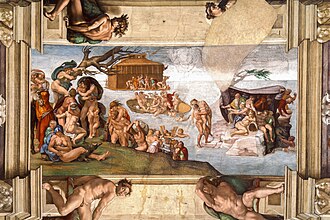 The Deluge - Michelangelo (1508)
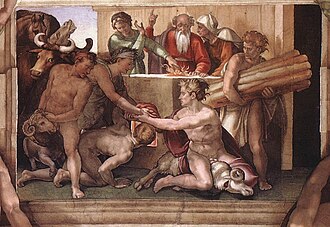 The Sacrifice of Noah - Michelangelo (1508)
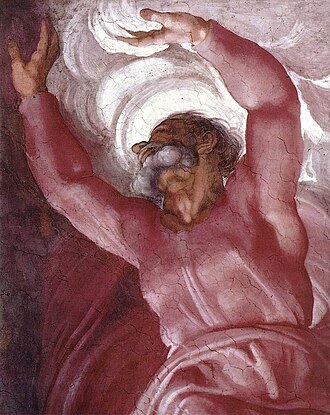 Separation of Light from Darkness - Michelangelo (1512)
Paintings by related artists
 Sistine Madonna - Raphael (1510s)
 La fornarina - Raphael
 Venus of Urbino - Titian (1538)
 Assumption of the Virgin - Titian (1510s)
 Mona Lisa - Leonardo da Vinci (1503-1519)
 Lady with an Ermine - Leonardo da Vinci (1490)
 Self-Portrait with Fur-Trimmed Robe - Albrecht Dürer (1500)
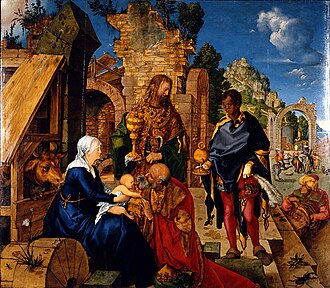 Adoration of the Magi - Albrecht Dürer (1504)
 The Birth of Venus - Sandro Botticelli (c. 1485)
 Primavera - Sandro Botticelli (1480s)
 The Garden of Earthly Delights - Hieronymus Bosch
 Ship of Fools - Hieronymus Bosch (1500s)