Le Chahut
Georges Seurat · 1889
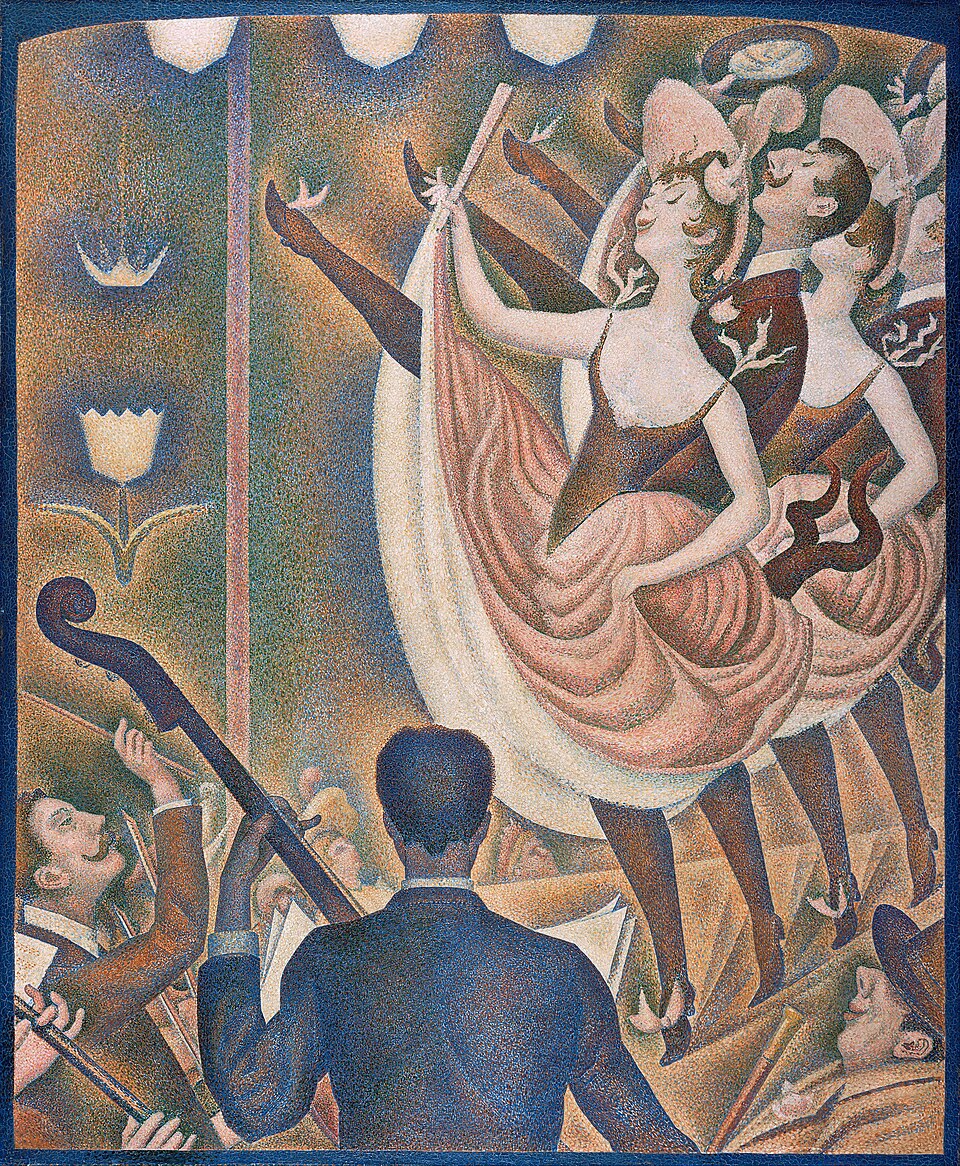
Legs fly up in a perfect row, coattails curl like snakes, a double bass stands like a sentry. Seurat turned the wild can-can of Montmartre into a precise machine of dots and rising lines.
The story behind the painting
Chahut, meaning noise or uproar, was another name for the can-can, a provocative dance born in Paris ballrooms around 1830 that caused scandal with its high kicks. By the 1890s it had moved onto stages such as the Moulin Rouge in Montmartre. Seurat had lived in Montmartre since 1886, among café-concerts, music halls and nightlife, and he painted this scene in 1889 to 1890; Wikidata gives 1889. He showed it at the Salon des Indépendants in spring 1890, alongside Young Woman Powdering Herself.
What to look for
The canvas is 170 by 141 cm, built entirely of small juxtaposed dots of colour meant to blend in the viewer's eye. The palette leans warm, browns, tans, warm greys and blues, mixed from eighteen hues on his palette. A deeper blue painted border rises into a shallow arch at the top. In the lower left a musician seen from behind holds up his double bass. In the upper right, two women and two men kick their legs high. Lamps glow behind, and at the lower right a man watches with a sidelong, leering glance.
Meaning and intent
Seurat followed theories by Charles Henry, and earlier ideas of Charles Blanc and Humbert de Superville, that lines carry feelings: horizontal lines mean calm, rising lines mean gaiety. So almost every line here climbs upward. Robert Herbert notes the dancers are lined up like ornament, flat and parallel to the surface, in staccato bursts. His friend Jules Christophe said Seurat gave these working-class Parisian dancers the almost sacred air of priestesses performing rites, then asked whether the rising lines really express gaiety. Japanese prints and Jules Chéret's posters also fed into it.
Legacy
At the 1890 Salon, Chahut eclipsed Seurat's other entry and was widely discussed by Symbolist critics such as Gustave Kahn, Emile Verhaeren and Téodor de Wyzewa. Many found its lines too schematic, yet its stiff, ritual-like forms marked Seurat as an innovator. John Rewald noted there is no sadness in Seurat's pictures. The painting went on to influence the Fauves, Cubists, Futurists and Orphists. It once belonged to the Symbolist poet Gustave Kahn and now hangs in the Kröller-Müller Museum in Otterlo, in the Netherlands.
Did you know?
- Painted 1889-1890; first shown at the Salon des Indépendants in 1890.
- Shows a can-can, also called chahut, at the Moulin Rouge.
- Built from pointillist dots and upward lines meant to express gaiety.
- Held by the Kröller-Müller Museum, Otterlo.
genre art · Kröller-Müller Museum
More by Georges Seurat
 A Sunday on La Grande Jatte - Georges Seurat (1884-1886)
 Bathers at Asnières - Georges Seurat (1884)
 The Circus - Georges Seurat (1891)
%20-%20BF811%20-%20Barnes%20Foundation.jpg) The Models - Georges Seurat (1886)
The Models - Georges Seurat (1886)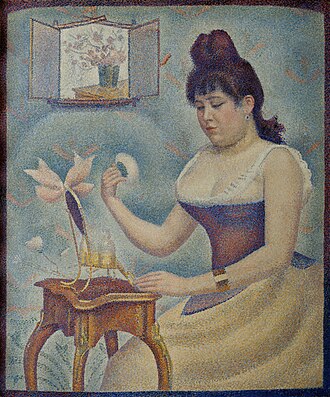 Young Woman Powdering Herself - Georges Seurat (1889)
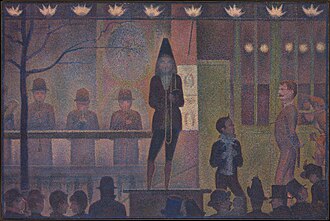 The Circus Parade - Georges Seurat (1888)
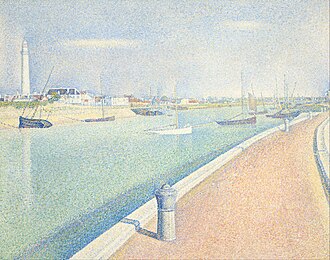 The Channel of Gravelines, Petit Fort Philippe - Georges Seurat (1890)
Paintings by related artists
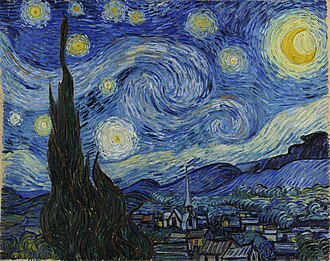 The Starry Night - Vincent van Gogh (1889)
.jpg) Café Terrace at Night - Vincent van Gogh (1888)
Café Terrace at Night - Vincent van Gogh (1888)