Esther before Ahasuerus
Artemisia Gentileschi · 1620s
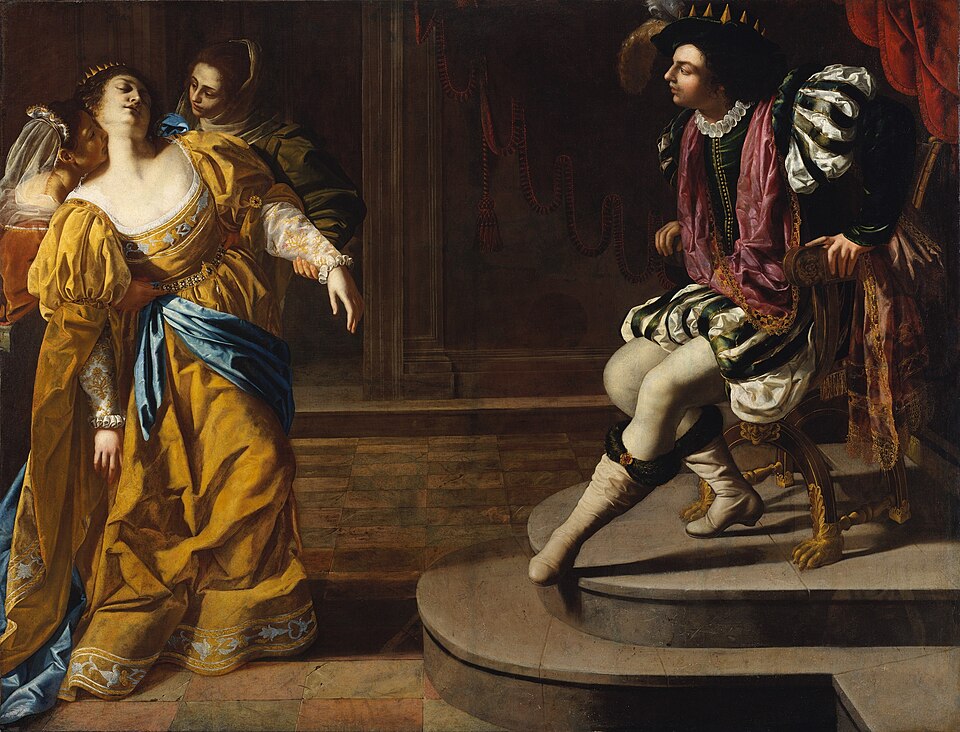
A queen in a bright yellow gown faints into her maids' arms while a king in a feathered hat leans forward, puzzled. Artemisia Gentileschi made the heroine the center of power and the ruler almost comic.
The story behind the painting
The scene comes from the Book of Esther. Esther, the Jewish wife of King Ahasuerus, goes before him without being summoned to beg him to spare her people from execution, breaking court etiquette at the risk of her life. She faints before the king, the moment Gentileschi paints, and her act softens his decision. The painting is not dated and its patron is unknown. Many scholars place it in the 1630s, in the artist's first Neapolitan period, while Wikidata gives the 1620s. It is one of her lesser known works and was given to the Metropolitan Museum of Art by Elinor Dorrance Ingersoll in 1969.
What to look for
Esther's vivid yellow dress stands out against muted colors and a background of reds darkened with brown. She is well lit, while the king sits almost in shadow in white and dark green, with a feathered hat and jeweled, fur-trimmed boots. The two figures lean on near parallel diagonals: Esther falls backward, chin sinking into her neck, as the king leans forward as if about to stand. Gentileschi took great care with folds of fabric, the stitches on Esther's hem, cracks in the marble floor and the carved paws on the king's chair. Near his knee is the faint shadow of a boy, painted over.
Meaning and intent
Trained in her father Orazio's workshop in the manner of Caravaggio, Gentileschi focused more on people than on dramatic setting. Here Esther looks like a real woman, not an idealized one, and the king looks more comic than royal. The text she seems to follow, the Greek additions to Esther declared canonical at the Council of Trent in 1546, calls the king a formidable sight in his robes of state. Her king is instead puzzled and fashionable, a sort of dandy, and Esther is majestic even as she swoons. The source suggests a role reversal, and a message that those in power may not be as fearsome as their position.
Legacy
Guercino also painted Esther swooning in her maids' arms, and in both pictures a pomegranate, a symbol of the Virgin Mary, is embroidered on her dress. Esther's muscular neck has been compared to Michelangelo's Haman on the Sistine Chapel ceiling. X-rays by the Metropolitan Museum showed that the shadow by the king's knee was an African boy restraining a dog, deliberately painted over. The painting is often read alongside Gentileschi's best known works such as Judith Slaying Holofernes and Susanna and the Elders, with their themes of women's power over men and of men objectifying women, themes the source links to her own experience of rape as a teenager.
Did you know?
- Undated: many scholars suggest the 1630s, Wikidata gives the 1620s.
- Given to the Metropolitan Museum of Art in 1969.
- X-rays revealed a painted-over boy holding a dog.
- About 208 by 274 cm.
About the artist
Artemisia Gentileschi (1593-1653)
religious art · woman · man · Metropolitan Museum of Art
More by Artemisia Gentileschi
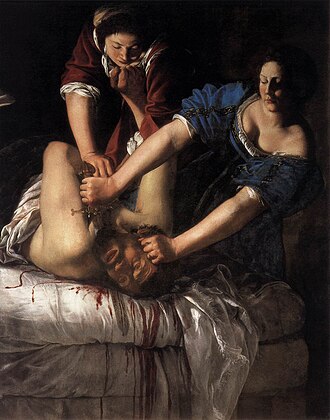 Judith Slaying Holofernes - Artemisia Gentileschi (1613)
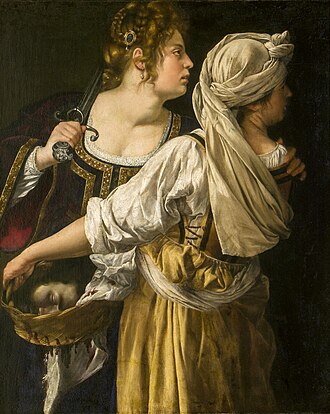 Judith and Her Maidservant - Artemisia Gentileschi (1618)
%2C%20Artemisia%20GentileschiFXD.jpg) Susanna and the Elders - Artemisia Gentileschi (1610)
Susanna and the Elders - Artemisia Gentileschi (1610)%20-%20Artemisia%20Gentileschi.jpg) Self-Portrait as the Allegory of Painting - Artemisia Gentileschi (1638)
Self-Portrait as the Allegory of Painting - Artemisia Gentileschi (1638)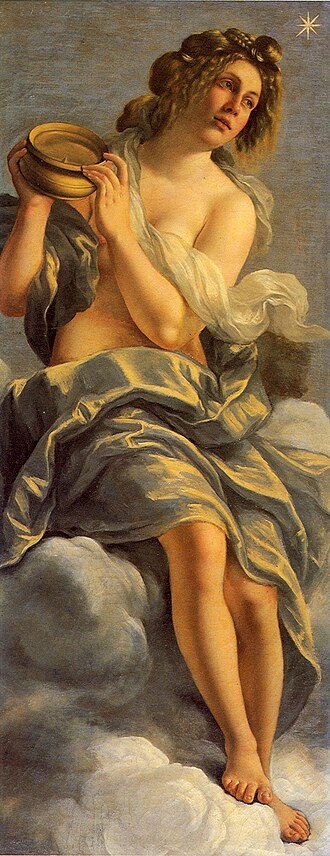 Allegory of Inclination - Artemisia Gentileschi (1615)
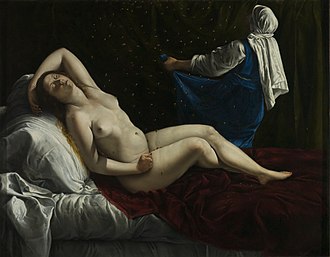 Danaë - Artemisia Gentileschi (1612)
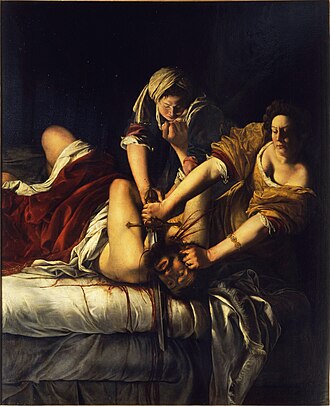 Judith Beheading Holofernes - Artemisia Gentileschi (1620)
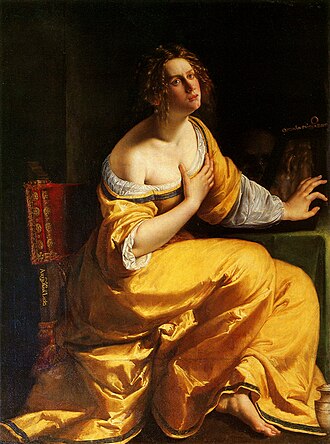 Conversion of the Magdalene - Artemisia Gentileschi (1616)