Christina of Denmark, Duchess of Milan
Hans Holbein the Younger · 1538
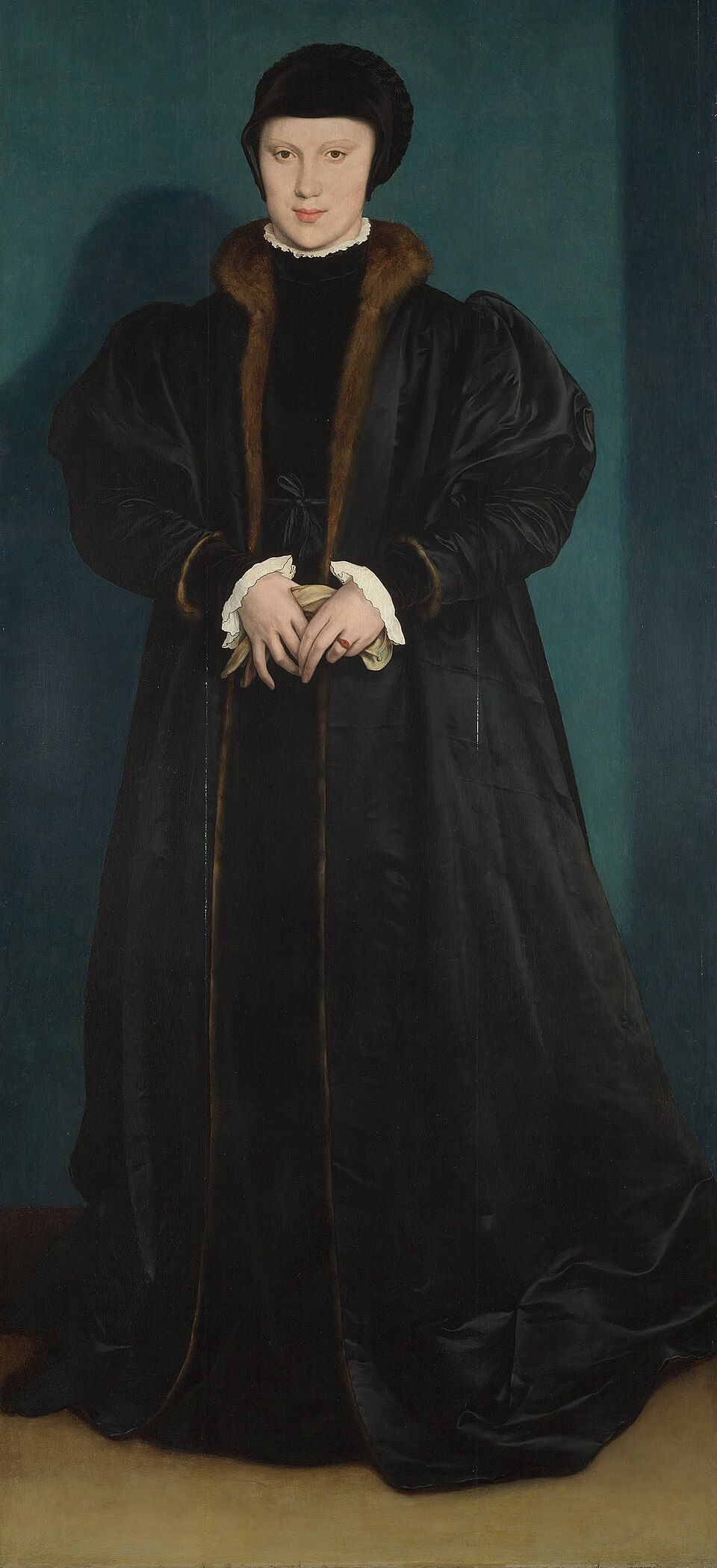
A sixteen-year-old widow in black looks out with a half smile. Holbein painted her as a possible bride for Henry VIII. She refused the king, but he kept her portrait until he died.
The story behind the painting
After Queen Jane Seymour died in 1537, Holbein was asked to paint noblewomen who might marry Henry VIII. Thomas Cromwell sent him with the ambassador Philip Hoby to Brussels to meet Christina of Denmark, Duchess of Milan, widowed at thirteen when Francesco II Sforza died in 1535. He was to make a straightforward, exact likeness. On 12 March 1538 she sat for him for three hours, from one to four in the afternoon, and Holbein, who could speak to her in German, drew her head. The article also says they arrived in Denmark on 10 March, which conflicts with its own account of Brussels.
What to look for
The oil on oak panel, about 179 by 83 cm, shows Christina full length and facing us, against a turquoise background that recalls fifteenth-century Burgundian art. She wears black mourning clothes, as noble widows in Italian marriages did for years, with a gown lined in brown fur. Notice her shadow on the wall behind her, and a second strip of shadow on the right from an unseen source. Her lips are bright red, echoed by the red ring on her fingers. She has taken off her gloves, which makes the portrait feel informal and intimate. Her half smile, oval face and dimples show her youth.
Meaning and intent
The portrait was a marriage proposal in paint, but its sitter had her own mind. Christina, only sixteen, made no secret of her dislike for Henry, whose treatment of his wives was known across Europe. She is credited with saying that if she had two heads, she would happily put one at the disposal of the King of England. Political and practical obstacles, including ties to the Lutheran church, also stood in the way. Yet her strength of character comes through. Holbein gave the king exactly what he asked for, and something more: a young woman fully present, lively and engaged.
Legacy
Henry was so taken with the first colour drawings of her head that, according to the imperial ambassador Eustace Chapuys, he was in better humour than ever and had musicians play all day. He then asked Holbein to extend the image into the full-length panel. The English ambassador John Hutton said another artist's drawing of her was slobbered compared with Holbein's. Though the marriage never happened, Henry kept the picture until his death. The historian Derek Wilson called it one of the finest female portraits ever painted. It entered the National Gallery in London in 1909 and is on permanent display.
Did you know?
- Commissioned in 1538 by Thomas Cromwell for Henry VIII.
- Christina sat for Holbein for three hours on 12 March 1538.
- She refused the marriage, but Henry kept the portrait until he died.
- In the National Gallery, London, since 1909.
More by Hans Holbein the Younger
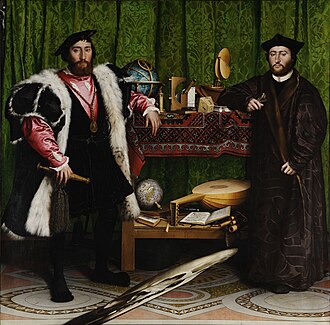 The Ambassadors - Hans Holbein the Younger (1533)
 The Body of the Dead Christ in the Tomb - Hans Holbein the Younger (1520s)
Paintings by related artists
 The Burial of the Count of Orgaz - El Greco (1586)
 View of Toledo - El Greco (1596)
.jpg) Venus of Urbino - Titian (1538)
Venus of Urbino - Titian (1538)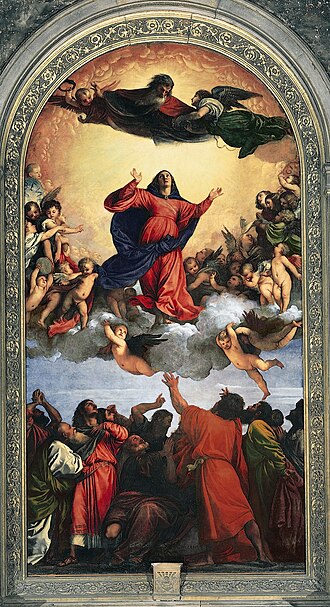 Assumption of the Virgin - Titian (1510s)
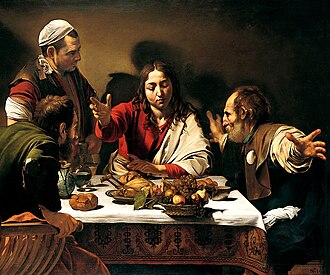 Supper at Emmaus - Caravaggio (1601)
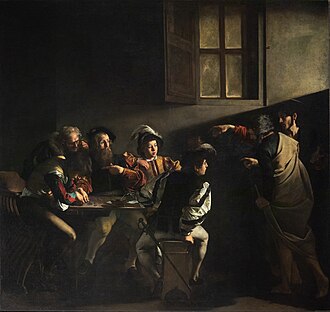 The Calling of Saint Matthew - Caravaggio (1609)