Brown Odalisque
François Boucher · 1740s
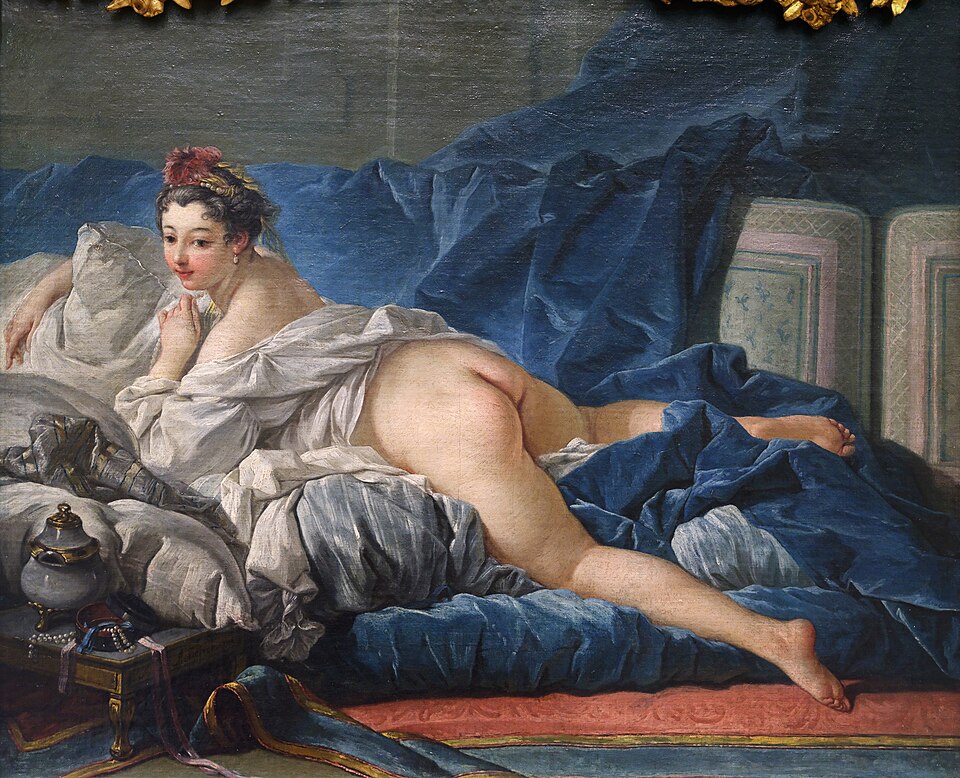
A partly nude young woman reclines on a low bed, feathers in her hair. Boucher's Brunette Odalisque feels less like a goddess than a real person, and who she was is still debated.
The story behind the painting
François Boucher painted The Brunette Odalisque in 1745, according to Wikipedia; Wikidata dates it more broadly to the 1740s. The signature is engraved on the low table. In that period a reclining nude was generally expected to be a goddess or a figure from myth, and Boucher used this same pose for mythological subjects such as Leda and Venus Requesting Arms from Vulcan for Aeneas. He later painted two other odalisques, both known as The Blonde Odalisque.
What to look for
The partly nude woman fills the foreground. Look for the exotic touches that give the picture its title: a bed without a frame, a screen covered in an intricate pattern of plants, and feathers in her hair. Some argue it may be improper to call her an odalisque, a concubine, at all. She is painted very intimately and specifically, as if the canvas were a portrait of one particular woman. Wikidata gives the size as 53.5 by 64.5 cm, a small and close picture.
Meaning and intent
Because her features are so specific, art historians believe she may be a real woman. Guesses have included Madame de Pompadour and Victoire O'Murphy, elder sister of the supposed model of The Blonde Odalisque. Many think she is Boucher's own wife. Boucher was not a portrait painter and painted portraits only of people close to him, his name appears on a note on the table, and she resembles the presumed portrait of his wife in the Frick Collection. The identification caused controversy: Denis Diderot attacked Boucher for prostituting his wife, describing a work that resembles this one.
Legacy
Boucher produced several signed versions, and Alastair Laing argues that this wide spread casts doubt on the wife theory, since an artist would hardly circulate so intimate an image. In 1765 Pierre Charles Lévesque made an engraving with a changed head, perhaps to hide the model's identity or to give a more fashionable face. That print of a risqué work may have been meant to discredit Boucher, coming as he was named First Painter to the King. The painting is now in the Louvre.
Did you know?
- Painted by Boucher, dated 1745 on Wikipedia.
- The signature is engraved on the low table.
- The model may be Boucher's wife; scholars disagree.
- Now in the Louvre, Paris.
About the artist
François Boucher (1703-1770)
woman · Department of Paintings of the Louvre · nude · nudity · bed · drapery · vase · bijou
More by François Boucher
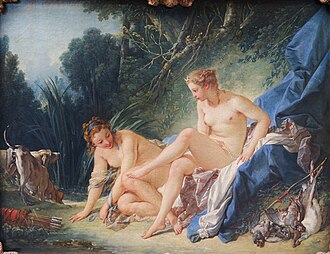 Diana leaving her Bath - François Boucher (1742)
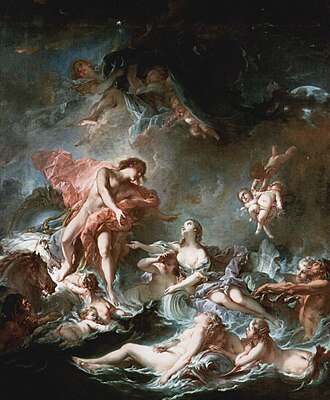 The setting of the sun - François Boucher (1752)
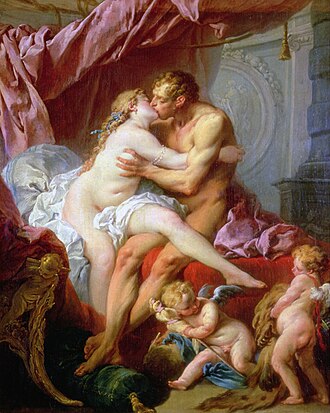 Hercules and Omphale - François Boucher (1730s)
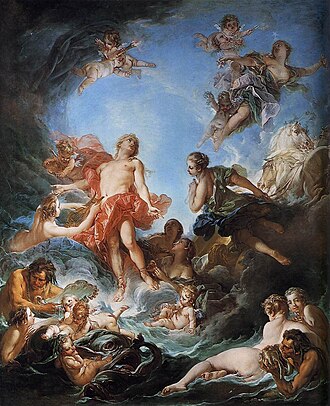 The Rising of the Sun - François Boucher (1753)
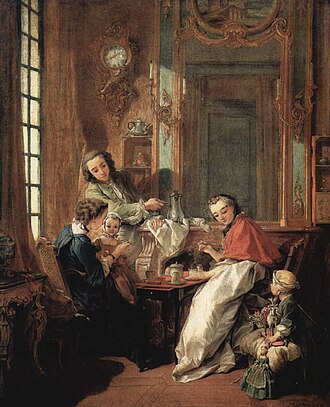 Morning Coffee - François Boucher (1739)
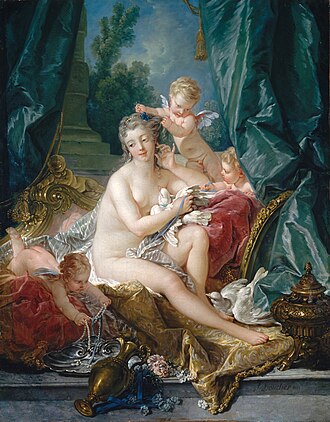 The Toilette of Venus - François Boucher (1751)
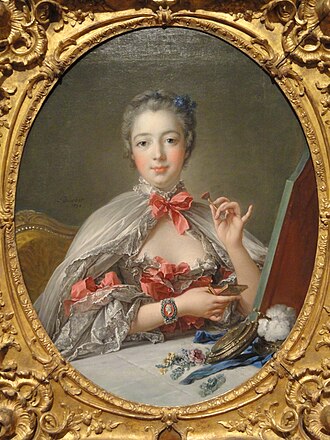 Jeanne-Antoinette Poisson, Marquise de Pompadour - François Boucher (1750)
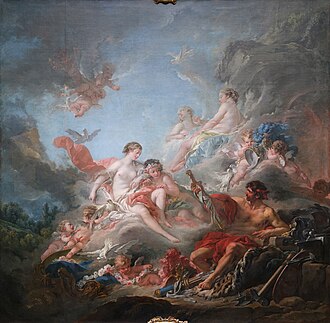 Vulcan Presenting Venus with Arms for Aeneas - François Boucher (1757)
Paintings by related artists
 The Embarkation for Cythera - Jean-Antoine Watteau (1717)
 Pierrot - Jean-Antoine Watteau (1718)
 The Swing - Jean-Honoré Fragonard (1760s)
 A Young Girl Reading - Jean-Honoré Fragonard (1770)
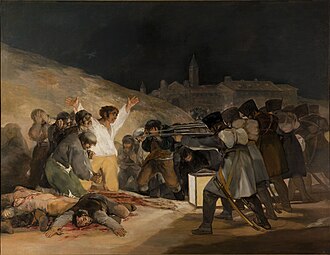 The Third of May 1808 - Francisco Goya (1814)
.jpg) La Maja nue - Francisco Goya (1800)
La Maja nue - Francisco Goya (1800)