Boulevard des Capucines
Claude Monet · 1873
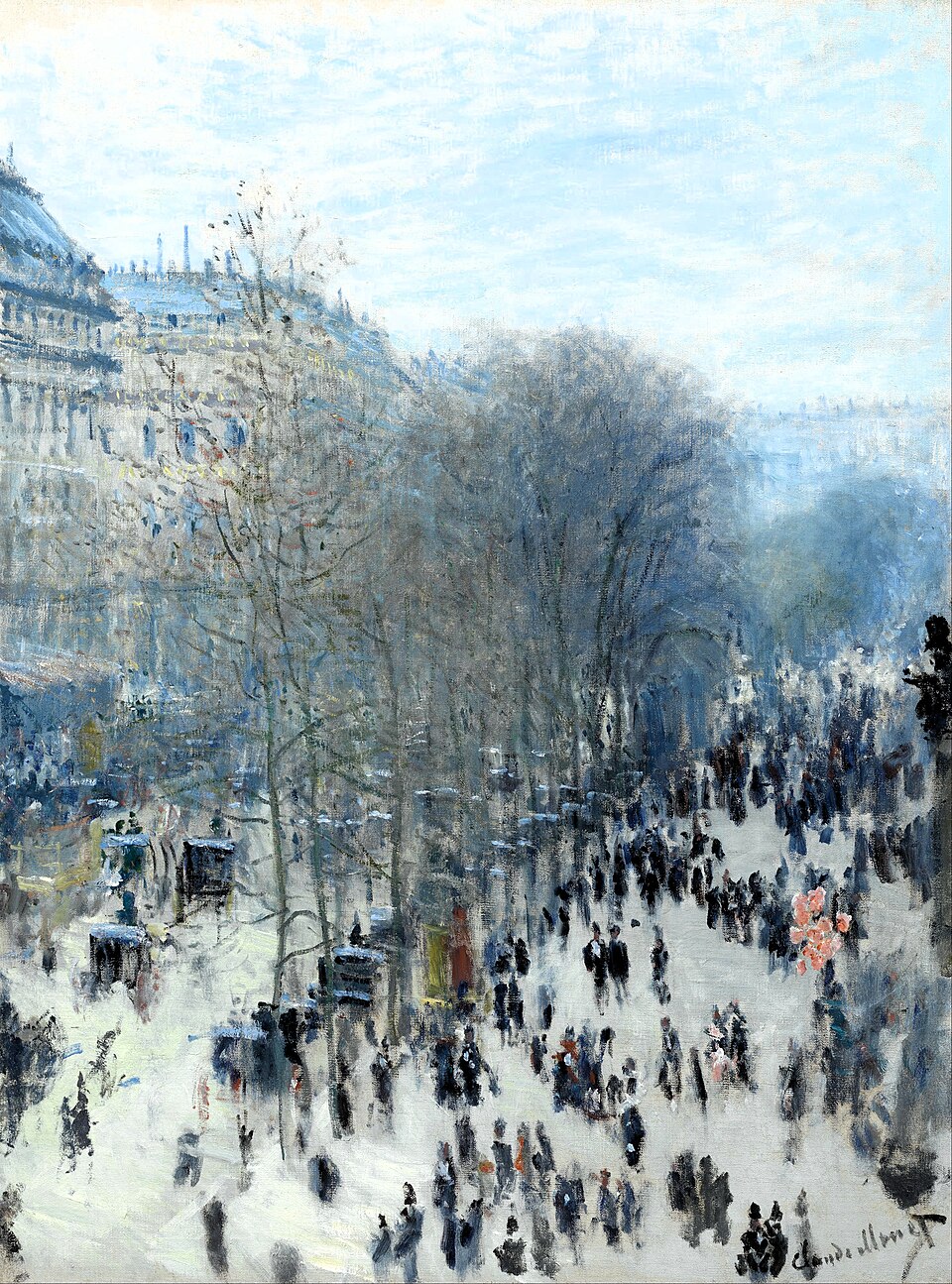
From a photographer's balcony high above Paris, Monet watched a winter boulevard dissolve into light, snow and tiny dark strokes of people. This is his second view of the street, painted in 1873.
The story behind the painting
In 1873 Monet painted two canvases of the boulevard des Capucines from the same balcony: the studio of the photographer Nadar at 35 boulevard des Capucines, on the corner of rue Daunou. A few months later those rooms would host the first exhibition of the Impressionist painters, from 15 April to 15 May 1874. Monet worked while that exhibition was being prepared, a time the French Wikipedia article calls both prosperous and feverish, when he was by turns anxious and euphoric. He wrote to Pissarro of running around Paris all day to collect signatures for the new cooperative and coming home empty-handed.
What to look for
This is the second of the two views, number 293 in Daniel Wildenstein's catalogue. The article describes a winter afternoon with bare, blurred trees, painted in snowy weather: roofs, streets and facades are swept with white streaks, and men in top hats watch the scene from the neighbouring balcony. Below, the passers-by become slender graphic notes rather than portraits. The sources disagree on the format: the French article gives 80 by 60 cm and calls it a vertical view, while Wikidata gives 50.8 by 78.2 cm. The first version, a horizontal canvas, is in the Pushkin Museum in Moscow.
Meaning and intent
Monet did not like crowds, and Marianne Alphant notes that no witness ever described him walking the streets of Paris or entering a cafe. A pavement could not give him the calm he needed to paint, so he climbed. From above, the bustle of the boulevard became something he could hold at a distance and turn into colour and movement. He kept returning to this habit: in 1876 from Victor Chocquet's fifth-floor balcony on rue de Rivoli for the Tuileries gardens, and in 1878 from two borrowed balconies for La Rue Montorgueil and La Rue Mosnier aux drapeaux.
Legacy
It was the first, horizontal Boulevard des Capucines that hung in the 1874 exhibition, not this one. There the critic Louis Leroy of Le Charivari mocked it in an imagined dialogue, asking what all the little black spots at the bottom were, and being told they were people walking. Others defended Monet: Ernest Chesneau praised the prodigious animation of the street and the swarming crowd on the asphalt. This second, snowy version now belongs to the Nelson-Atkins Museum of Art in Kansas City, a quieter companion to a painting that helped give Impressionism its fight.
Did you know?
- Painted in 1873 from Nadar's studio balcony at 35 boulevard des Capucines.
- The second of two views of the boulevard; the first is in Moscow.
- Wildenstein catalogue number 293.
- Held by the Nelson-Atkins Museum of Art, Kansas City.
About the artist
Claude Monet (1840-1926)
Impressionism · cityscape · crowd · multi-story urban building · The Nelson-Atkins Museum of Art · roadside tree
More by Claude Monet
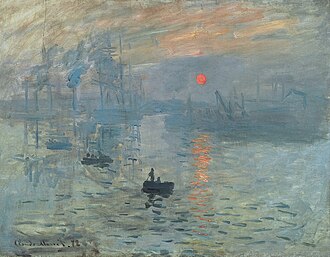 Impression, Sunrise - Claude Monet (1872)
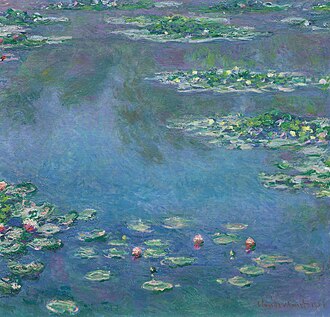 Water Lilies - Claude Monet (1906)
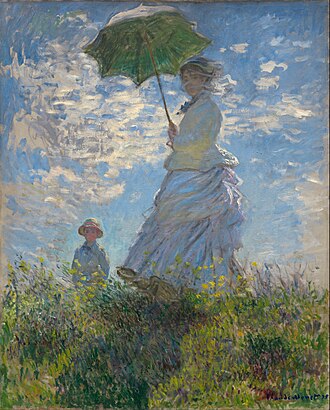 Woman with a Parasol - Claude Monet (1875)
 Garden at Sainte-Adresse - Claude Monet (1867)
 Women in the Garden - Claude Monet (1866)
 The Magpie - Claude Monet (1868)
 Woman in the Garden - Claude Monet (1867)
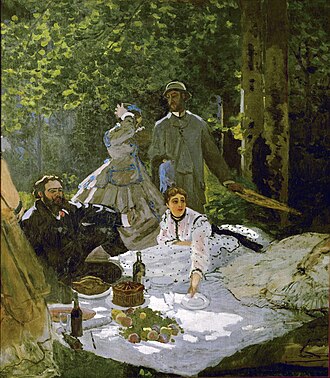 Luncheon on the Grass - Claude Monet (1866)
Paintings by related artists
 The Fighting Temeraire - J. M. W. Turner (1839)
 Rain, Steam and Speed - The Great Western Railway - J. M. W. Turner (1844)
 L'Origine du monde - Gustave Courbet (1866)
 A Burial at Ornans - Gustave Courbet (2020)
 Luncheon on the Grass - Édouard Manet (1863)
 Olympia - Édouard Manet (1863)
 Dance at Le Moulin de la Galette - Pierre-Auguste Renoir (1876)
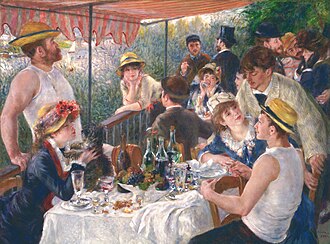 Luncheon of the Boating Party - Pierre-Auguste Renoir (1881)
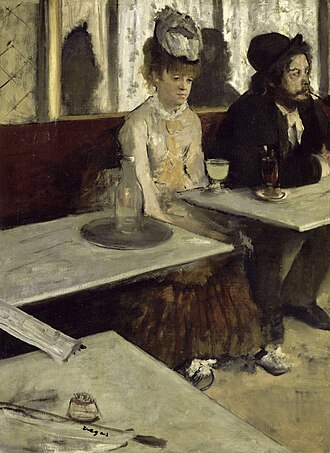 L'Absinthe - Edgar Degas (1875)
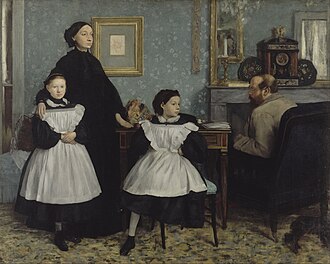 The Bellelli Family - Edgar Degas (1858)
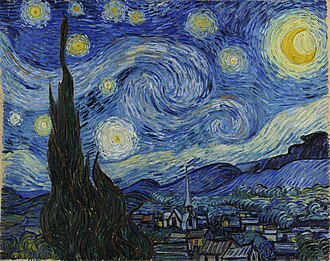 The Starry Night - Vincent van Gogh (1889)
.jpg) Café Terrace at Night - Vincent van Gogh (1888)
Café Terrace at Night - Vincent van Gogh (1888)