The Rising of the Sun
François Boucher · 1753
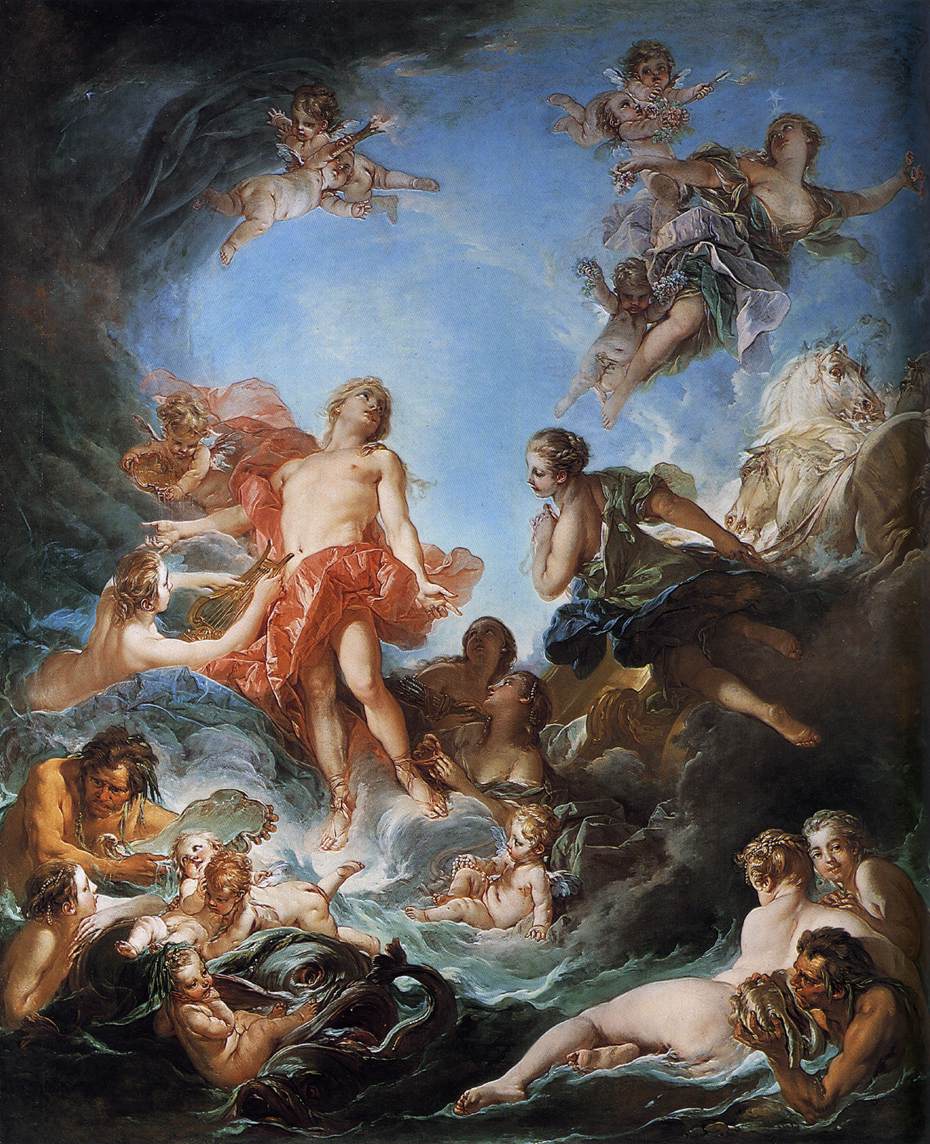
Apollo surges up out of the sea, arms flung wide, chasing the night away, while nymphs tumble in the waves below. Boucher painted this huge sunrise not to hang as a picture but as the model for a tapestry in a king's bedroom.
The story behind the painting
Madame de Pompadour commissioned this painting and its pair, The Setting of the Sun, privately from François Boucher. Both were full-scale models for the Gobelins Manufactory, which wove them into tapestries completed in 1754 to 1755. The tapestries hung in the bedroom of King Louis XV at the château de Bellevue, the King's country house. The date of the painting differs between sources: the Wikipedia article gives 1752, while Wikidata gives 1753. Either way it belongs to the same moment as its partner, and the canvas is enormous, about 378 by 261 cm, at the scale of the tapestry it was meant to become.
What to look for
Apollo, god of the sun, rises into the sky with his arms stretched out, driving back the darkness of night. Turquoise and azure blues announce the clear day, and the strong morning light picks out the shadows on the young god's sculpted body. The foreground is crowded with nude nymphs and naiads, their bodies overlapping in arabesque curves that echo the shapes of the waves. Look for Thetis, the sea nymph who holds the reins of Apollo's horses, said to help the god on his journey across the sky. Wikidata adds a chariot, clouds, and the turning of dawn and twilight.
Meaning and intent
The pair represents the rhythm of the day, from dawn to dusk, layered with allegory and symbolism. Some art historians read the figure of Thetis as a tribute to Madame de Pompadour herself: just as the nymph helps Apollo across the sky, Pompadour had recently taken a more active role as a political adviser at the King's court. The harmonious pastels, beautiful bodies and gauzy textures are typical of Rococo elegance, and their decorative purpose made sense for a tapestry design, meant to adorn a luxurious and fashionable home rather than to be studied on a gallery wall.
Legacy
The two paintings are often described as Boucher's most ambitious and successful mythological works. After Madame de Pompadour's death they were sold with the rest of her collection on 28 April 1766. They passed through four other collections before Richard Seymour-Conway, 4th Marquess of Hertford, bought them on 2 August 1855. Like the rest of his collection they are now in the Wallace Collection in London, where the rising and the setting sun can still be seen together, as Boucher planned them, though as paintings rather than the tapestries they were made to serve.
Schon gewusst?
- Commissioned by Madame de Pompadour as a tapestry model.
- Woven at the Gobelins for Louis XV's bedroom at Bellevue.
- Dated 1752 by Wikipedia and 1753 by Wikidata.
- Now in the Wallace Collection, London.
Über den Künstler
François Boucher (1703-1770)
mythologische Malerei · Akt · Himmel · Wolke · Wallace Collection · Nymphe · Apollon
Mehr von François Boucher
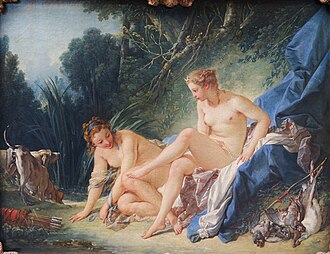 »Diana im Bade - Diana nach dem Bade« - François Boucher (1742)
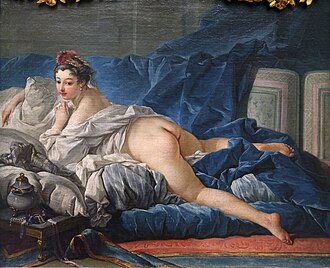 Odaliske - François Boucher (1740s)
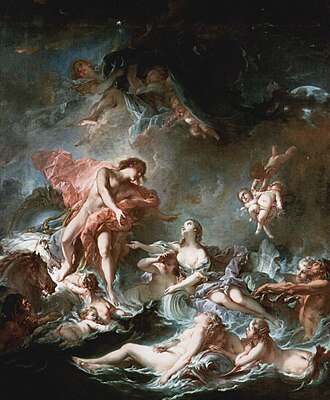 Sonnenuntergang - François Boucher (1752)
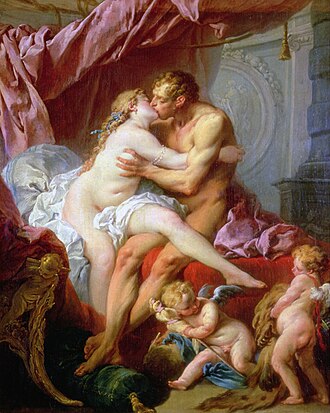 Herkules und Omphale - François Boucher (1730s)
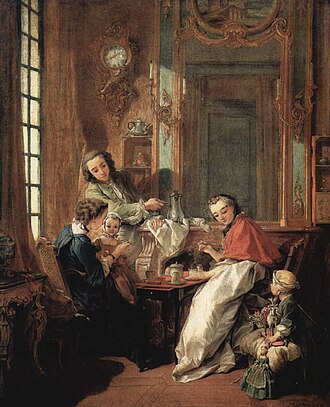 Das Frühstück - François Boucher (1739)
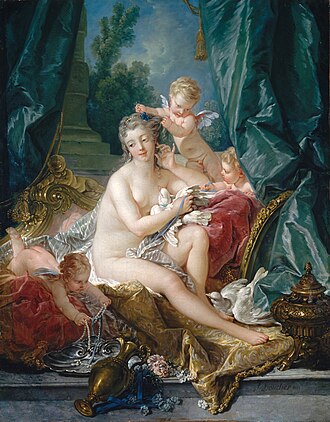 Die Toilette der Venus - François Boucher (1751)
 Jeanne-Antoinette Poisson, Marquise de Pompadour - François Boucher (1750)
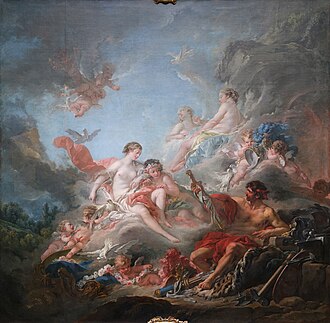 Vulcan Presenting Venus with Arms for Aeneas - François Boucher (1757)
Werke verwandter Künstler
 Einschiffung nach Kythera - Jean-Antoine Watteau (1717)
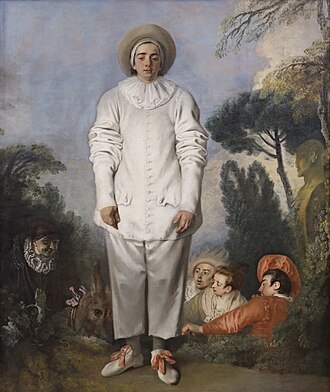 Gilles - Jean-Antoine Watteau (1718)
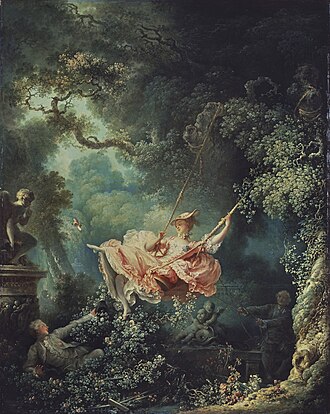 Die Schaukel - Jean-Honoré Fragonard (1760s)
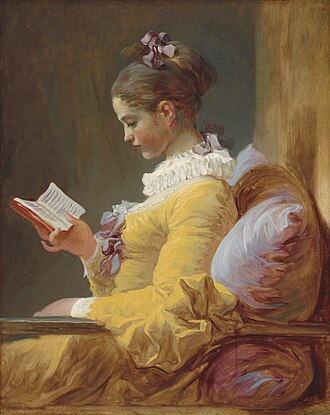 Lesende Frau - Jean-Honoré Fragonard (1770)
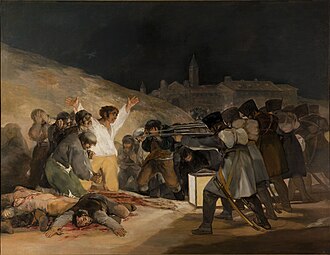 Die Erschießung der Aufständischen - Francisco Goya (1814)
.jpg) Die nackte Maja - Francisco Goya (1800)
Die nackte Maja - Francisco Goya (1800)