Der polnische Reiter
Rembrandt van Rijn · 1655
.jpg)
A young man rides through a murky landscape, calm and alert, toward a danger we cannot see. Nobody knows for sure who he is, and for a while scholars even doubted who painted him. The mystery is part of the spell.
The story behind the painting
The painting is usually dated to the 1650s; Wikidata gives 1655, and Wilhelm von Bode in 1883 called it a late Rembrandt of about 1654. Its known history starts in Poland. In a 1793 letter to King Stanislaus Augustus, the owner Michał Kazimierz Ogiński called the rider a Cossack on horseback, and the king recognised him as a member of the irregular Lisowczyk cavalry. The painting passed through Polish noble families until Countess Waleria Tarnowska brought it to Dzików in Galicia in 1834. In 1910 Zdzisław Tarnowski sold it to Henry Frick, and it is now in the Frick Collection, New York.
What to look for
A young rider sits on a horse in a bare, mountainous landscape that holds a mysterious building, dark water and, far off, signs of a fire. His face, brilliantly painted, has a mysterious and somewhat solemn expression. Notice his costume, his weapons and quiver of arrows; some believe these, and even the breed of the horse, are Polish, though in 1944 Julius Held suggested the costume could be Hungarian. Parts of the background are very sketchily painted or unfinished. Equestrian pictures were rare for Rembrandt; his only other known one is the Portrait of Frederick Rihel of 1663.
Meaning and intent
Is it a portrait? The 18th-century owners said it showed Marcjan Aleksander Ogiński; others proposed the Protestant theologian Jonasz Szlichtyng, and two Polish scholars in 1912 suggested Rembrandt's son Titus as the model. Historical readings range from David and the Prodigal Son to Tamerlane, Gijsbrecht IV of Amstel, or a soldier of Christ defending Eastern Europe against the Turks. The critic Waldemar Januszczak argues the rider is the First Horseman of the Apocalypse, crossing a Europe devastated by the Thirty Years' War. Its idealised, inscrutable character keeps all these theories alive.
Legacy
In 1984 Josua Bruyn of the Rembrandt Research Project tentatively pointed to Rembrandt's pupil Willem Drost. That view stayed a minority one and is now generally rejected; the Frick never changed its label from Rembrandt, and Simon Schama and Ernst van de Wetering argued for the master. A 1998 study by the project concluded that another hand was also involved, so Rembrandt may have left it unfinished for someone else to complete. In 1993 the artist Russell Connor mocked the debate with a painting of Rembrandt standing before the incomplete Polish Rider, which The New Yorker published as a joke.
Schon gewusst?
- Sold by Zdzisław Tarnowski to Henry Frick in 1910.
- Called a Cossack on horseback by its owner in 1793.
- Attribution questioned in 1984, now mostly accepted as Rembrandt.
- Parts of the background are unfinished.
Über den Künstler
Rembrandt van Rijn (1606-1669)
Mann · Niederländisches Goldenes Zeitalter der Malerei · Landschaftsmalerei · Hauspferd · The Frick Collection · Pfeil · Reiten
Mehr von Rembrandt van Rijn
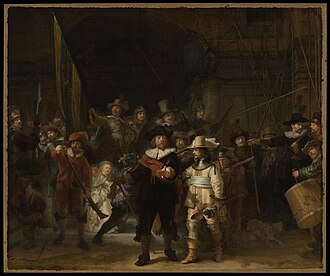 Die Nachtwache - Rembrandt van Rijn (1642)
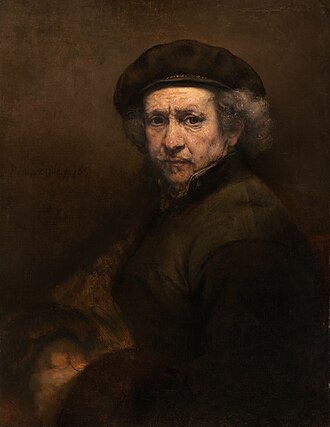 Selbstbildnis - Rembrandt van Rijn (1659)
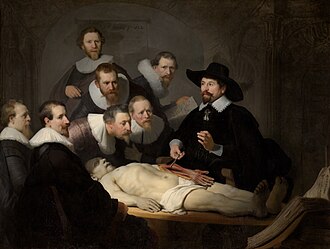 Die Anatomie des Dr. Tulp - Rembrandt van Rijn (1632)
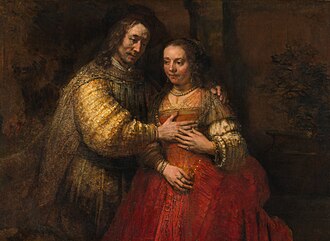 Die Judenbraut - Rembrandt van Rijn (1660s)
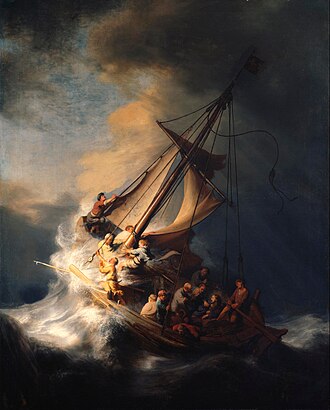 Der Sturm auf dem See Genesareth - Rembrandt van Rijn (1633)
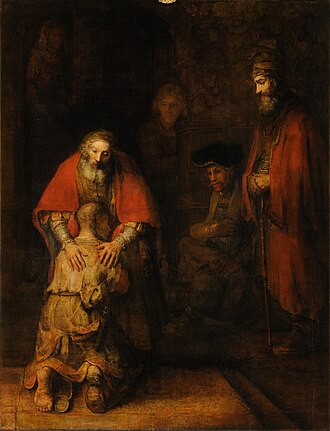 Die Rückkehr des verlorenen Sohnes - Rembrandt van Rijn (1668)
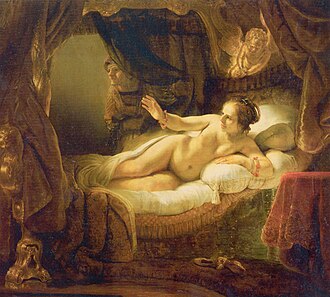 Danaë - Rembrandt van Rijn (1636)
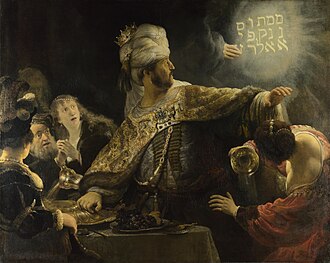 Das Gastmahl des Belsazar - Rembrandt van Rijn (1636)
Werke verwandter Künstler
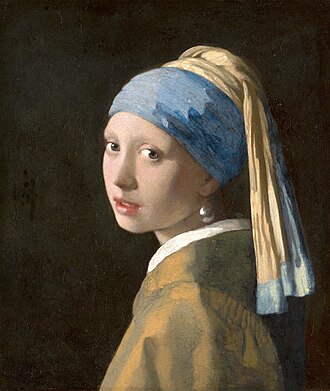 Das Mädchen mit dem Perlenohrgehänge - Johannes Vermeer (1665)
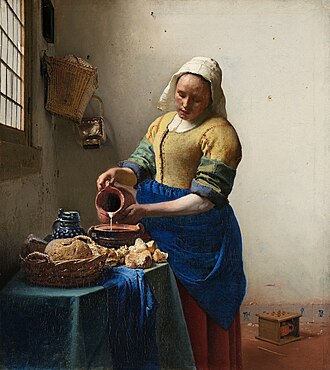 Dienstmagd mit Milchkrug - Johannes Vermeer (c. 1658)