The Love of James the First, of Scotland
John Everett Millais · 1850s
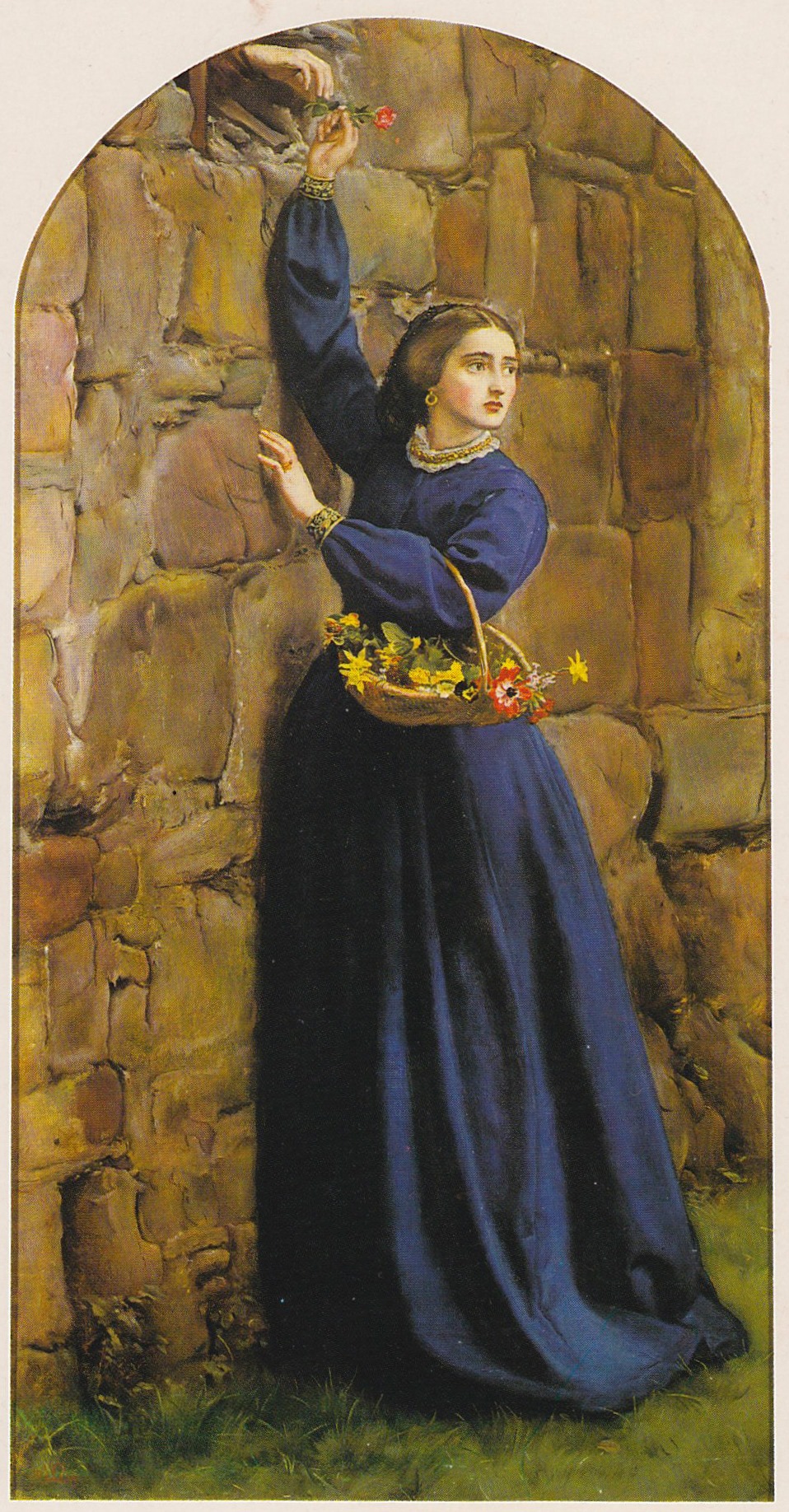
A woman in blue lifts a flower toward a hand reaching out of a slit in a stone wall. Millais turned a legend about an imprisoned king and the lady he loved into a single, silent gesture.
The story behind the painting
Millais based the painting on a story from history. King James I of Scotland, who lived from 1394 to 1437, was held prisoner in Windsor Castle for some years. Legend says he fell in love with Lady Joan Beaufort, who used to walk in the castle garden below his window, and that his only way to reach her was to pass letters and small objects through the bars of the grated window. Millais painted the picture during 1858 and 1859, and signed it with his monogram and the date 1859.
What to look for
The canvas is tall and narrow. A woman in a blue gown, a basket of flowers over one arm, reaches up to pass a flower to a hand that comes out of an opening in a sturdy stone wall. We never see the king, only his hand. For the wall Millais used the picturesque old ruin of Balhousie Castle. A reference photograph was taken with the model's hand dropping a love letter from the window. The model was a Miss Eyre of Kingston, whose sister Mary sat for The Bride the following year.
Meaning and intent
The whole love story is told through what cannot be seen. The wall that keeps the lovers apart fills the picture, and the only contact is a hand and a flower passing through a narrow gap. The pure blue of the lady's dress is the strongest note of colour. Even a sympathetic critic found this restraint hard to love: Marion Spielmann wrote that the colour was as strong and the handling as incisive as ever, yet that despite passages of great beauty the picture was not an attractive one.
Legacy
The painting was shown at the Royal Academy in 1859, number 482, beside Millais' Spring and The Vale of Rest. After the painter's death it hung again at the Royal Academy's Winter Exhibition of January to March 1898, under the title The Love of James I, of Scotland, when it belonged to Charles Churchill. Spielmann's comments come from his book on that exhibition, where he judged it hardly among Millais's most successful efforts. Today its owner and location are not on public record.
Schon gewusst?
- Painted 1858-1859, dated 1859.
- The wall is based on Balhousie Castle.
- Shown at the Royal Academy in 1859 and 1898.
- Its present location is not publicly known.
Über den Künstler
John Everett Millais (1829-1896)
Mehr von John Everett Millais
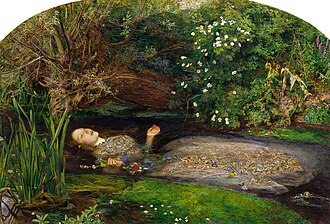 Ophelia - John Everett Millais (1851)
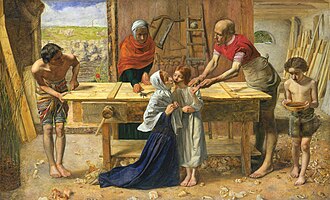 Christus im Hause seiner Eltern - John Everett Millais (1849)
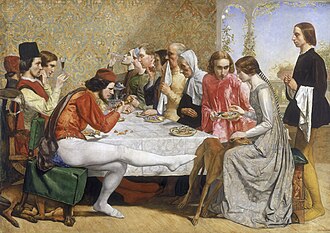 Isabella - John Everett Millais (1849)
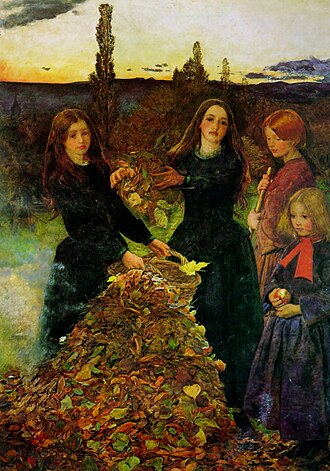 Herbstlaub - John Everett Millais (1856)
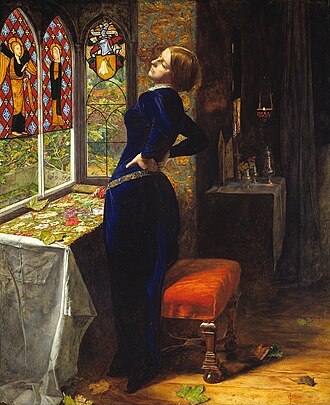 Mariana - John Everett Millais (1851)
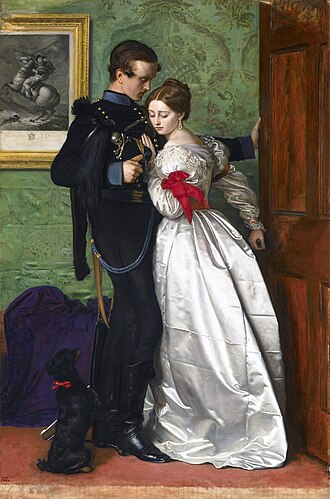 The Black Brunswicker - John Everett Millais (1860)
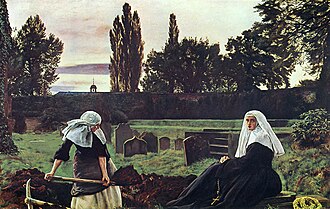 Das Tal der Stille - John Everett Millais (1850s)
 The Order of Release - John Everett Millais (1850s)
Werke verwandter Künstler
 Proserpine - Dante Gabriel Rossetti (1874)
 Bocca Baciata - Dante Gabriel Rossetti (1859)
 Hylas und die Nymphen - John William Waterhouse (1896)
 The Lady of Shalott - John William Waterhouse (1888)