The Holy Family with Angels
Rembrandt van Rijn · 1645
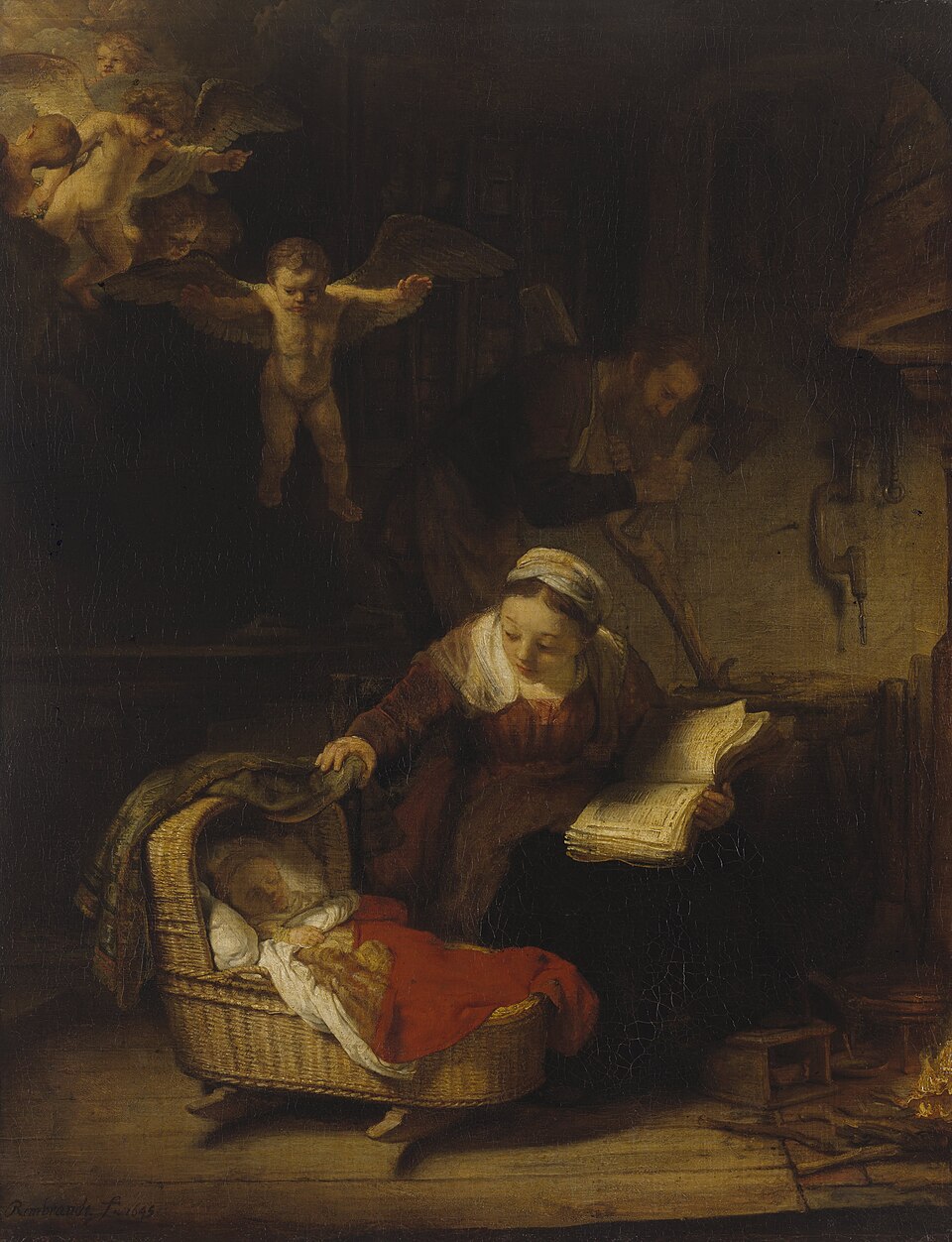
A young mother looks up from her book and lifts the cradle curtain to check on her sleeping baby, while her husband works in the shadows and little angels float down with light. Rembrandt painted the Holy Family in 1645 as an ordinary Amsterdam household.
The story behind the painting
The canvas is signed at lower left Rembrandt f. 1645 and measures about 117 by 91 cm, with figures almost half life size. Rembrandt made preparatory work for it: a pen drawing for the whole picture was in the collection of Léon Bonnat in Paris, and a chalk study for the child in the cradle was in London. The painting was sold in The Hague in 1733 in the sale of Adriaen Bout, then belonged to the Crozat collection in Paris, from which it was bought for the Hermitage by Empress Catherine II. It remains in the Hermitage Museum today, an example of Dutch Golden Age painting.
What to look for
We are in Joseph's carpenter's workshop. In the foreground Mary sits on a low chair, a large open book on her left arm, her left foot resting on a foot warmer. She leans to draw back the green curtain of the cradle, where the child sleeps under a red fur lined cover. She wears a deep red gown, a dark blue skirt and a white kerchief and cap. Behind her, in half shadow, Joseph in brown working clothes shapes a yoke with his axe. From the upper left small child angels flutter down, throwing bright light on the Virgin and the cradle. The wicker crib is the same type seen in paintings of mothers and babies by Pieter de Hooch.
Meaning and intent
Rembrandt shows the Holy Family as a typical Amsterdam family of his day, and that is what makes the picture so tender: a mother who cannot resist peeking at her sleeping child. Yet the everyday detail carries meaning. The yoke Joseph is making recalls the prophecy of Isaiah about the yoke of the oppressor being broken, and also the words of Jesus in Matthew: take my yoke upon you, for my yoke is easy and my burden is light. So, in the shadow behind the cradle, the father's work quietly points to the child's future. The angels are the only sign that this is no ordinary home.
Legacy
The composition was admired and copied. Hofstede de Groot recorded in 1915 an old copy without the angels with an English dealer in 1899, later in New York, and another copy without the angels sold in London in 1912. The picture was engraved by J. Vendramini in 1836 and by J. Sanders, etched by N. Mossoloff and lithographed by H. Robillard, and discussed by many writers on Rembrandt. The 1733 sale catalogue gave different measurements from those recorded later, a discrepancy noted in the sources. Rembrandt and his school painted several other Holy Family scenes, but this one, with its falling angels and peeking mother, remains one of the warmest.
Schon gewusst?
- Signed and dated Rembrandt f. 1645.
- Shows the Holy Family as an Amsterdam household in Joseph's workshop.
- Bought for the Hermitage by Catherine II from the Crozat collection.
- Old copies were made without the angels.
Über den Künstler
Rembrandt van Rijn (1606-1669)
religiöse Kunst · Frau · Mann · Maria · Niederländisches Goldenes Zeitalter der Malerei · Jesuskind · Junge · Eremitage · Josef von Nazaret
Mehr von Rembrandt van Rijn
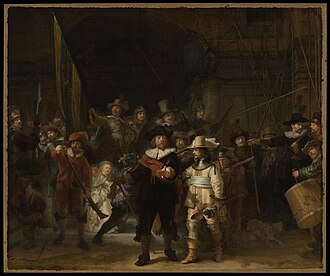 Die Nachtwache - Rembrandt van Rijn (1642)
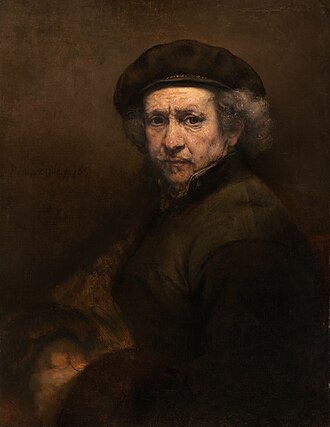 Selbstbildnis - Rembrandt van Rijn (1659)
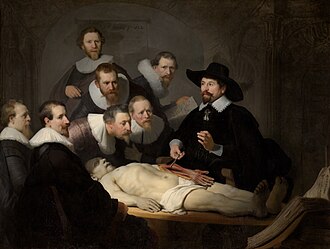 Die Anatomie des Dr. Tulp - Rembrandt van Rijn (1632)
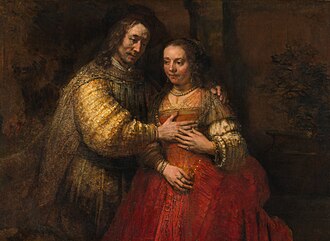 Die Judenbraut - Rembrandt van Rijn (1660s)
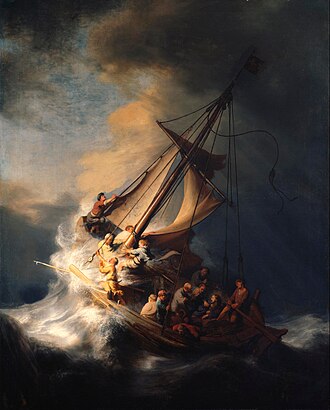 Der Sturm auf dem See Genesareth - Rembrandt van Rijn (1633)
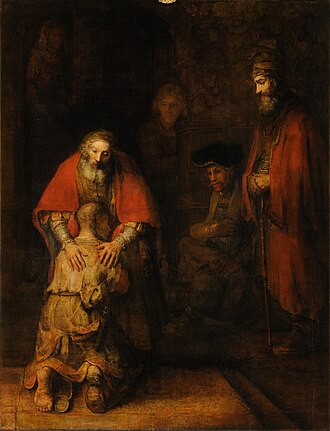 Die Rückkehr des verlorenen Sohnes - Rembrandt van Rijn (1668)
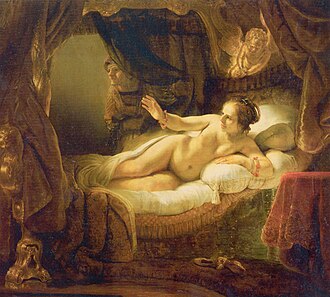 Danaë - Rembrandt van Rijn (1636)
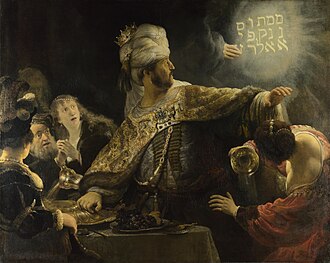 Das Gastmahl des Belsazar - Rembrandt van Rijn (1636)
Werke verwandter Künstler
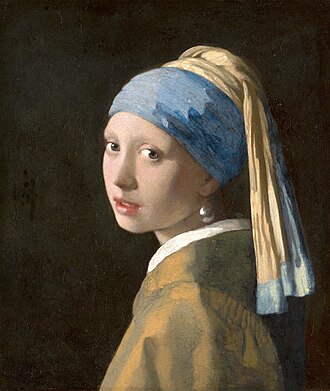 Das Mädchen mit dem Perlenohrgehänge - Johannes Vermeer (1665)
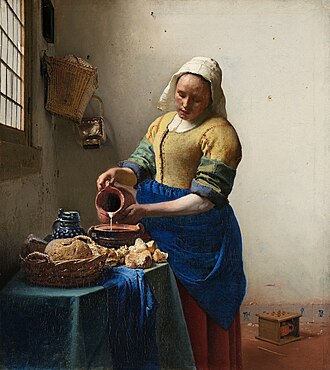 Dienstmagd mit Milchkrug - Johannes Vermeer (c. 1658)