Die Verschwörung des Claudius Civilis
Rembrandt van Rijn · 1660s
%20-%20Nationalmuseum%20-%2017581.tif)
A one-eyed chieftain under a strange crown, swords crossing in a glow of light. This was once the largest painting Rembrandt ever made, about five metres across, until Amsterdam sent it back and he cut it down to a quarter of its size.
The story behind the painting
Amsterdam's new town hall on the Dam, finished in 1655 and now the Royal Palace, needed history paintings for its gallery. The commission first went to Govert Flinck, Rembrandt's former pupil, for twelve works on the Batavian revolt, a story the Dutch romanticised as a forerunner of their war against Spain. Flinck died in 1660 before finishing any of them, and the work was shared out between several painters, including Jacob Jordaens and Jan Lievens. Rembrandt received the scene from Tacitus. A sketch on the back of a funeral ticket dated October 1661 shows his plan. The painting, a lunette about five by five metres, was delivered by July 1662 and hung in place only briefly.
What to look for
Tacitus tells how Claudius Civilis gathered the Batavian chiefs in a sacred grove, ostensibly for a banquet, and bound them to rebellion with barbarous rites and strange oaths. Rembrandt moved the scene into a vast vaulted hall and invented the sword oath: earlier images showed handshakes. Civilis had lost an eye, like Hannibal, and Otto van Veen had always shown him decorously in profile, with only his good eye visible. Notice the crown on his head, the eerie light and the iridescent greyish blues and pale yellows, unusual even for late Rembrandt. Count the swords: there is one more than there are hands to hold it, probably added later to mask damage.
Meaning and intent
Why was it rejected? The reasons are undocumented. Suggested causes include a lack of the decorum expected in history painting, a lack of finish, and an approach not heroic enough. The crown and Civilis's dominance may have seemed out of place for a republican, consultative council, and the scholar Blankert noted the large dark empty spaces next to the crowded works of others. Kenneth Clark called it a most marvellous picture that in places borders on the absurd, and thought the word Shakespearean justified, evoking the heroic past of King Lear. By 24 September 1662 it was gone from the wall, and Flinck's unfinished design was completed by Jürgen Ovens in four days.
Legacy
In financial difficulty, Rembrandt cut the canvas down to about a quarter, partly repainted it, lengthened the table and added the man on the left, so that it could be sold. It is the last secular history painting he finished. Bought at auction in Amsterdam in 1734, it reached Sweden by inheritance, was given to the Royal Swedish Academy of Arts in 1798 and has been deposited since 1864 in the Nationalmuseum in Stockholm. Around 1782 the conservator Erik Hallblad transferred its paint layer to a new canvas. In the early twentieth century Karl Madsen even imagined it showed the one-eyed god Odin, painted by a Rembrandt who had fled to Sweden, a theory already disproved.
Schon gewusst?
- Commissioned for Amsterdam's town hall, delivered by July 1662.
- Originally about five by five metres, Rembrandt's largest painting.
- Returned to Rembrandt and cut down to a quarter of its size.
- Deposited in the Nationalmuseum, Stockholm, since 1864.
Über den Künstler
Rembrandt van Rijn (1606-1669)
Niederländisches Goldenes Zeitalter der Malerei · Historienmalerei · Rijksmuseum
Mehr von Rembrandt van Rijn
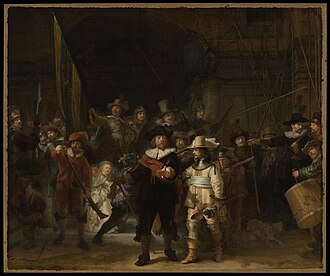 Die Nachtwache - Rembrandt van Rijn (1642)
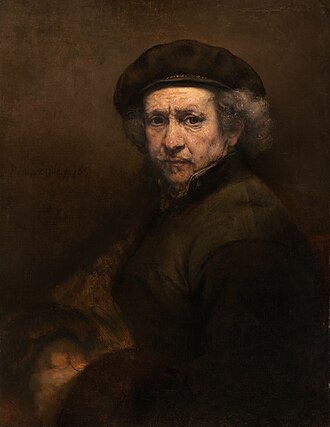 Selbstbildnis - Rembrandt van Rijn (1659)
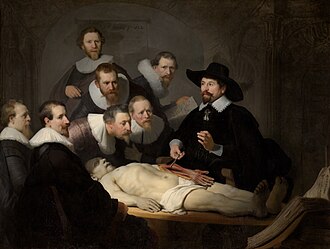 Die Anatomie des Dr. Tulp - Rembrandt van Rijn (1632)
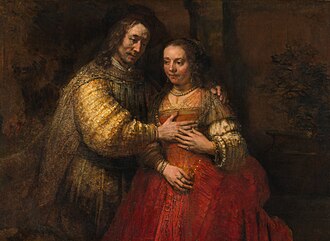 Die Judenbraut - Rembrandt van Rijn (1660s)
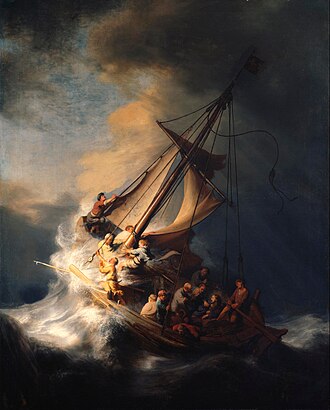 Der Sturm auf dem See Genesareth - Rembrandt van Rijn (1633)
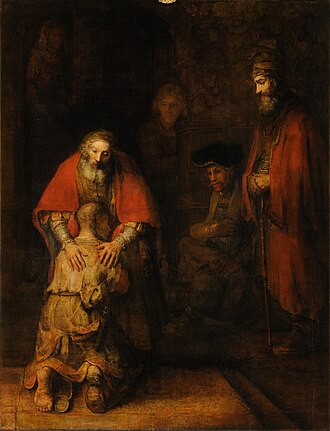 Die Rückkehr des verlorenen Sohnes - Rembrandt van Rijn (1668)
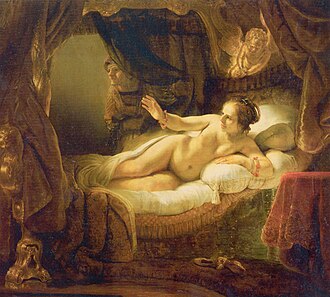 Danaë - Rembrandt van Rijn (1636)
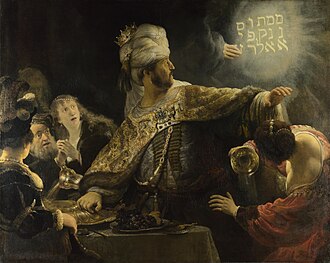 Das Gastmahl des Belsazar - Rembrandt van Rijn (1636)
Werke verwandter Künstler
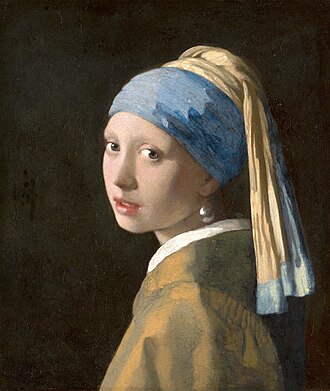 Das Mädchen mit dem Perlenohrgehänge - Johannes Vermeer (1665)
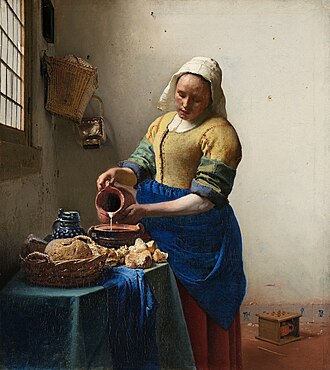 Dienstmagd mit Milchkrug - Johannes Vermeer (c. 1658)