Die Anatomiestunde von Dr. Joan Deyman
Rembrandt van Rijn · 1656
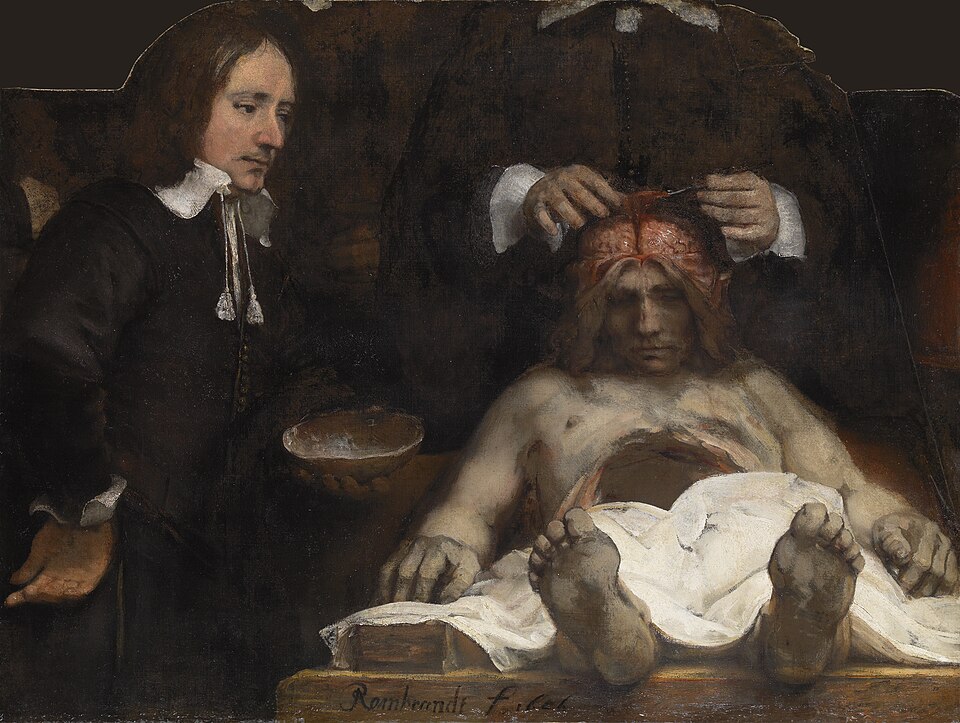
A dead man lies feet first toward us, his skull opened, while a surgeon holds the top of it like a bowl. Fire took most of Rembrandt's canvas in 1723, but what survives still stops you at the dissection table.
The story behind the painting
Rembrandt painted The Anatomy Lesson of Dr. Deijman, also spelled Deyman, in 1656. It is a group portrait showing a brain dissection by Dr. Jan Deijman, who lived from 1619 to 1666. The body was that of Joris Fonteijn, called Black Jan, a tailor from Diest in Flanders, born in 1633 or 1634. He had served three and a half years with the Dutch East India Company, came home in 1653, squandered his inheritance and turned to crime. Caught breaking in at the Nieuwendijk in Amsterdam late in 1655, he was sentenced to hang on 27 January 1656 and executed two days later.
What to look for
The corpse is shown with strongly exaggerated foreshortening, feet toward us, so that we feel we are standing at the foot of the dissection table. The source compares it to the foreshortening in Mantegna's Lamentation of Christ, which Rembrandt would have known from prints. Dr. Deijman works on the opened head, while on the left his assistant, the surgeon Gijsbert Calkoen, holds the top of the dead man's skull. Today the canvas measures about 100 by 134 cm, a fragment of the original composition, and the full group survives only in a preparatory sketch.
Meaning and intent
The painting is unsparing about who this man was and how he came to lie here. According to the source, the firearm Fonteijn used in his burglary was displayed above his head for the edification of others. After his execution his body was made available to the surgeons for three days for their training, and he was buried on 2 February at the Zuiderkerkhof. Rembrandt places the viewer in the role of a witness to a lesson in anatomy that is also the last chapter of a short, troubled life.
Legacy
Much of the canvas was destroyed in a fire in 1723, and the painting was afterwards cut down to its present size. What remains is the dramatic centre: the foreshortened body, the open skull and the assistant's hands. The work is now in the Amsterdam Museum, and Wikidata also lists the Rijksmuseum in connection with it. Even as a fragment, it stands beside Rembrandt's earlier anatomy lesson as a portrait of a surgeons' guild that is far less about the doctors than about the body before them.
Schon gewusst?
- Painted by Rembrandt in 1656.
- Shows Dr. Jan Deijman dissecting the brain of Joris Fonteijn, executed in 1656.
- Largely destroyed by fire in 1723 and cut down afterwards.
- A preparatory sketch shows the full group.
Über den Künstler
Rembrandt van Rijn (1606-1669)
Niederländisches Goldenes Zeitalter der Malerei · Rijksmuseum · Gruppenporträt · Amsterdam-Museum
Mehr von Rembrandt van Rijn
 Die Nachtwache - Rembrandt van Rijn (1642)
 Selbstbildnis - Rembrandt van Rijn (1659)
 Die Anatomie des Dr. Tulp - Rembrandt van Rijn (1632)
 Die Judenbraut - Rembrandt van Rijn (1660s)
 Der Sturm auf dem See Genesareth - Rembrandt van Rijn (1633)
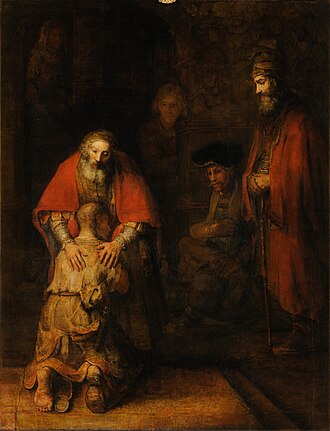 Die Rückkehr des verlorenen Sohnes - Rembrandt van Rijn (1668)
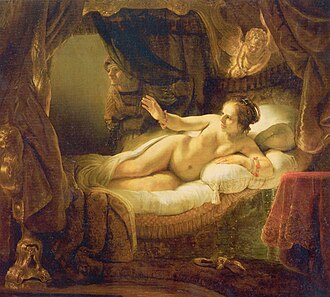 Danaë - Rembrandt van Rijn (1636)
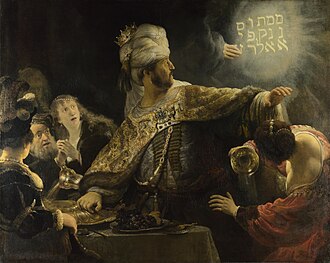 Das Gastmahl des Belsazar - Rembrandt van Rijn (1636)
Werke verwandter Künstler
 Das Mädchen mit dem Perlenohrgehänge - Johannes Vermeer (1665)
 Dienstmagd mit Milchkrug - Johannes Vermeer (c. 1658)
 Fest des hl.Nikolaus - Jan Steen (1660s)
 Mädchen mit Austern. - Jan Steen (1658)
 Ein Schütze einen Berkemeyer haltend, bekannt als „Der fröhliche Trinker" - Frans Hals (1620s)
 Der lachende Kavalier - Frans Hals (1624)
 Die Mühle von Wijk - Jacob van Ruisdael (1670)
 Judenfriedhof - Jacob van Ruisdael (1650s)
 Hof eines Hauses in Delft - Pieter de Hooch (1658)
 A Woman Peeling Apples - Pieter de Hooch (1663)