Die Vorsteher der Tuchmacherzunft
Rembrandt van Rijn · 1662
%20van%20het%20Amsterdamse%20lakenbereidersgilde%20-%20Google%20Art%20Project.jpg)
Five men in black look up from their work as if you have just walked in unannounced. Rembrandt makes you the interruption in their meeting.
The story behind the painting
In 1662 Rembrandt painted what has been called his last great collective portrait. It was commissioned by the Amsterdam cloth guild and shows five sampling officials, the staalmeesters, with their servant. These wardens inspected cloth, comparing batches against test pieces called samples and grading quality on a scale of four, sealing the result with lead stamps pressed by pliers. The post was unpaid and honorary, held for one year from Good Friday, and the men met three times a week. Those depicted served from Good Friday 1661 to Good Friday 1662: Jacob van Loon, Volckert Jansz, the chairman Willem van Doeyenburg, Frans Hendricksz Bel, Aernout van der Mye and the servant Jochem de Neve. Notably, they belonged to different faiths: two Catholics, a Mennonite, a Remonstrant and a Reformed Protestant.
What to look for
Rembrandt planned for the painting to hang high, probably above a mantelpiece in the guildhall. So he chose a low vantage point: we look up at the table from below, which magnifies the men's stature. From this angle the tabletop disappears, leaving only a heavy, rich tablecloth, a Persian-style fabric the men are appraising against a swatch book. The device let him line the figures up almost in a row: dark shapes, bright white collars and serious, frontal gazes, aligned almost horizontally yet rising and falling slightly like lanterns. The lighting was likely adjusted to match the room, and the panelling behind them likely echoed the real interior. Find the open book, probably the guild's accounts, and the man at far right: restorers in 1991 found he holds a pair of gloves, not a bag of stamps.
Meaning and intent
This is a portrait of responsibility. The staalmeesters' work was to guarantee honest quality, and Rembrandt shows them fully aware of the importance of their role. Their gaze, turned outward as one, gives the sense that we, the viewers, have been noticed, perhaps even judged. The upward perspective adds dignity, and the alignment of faces gives each man equal weight, fitting for a group in which no one is a mere background figure. There is also something quietly remarkable in the mix of Catholic and Protestant faiths around a single table, united by civic duty. The open account book and the sample of cloth remind us that this is about everyday trust in a trading city, painted with the seriousness usually reserved for grander subjects.
Legacy
The guild hung the painting in its hall, the Staalhof, until 1771. Today it is in the Rijksmuseum in Amsterdam, a large canvas of 191.5 by 279 centimetres and a landmark of Dutch Golden Age painting. Its fame has spread far beyond the museum. The image appears on the packaging of Dutch Masters cigars and on the wall of H. G. Wells' house in the opening of the 1960 film The Time Machine. It plays a prominent part in Jeffrey Archer's 2019 novel Nothing Ventured, an important role in Zadie Smith's On Beauty, whose main character Howard Belsey is a Rembrandt scholar, and appears on the cover of The Company: A Short History of a Revolutionary Idea. Few group portraits have looked back at so many people.
Schon gewusst?
- Staalmeesters means 'masters of samples' in Dutch.
- The officials were unpaid and served one-year terms beginning on Good Friday.
- A 1991 restoration showed that one man holds gloves, not a bag of stamps.
- The painting hung in the guild's Staalhof until 1771.
Über den Künstler
Rembrandt van Rijn (1606-1669)
Niederländisches Goldenes Zeitalter der Malerei · Gruppenporträt · Rijksmuseum · Hut · Amsterdam-Museum · Bart
Mehr von Rembrandt van Rijn
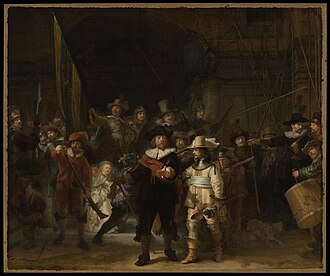 Die Nachtwache - Rembrandt van Rijn (1642)
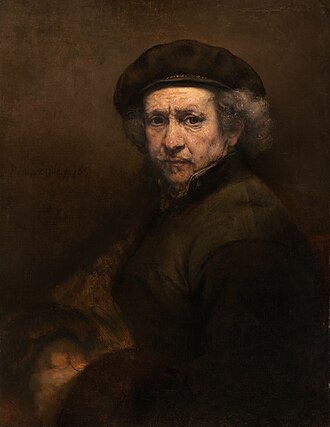 Selbstbildnis - Rembrandt van Rijn (1659)
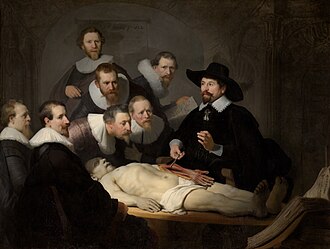 Die Anatomie des Dr. Tulp - Rembrandt van Rijn (1632)
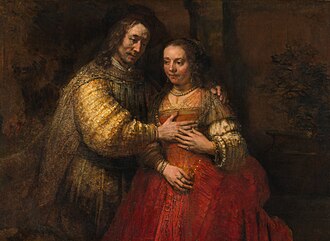 Die Judenbraut - Rembrandt van Rijn (1660s)
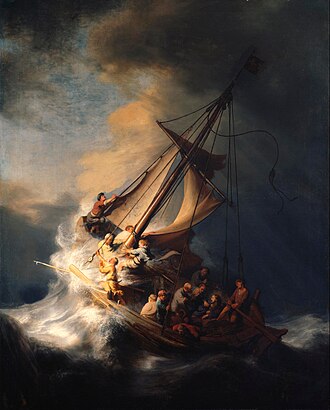 Der Sturm auf dem See Genesareth - Rembrandt van Rijn (1633)
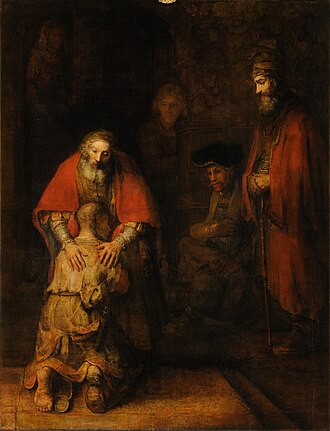 Die Rückkehr des verlorenen Sohnes - Rembrandt van Rijn (1668)
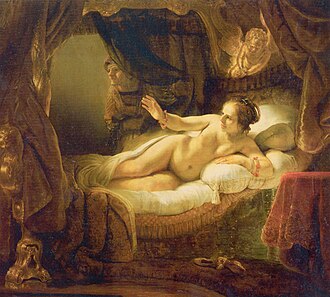 Danaë - Rembrandt van Rijn (1636)
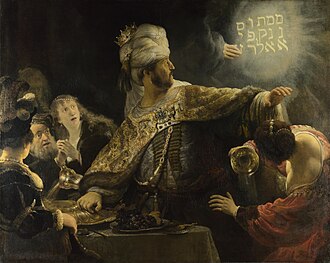 Das Gastmahl des Belsazar - Rembrandt van Rijn (1636)
Werke verwandter Künstler
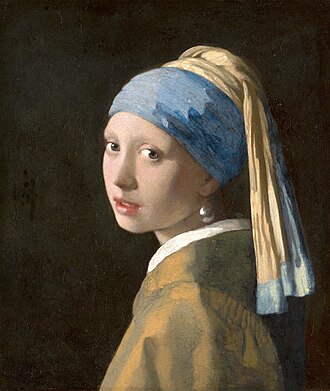 Das Mädchen mit dem Perlenohrgehänge - Johannes Vermeer (1665)
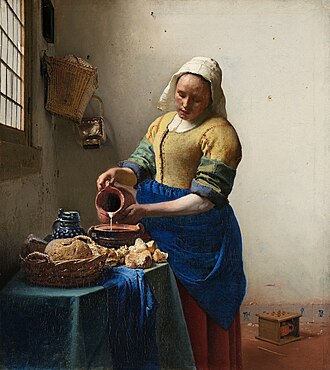 Dienstmagd mit Milchkrug - Johannes Vermeer (c. 1658)
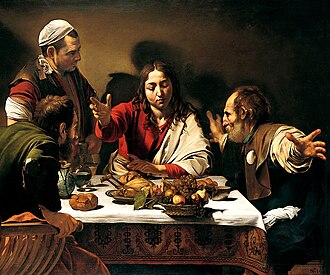 Das Abendmahl in Emmaus - Caravaggio (1601)
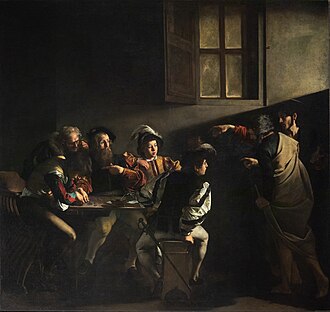 Die Berufung des Hl. Matthäus - Caravaggio (1609)
 Las Meninas - Diego Velázquez (1656)
 Die Übergabe von Breda - Diego Velázquez (1635)