Stillleben mit einem Teller Zwiebeln
Vincent van Gogh · 1889
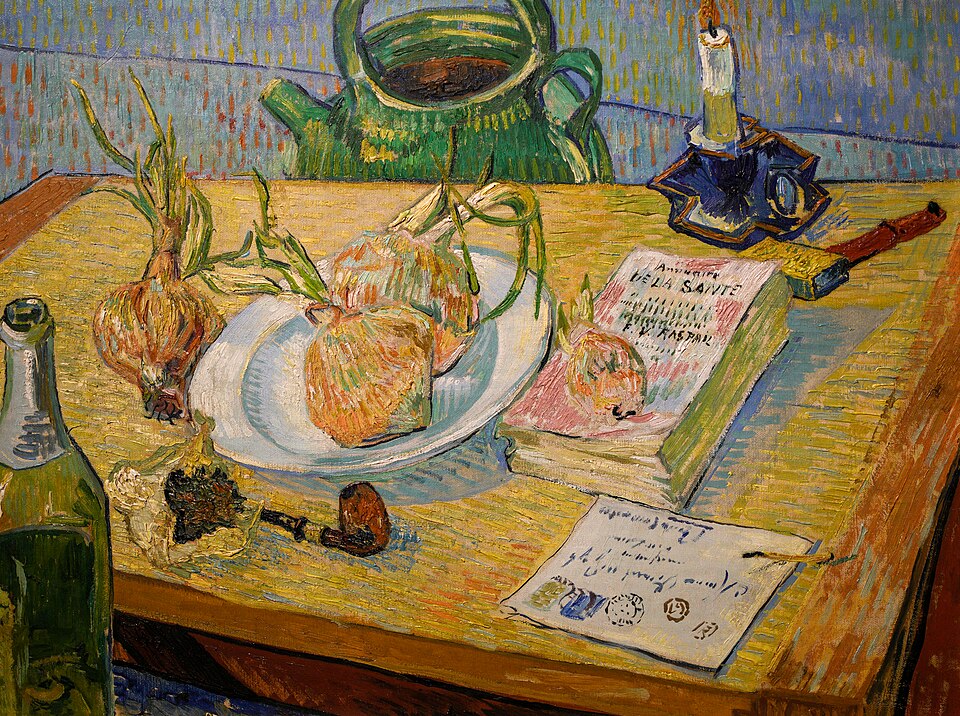
A plate of onions, a pipe, a burning candle and a letter from his brother. Days after leaving hospital in Arles, Van Gogh painted the things that kept him alive.
The story behind the painting
On 23 December 1888 Van Gogh suffered an attack of madness in Arles and cut his ear. He entered the town hospital on 25 December and came out on 7 January 1889. In the respite that followed, he told his brother Theo in his letters that he had gone back to painting still lifes, and this one, from January 1889, was the first of them. He was then in the last full year before his death in July 1890. The painting is in the Kröller-Müller Museum in Otterlo.
What to look for
On a table Van Gogh set a plate of onions on a drawing board. Around it are an empty bottle and a full jug, of wine or coffee, a candle burning down, a box of matches and sealing wax, a stamped envelope, a pipe and tobacco, and a book: the health handbook of François-Vincent Raspail. Notice the play of colour: the yellow of the drawing board in horizontal strokes against green and blue, as in the tiles, in vertical ones. The contrasts are calmer and more controlled than in his work of summer and autumn 1888 alongside Gauguin.
Meaning and intent
The picture is often read as a self-portrait made of objects. The lit candle, in the tradition of vanitas painting, stands for passing time and the time he had left. The empty bottle, probably absinthe, seems replaced by wine or coffee, pipe and tobacco. His life also seems to depend on onions, the food of the poor, on his letters with Theo, and on Raspail's handbook, whose advice he followed. The envelope has been studied closely: a registered letter posted at the Place des Abbesses in Montmartre, thought to be Theo's letter of 23 December 1888.
Legacy
That reading turns a humble tabletop into a quiet record of recovery: food, smoke, light, medicine and a brother's support, laid out in plain sight just after a crisis. The painting stayed a key work in the story of Van Gogh's final years. Michel Butor included it among the 105 decisive works of Western painting that make up his imaginary museum. Today it hangs in the Kröller-Müller Museum in Otterlo, in the Netherlands, among the large group of Van Gogh's paintings kept there.
Schon gewusst?
- Painted in January 1889, after Van Gogh left hospital in Arles.
- His first still life after the crisis of December 1888.
- Includes Raspail's health handbook and a letter likely from Theo.
- Kept in the Kröller-Müller Museum, Otterlo.
Über den Künstler
Vincent van Gogh (1853-1890)
Stillleben · Kröller-Müller Museum · Tabakpfeife · Speisezwiebel
Mehr von Vincent van Gogh
 Die Sternennacht - Vincent van Gogh (1889)
 Caféterrasse am Abend - Vincent van Gogh (1888)
 Sonnenblumen - Vincent van Gogh (1888)
 Mandelblüte - Vincent van Gogh (1890)
 Weizenfeld mit Raben - Vincent van Gogh (1890)
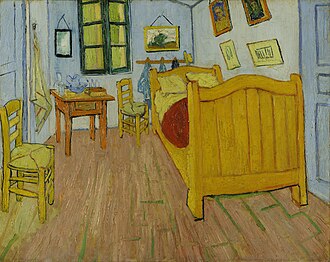 Das Schlafzimmer - Vincent van Gogh (1888)
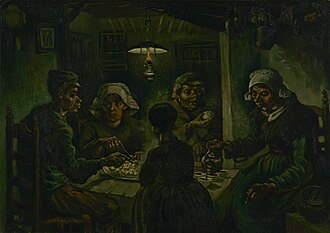 Die Kartoffelesser - Vincent van Gogh (1885)
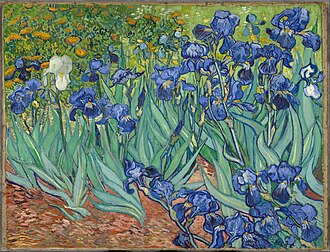 Schwertlilien - Vincent van Gogh (1889)
Werke verwandter Künstler
 Die großen Badenden - Paul Cézanne (1900s)
 Der Knabe mit der roten Weste - Paul Cézanne
 Woher kommen wir? Wer sind wir? Wohin gehen wir? - Paul Gauguin (1897-1898)
 Der gelbe Christus - Paul Gauguin (1889)
 Die Aufrichtung des Kreuzes - Peter Paul Rubens (1609)
 Der Raub der Töchter des Leukippos - Peter Paul Rubens (1618)
 Strandspaziergang - Joaquín Sorolla (1909)
 Sad Inheritance - Joaquín Sorolla (1898)
 Tanz im Moulin de la Galette - Pierre-Auguste Renoir (1876)
 Das Frühstück der Ruderer - Pierre-Auguste Renoir (1881)
 Das Promenoir des »Moulin Rouge« - Henri de Toulouse-Lautrec (1892)
 Die Toilette - Henri de Toulouse-Lautrec (1896)