Steep Cliffs near Dieppe
Claude Monet · 1897
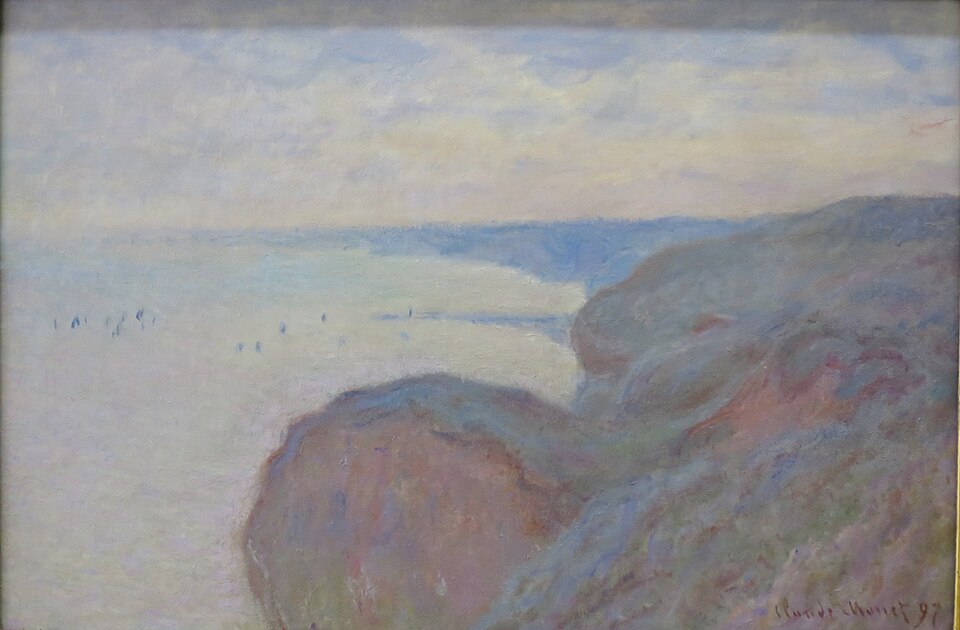
Cliffs above the Channel under a heavy sky, washed in mauve and pink at the end of the day. Monet painted them in the winter of 1897, working hard in bad weather.
The story behind the painting
Monet arrived on the Normandy coast in mid January 1897, staying at Pourville, to paint the surroundings of Dieppe. He loved painting Normandy and especially its cliffs, watching how their light changed with the seasons and the hours of the day. At the beginning of April 1897 he was still there, writing to his dealer Paul Durand-Ruel that he was working hard despite the bad weather. This canvas, Cliffs near Dieppe, Overcast Sky, is one of the results of that long winter stay.
What to look for
The French title tells you what to look for: an overcast sky. The cliffs are shown at the end of the day, in tones of mauve and pink rather than bright sunlight. The canvas measures 65 by 100.5 cm, a wide format that lets the coast stretch across the picture. Monet signed it at the lower right. Instead of a clear outline of rock and sea, the painting is about the soft, cloudy light that settles over everything as evening comes on.
Meaning and intent
For Monet a cliff was never a single subject painted once. He returned to the same coast again and again to catch its light at different seasons and times of day, and this overcast evening is one such moment. He also made a similar drawing, now in the Musée Marmottan in Paris, and another version of the theme, On the Cliff at Dieppe, is in the Musée d'Orsay. Seen together, they show a painter trying to hold on to weather and time, which never stay still.
Legacy
The painting was shown with other Normandy landscapes by Monet at the Galerie Georges Petit the following year. In 1901 it passed to Durand-Ruel, who sold it in 1903 to the famous Moscow collector Sergei Shchukin. After the October Revolution the Bolsheviks confiscated Shchukin's collection and moved it to the Museum of Modern Western Painting in Moscow. In 1948 the canvas came to the Hermitage in Saint Petersburg, where it remains. It has travelled to Leningrad in 1974, Budapest in 1975, Kyoto in 1979, Saint Petersburg in 2002 and Paris in 2016.
Schon gewusst?
- Painted in 1897 while Monet stayed at Pourville.
- Bought by Moscow collector Shchukin in 1903.
- In the Hermitage since 1948.
- A related drawing is in the Musée Marmottan.
Über den Künstler
Claude Monet (1840-1926)
Mehr von Claude Monet
 Impression, Sonnenaufgang - Claude Monet (1872)
 Seerosen - Claude Monet (1906)
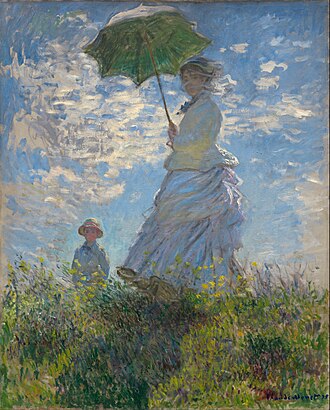 Die Frau mit dem Sonnenschirm - Claude Monet (1875)
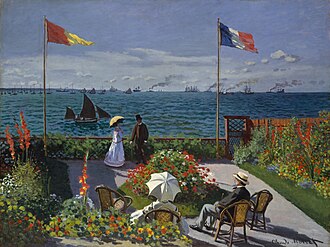 Garten in Sainte-Adresse - Claude Monet (1867)
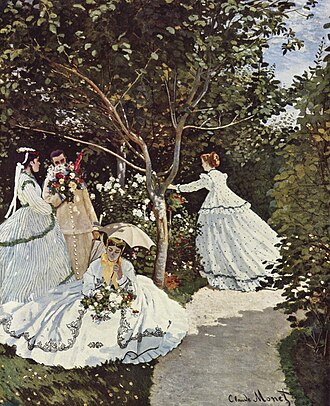 Frauen im Garten - Claude Monet (1866)
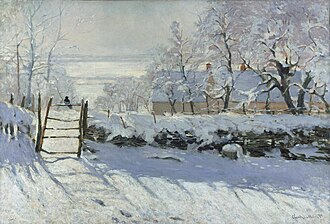 Die Elster - Claude Monet (1868)
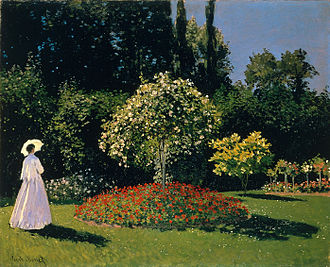 Frau im Garten - Claude Monet (1867)
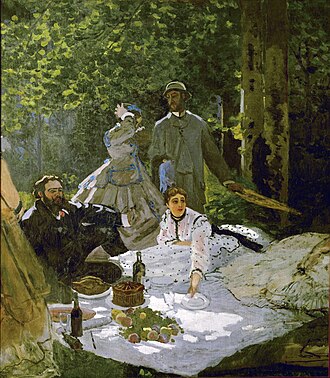 Das Frühstück im Grünen - Claude Monet (1866)
Werke verwandter Künstler
 Die letzte Fahrt der Temeraire - J. M. W. Turner (1839)
 Rain, Steam and Speed - The Great Western Railway - J. M. W. Turner (1844)
 Der Ursprung der Welt - Gustave Courbet (1866)
 Ein Begräbnis in Ornans - Gustave Courbet (2020)
 Das Frühstück im Grünen - Édouard Manet (1863)
 Olympia - Édouard Manet (1863)
 Tanz im Moulin de la Galette - Pierre-Auguste Renoir (1876)
 Das Frühstück der Ruderer - Pierre-Auguste Renoir (1881)
 Wiege - Berthe Morisot (1872)
 Sommertag - Berthe Morisot (1879)
 Der Absinth - Edgar Degas (1875)
 Die Bellelli Familie - Edgar Degas (1858)